
Let’s Be Real… Halal Certification Isn’t as Simple as It Looks
If you’ve ever searched for Complete halal certification guide.., chances are you expected a simple checklist.
Fill a form.
Get approval.
Done.
But that’s not how it works in real life.
Here’s the part most people don’t talk about: halal certification is not just a label — it’s a complete system that touches everything from sourcing to storage to packaging.
And honestly? That’s where most businesses get stuck.
Some feel overwhelmed.
Some get rejected.
And many don’t even know where they went wrong.
So in this Complete halal certification guide, we’re not just going to explain the process — we’re going to uncover the hidden gaps, real challenges, and practical solutions that actually help you succeed.
What Does Complete halal certification guide Really Mean?
You might be thinking:
“Halal just means no pork or alcohol, right?”
That’s only a small part of the story.
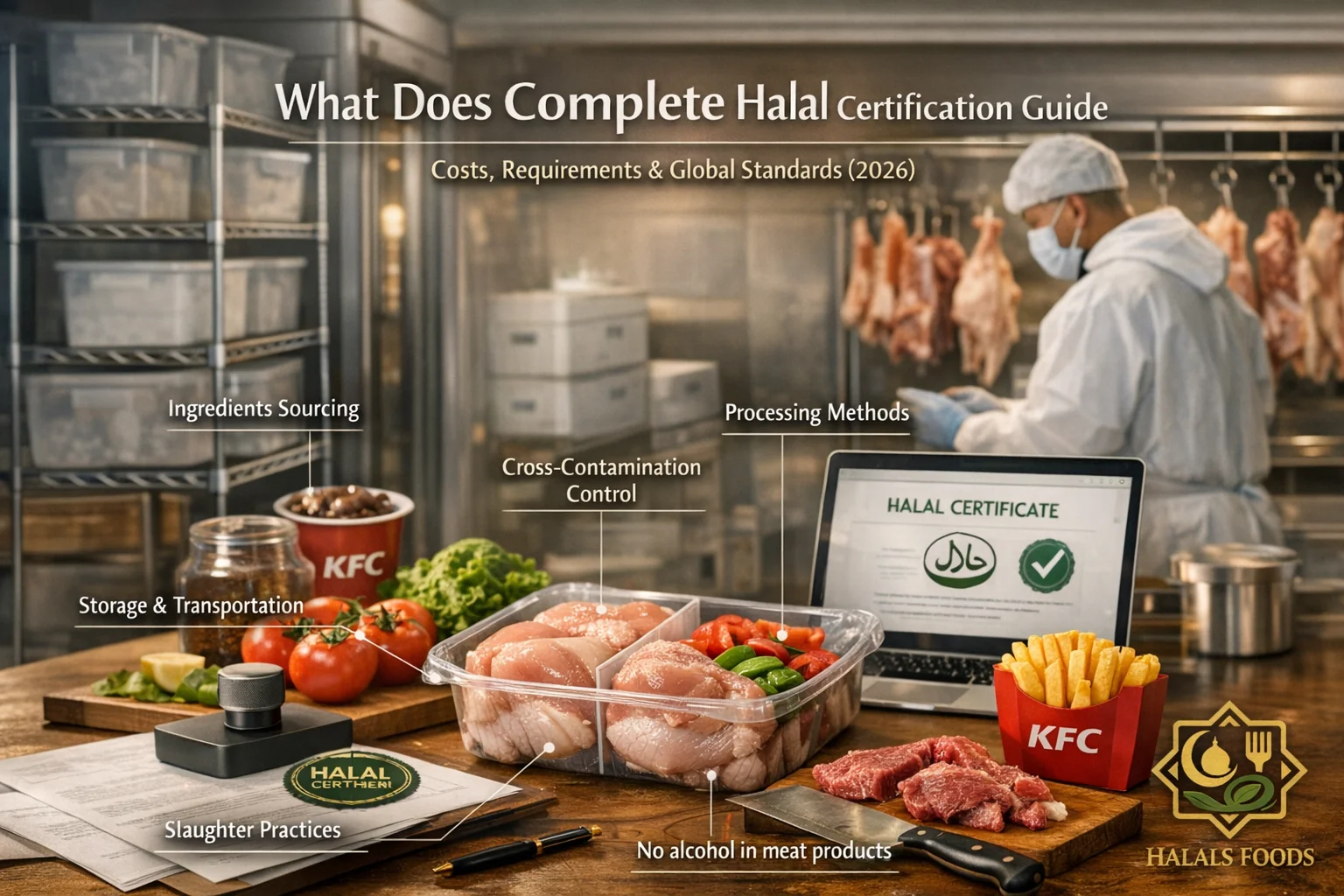
In reality, Complete halal certification guide covers:
- Ingredients sourcing
- Processing methods
- Cross-contamination control
- Slaughter practices (for meat products)
- Storage and transportation
- Packaging integrity
In simple words:
👉 Halal certification ensures the entire journey of a product is compliant, not just the final product.
Basic Halal Principles (Simplified for Real Understanding)
Before going deeper into Complete halal certification guide, let’s break down the core principles in a very simple way.
1. Halal vs Haram
- Halal = Permissible
- Haram = Forbidden
Examples of Haram:
- Pork and its derivatives
- Alcohol
- Improperly slaughtered animals
But here’s what many people miss…
Even halal ingredients can become haram through contamination.
That’s where certification becomes critical.
2. Cleanliness (Tayyib Concept)
Halal is not just about religious compliance.
It also includes clean, safe, and hygienic food.
So if your process is messy, unsafe, or unhygienic — it may fail certification even if ingredients are halal.
3. Ethical Treatment
Especially in meat production:
- Animals must be treated humanely
- Slaughter must follow Islamic guidelines
This is a major part of Complete halal certification guide that many global brands struggle with.
Why Businesses Are Rushing Toward Halal Certification in 2026
Let’s talk numbers for a second.
The global halal food market is worth trillions of dollars.
And it’s growing fast.
So businesses aren’t just doing this for religious reasons — they’re doing it for:
- Market expansion
- Consumer trust
- Export opportunities
- Brand credibility
Here’s the reality:
👉 Without halal certification, you’re automatically cutting off a massive audience.
Types of Halal Certification (Most People Don’t Know This)
One of the biggest mistakes businesses make in Complete halal certification guide is assuming there’s only one type.
There isn’t.
1. Product-Based Certification
- Specific products are certified
- Common in packaged food
2. Facility Certification
- Entire factory or plant is certified
- More complex but more powerful
3. Slaughterhouse Certification
- Required for meat processing
- Strict compliance rules
4. Restaurant Certification
- Covers kitchen, ingredients, and handling
Each type has different requirements — and choosing the wrong one can waste time and money.
The Halal Certification Process (Step-by-Step Reality)
Now let’s get into what you actually came for.
Here’s a simplified version of the Complete halal certification guide process:
Step 1: Application Submission
- Business details
- Product list
- Ingredient sources
Simple on paper… but many applications get rejected here due to incomplete data.
Step 2: Documentation Review
Certification bodies check:
- Ingredient compliance
- Supplier verification
- Production flow
This is where hidden issues start appearing.
Step 3: On-Site Audit
Inspectors visit your facility to check:
- Hygiene standards
- Equipment cleanliness
- Cross-contamination risks
And yes — they notice everything.
Step 4: Compliance Adjustments
Most businesses fail initially and must:
- Change suppliers
- Modify processes
- Improve storage systems
Step 5: Certification Approval
Once everything meets standards:
👉 You receive halal certification
But it doesn’t end here…
Step 6: Ongoing Monitoring
- Regular audits
- Renewal checks
- Surprise inspections
Halal certification is continuous, not one-time.
The Hidden Challenges Nobody Talks About
Now let’s get into the real stuff.
Because this is where most guides fail.
Challenge 1: Ingredient Complexity
Modern food products contain:
- Emulsifiers
- Flavor enhancers
- Additives
Many of these have unclear sources.
So even if your product looks halal — it might not be.
Challenge 2: Supplier Transparency
You depend on suppliers.
But:
- Not all suppliers provide full details
- Some hide ingredient origins
This creates serious compliance risks.
Challenge 3: Cross-Contamination
This is one of the biggest reasons businesses fail.
Example:
A halal product processed on the same machine as non-halal items = NOT halal.
Challenge 4: Different Global Standards
Here’s something frustrating:
👉 Halal standards are NOT universal
- Malaysia (JAKIM)
- UAE (ESMA)
- USA certifiers
Each has slightly different rules.
So one certification may not work everywhere.
Protein Sourcing: The Most Sensitive Area
If your business deals with meat, then this section of Complete halal certification guide is critical.
Key requirements:
- Animal must be halal species
- Slaughter must follow Islamic method
- Name of Allah must be recited
- Blood must be fully drained
Even one mistake here = full rejection.
Tips to Speed Up Your Halal Certification Process
Let’s make this practical.
Here are real-world tips:
✔️ Work with Verified Suppliers
Don’t guess — always confirm certification.
✔️ Prepare Documentation Early
Keep everything ready:
- Ingredient lists
- Supplier certificates
- Process flow charts
✔️ Train Your Staff
Your team must understand:
- Halal rules
- Hygiene standards
- Handling procedures
✔️ Choose the Right Certification Body
Not all are equal.
Pick one recognized in your target market.
Purpose of Halal Certification (Beyond Religion)
This might surprise you.
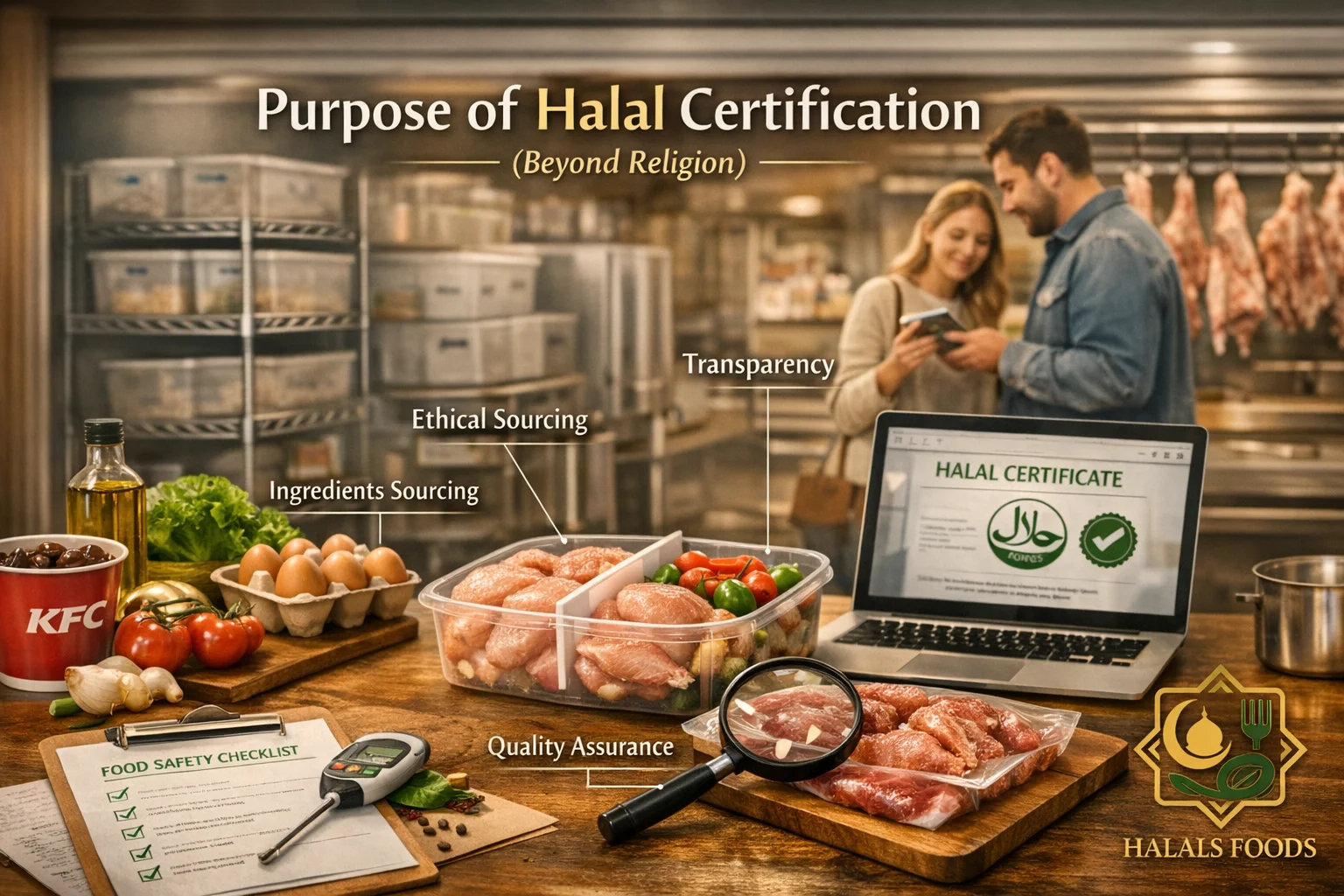
The purpose of Complete halal certification guide is not just religious compliance.
It also ensures:
- Food safety
- Transparency
- Ethical sourcing
- Quality assurance
That’s why even non-Muslim consumers trust halal products.
Global Halal Standards & Accreditation Bodies
To truly understand Complete halal certification guide, you need to know the key players:
- JAKIM (Malaysia) – very strict, globally respected
- HFA (UK)
- IFANCA (USA)
- ESMA (UAE)
Each has different requirements — and this affects your business strategy.
You Might Be Overlooking This…
Here’s something many businesses realize too late:
👉 Halal certification is not just about passing — it’s about maintaining consistency.
One small mistake:
- New supplier
- Changed ingredient
- Process modification
And your certification can be at risk.
Internal Linking Suggestions
You can also read:
- Is McDonald’s Halal in USA
- Are Pringles Halal? Complete Guide
- Is Burger King Halal in 2026
Before You Move Forward…
At this point, you understand:
- What Complete halal certification guide really means
- The process behind it
- The biggest hidden challenges
But here’s the real question:
👉 How do you actually pass certification smoothly without costly mistakes?
👉 And what strategies separate successful businesses from those who fail?
Now that you understand the basics, let’s get into what really matters.
Because knowing the process is one thing…
But successfully passing halal certification without delays, rejection, or loss is something else entirely.
Let’s be honest for a second.
Most businesses don’t fail because they don’t try.
They fail because they don’t prepare smartly.
And this part of Complete halal certification guide is where the real difference happens.
The Smart Strategy Most Successful Businesses Use
Here’s something interesting.
Top-performing companies don’t treat halal certification as a “task.”
They treat it like a system built into their business.
That means:
- Halal is considered during product development
- Suppliers are selected carefully from the start
- Processes are designed with compliance in mind
👉 Not adjusted later as a fix.
This mindset alone can save you months of delays and thousands in costs.
Step-by-Step Winning Framework for Complete halal certification guide.
Let’s break it down into a real-world, actionable framework.
Step 1: Start With Ingredient Transparency (Not Guesswork)
Here’s where many businesses go wrong.
They assume ingredients are halal without verifying.
Big mistake.
Instead, do this:
- Ask suppliers for halal certificates
- Verify source of emulsifiers, enzymes, and gelatin
- Maintain a traceable ingredient list
💡 Pro Tip: If you can’t trace it, don’t use it.
Step 2: Build a Halal-Compliant Supply Chain
Your product is only as halal as your weakest supplier.
So:
- Work only with certified vendors
- Avoid suppliers with unclear documentation
- Keep backup suppliers ready
Because if one supplier fails — your entire certification can collapse.
Step 3: Design Your Facility the Right Way
Let’s be real…
Auditors don’t just look at ingredients — they inspect your entire environment.
So your facility must:
- Prevent cross-contamination
- Have separate storage for halal/non-halal (if applicable)
- Use properly cleaned equipment
Even shared utensils can cause rejection.
Step 4: Train Your Team (This Is Often Ignored)
Here’s the part most people ignore…
Your employees are part of your halal system.
If they don’t understand:
- Handling rules
- Cleaning procedures
- Ingredient sensitivity
👉 You’re at risk.
Simple training sessions can make a massive difference.
Step 5: Do a Pre-Audit (Game-Changer)
Before the official audit, smart businesses conduct an internal audit.
Why?
Because it helps you:
- Catch mistakes early
- Fix gaps before inspection
- Improve confidence
Think of it as a “practice test” before the real exam.
Common Mistakes That Can Destroy Your Certification
Let’s talk about real problems businesses face during Complete halal certification guide.
❌ Mistake 1: Assuming “Halal by Default”
Just because something doesn’t contain pork or alcohol doesn’t mean it’s halal.
Hidden ingredients matter.
❌ Mistake 2: Ignoring Cross-Contamination
Even a small contamination can:
- Invalidate certification
- Damage brand reputation
❌ Mistake 3: Poor Documentation
No records = no trust.
Auditors expect:
- Clear documentation
- Updated records
- Supplier verification
❌ Mistake 4: Choosing the Wrong Certification Body
Some certifications are not globally recognized.
So always choose based on your target market.
❌ Mistake 5: Treating Certification as One-Time
This is a big one.
Halal certification requires:
- Continuous monitoring
- Renewals
- Updates
Not just a one-time approval.
Real-Life Example (So You Understand Better)
Let’s make this practical.
Imagine a snack company applying for halal certification.
Everything looks fine…
But during audit, they discover:
👉 The flavoring agent contains alcohol-based solvent.
Result?
❌ Certification rejected
Now they must:
- Change supplier
- Reformulate product
- Reapply
This costs time, money, and trust.
How Small Businesses Can Compete With Big Brands
You might be thinking:
“Big companies can do this… but what about small businesses?”
Here’s the truth:
👉 Small businesses actually have an advantage.
Why?
Because they are:
- More flexible
- Faster to adapt
- Easier to manage
Start small:
- Certify one product
- Build a halal system gradually
- Expand step by step
Cost of Halal Certification (What to Expect)
Let’s talk money — because this matters.
Costs vary depending on:
- Business size
- Product type
- Certification body
- Location
Typical expenses include:
- Application fees
- Audit fees
- Annual renewal
But here’s the real perspective:
👉 It’s not a cost — it’s an investment in market access
Benefits of Following Complete halal certification guide Properly
When done right, halal certification gives you:
✔️ Access to Global Markets
Especially:
- Middle East
- Southeast Asia
- Muslim communities worldwide
✔️ Strong Consumer Trust
Halal label = credibility + transparency
✔️ Better Product Quality
Because standards improve:
- Hygiene
- Sourcing
- Production
✔️ Competitive Advantage
Many businesses still ignore halal compliance.
You don’t have to.
Future of Halal Certification (What’s Coming Next?)
Let’s look ahead.
The future of Complete halal certification guide is evolving fast.
Trends to watch:
- Digital halal tracking systems
- Blockchain-based supply chains
- Stricter global regulations
- Higher consumer awareness
Soon, halal won’t just be a niche — it will be a global standard of quality.
Quick Answers (Featured Snippet Style)
What is halal certification?
Halal certification is an official approval confirming that a product complies with Islamic dietary laws, covering ingredients, processing, and handling.
How long does halal certification take?
Typically 4 to 12 weeks, depending on business readiness and complexity.
Is halal certification mandatory?
Not legally mandatory in most countries, but essential for selling to Muslim consumers.
Can non-Muslim companies get halal certification?
Yes. Any business can apply if it meets halal requirements.
Final Verdict on Complete halal certification guide.
Let’s wrap this up honestly.
Halal certification is not just a religious label.
It’s a complete business system.
If you treat it casually → you’ll struggle.
If you treat it strategically → it becomes a powerful growth tool.
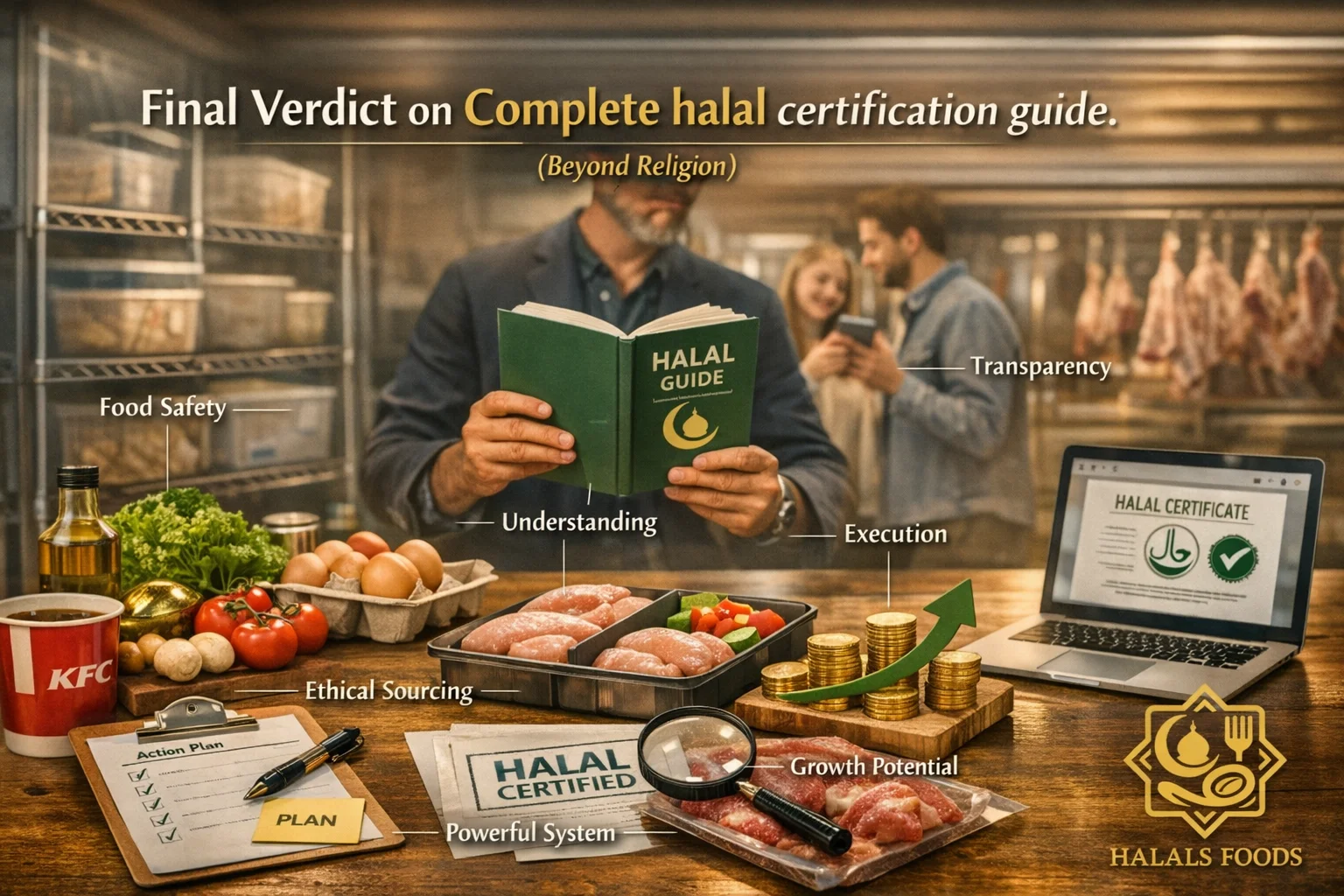
The difference is in:
- Preparation
- Understanding
- Execution
Conclusion
At the end of the day…
Complete halal certification guide is not about making things complicated.
It’s about doing things right, clean, and transparent.
Yes, the process can feel overwhelming at first.
But once you understand the system, it actually becomes:
👉 Simple
👉 Structured
👉 Profitable
And here’s the truth most people realize too late:
Businesses that invest in halal today…
Will dominate tomorrow’s global market.
Related Halal Food Guides You May Find Helpful
People searching for “Is [ Is Gelatin Halal? (2026 guide) ]” are also curious about other foods and ingredients. Below, you’ll find related halal food articles that clearly explain ingredient sources, how products are made, and whether they meet halal requirements.
More Related Articles [ Is Vanilla Extract Halal? ]
More Related Articles [ Is Rennet Halal or Haram? ]
More Related Articles [ What Is Zabiha Halal? ]
More Related Articles [ What Is HFSAA Certification? ]
More Related Articles [ Difference Between Halal & Kosher ]
More Related Articles [ How to Read Halal Labels ]
More Related Articles [ Are Airheads halal? ]
More Related Articles [ Traditional Saudi Halal Foods ]