Let’s Be Honest… This Question Is Bigger Than It Looks
Walk into any kitchen—whether in Pakistan, the UK, or the USA—and you’ll probably find a small bottle of vanilla extract sitting quietly on a shelf.
No one really questions it.
It’s just “flavor,” right?
But here’s where things get uncomfortable…
When you actually read the label, you see something that changes everything:
Alcohol (35%)
And suddenly, the simple question becomes serious:
👉 Is vanilla extract halal or are we unknowingly using something questionable every day?
This isn’t just about desserts anymore.
This is about what goes into your body, your family’s food, and ultimately your deen.
Why This Topic Confuses So Many Muslims
You might be thinking:
- “It’s just a few drops…”
- “It burns off in baking…”
- “Everyone uses it…”
And honestly, these are very common thoughts.
But here’s the part most people ignore:
👉 Halal isn’t based on habit. It’s based on principles.
And when it comes to alcohol in food, Islamic rulings are not casual.
So before jumping to conclusions, we need to break things down step by step, in a way that actually makes sense.
First Step: What Exactly Is Vanilla Extract?
To understand Is vanilla extract halal, we need to start from the basics.
Vanilla extract is made from:
- Vanilla beans (from a plant)
- Alcohol (ethanol)
- Water
That’s it.
Sounds simple… but the process is where things get serious.
The Part No One Talks About: How It’s Actually Made
Here’s how manufacturers produce vanilla extract:
- Vanilla beans are harvested and dried
- They are chopped or crushed
- Then soaked in alcohol solution
- Left for weeks or months
- Filtered and bottled
Now pause for a second.
👉 Alcohol is not accidental here.
👉 It’s not a tiny trace.
👉 It’s the main ingredient used to extract flavor
In fact, according to food standards:
Pure vanilla extract must contain at least 35% alcohol
That’s not small. That’s significant.
So… Let’s Address the Core Question
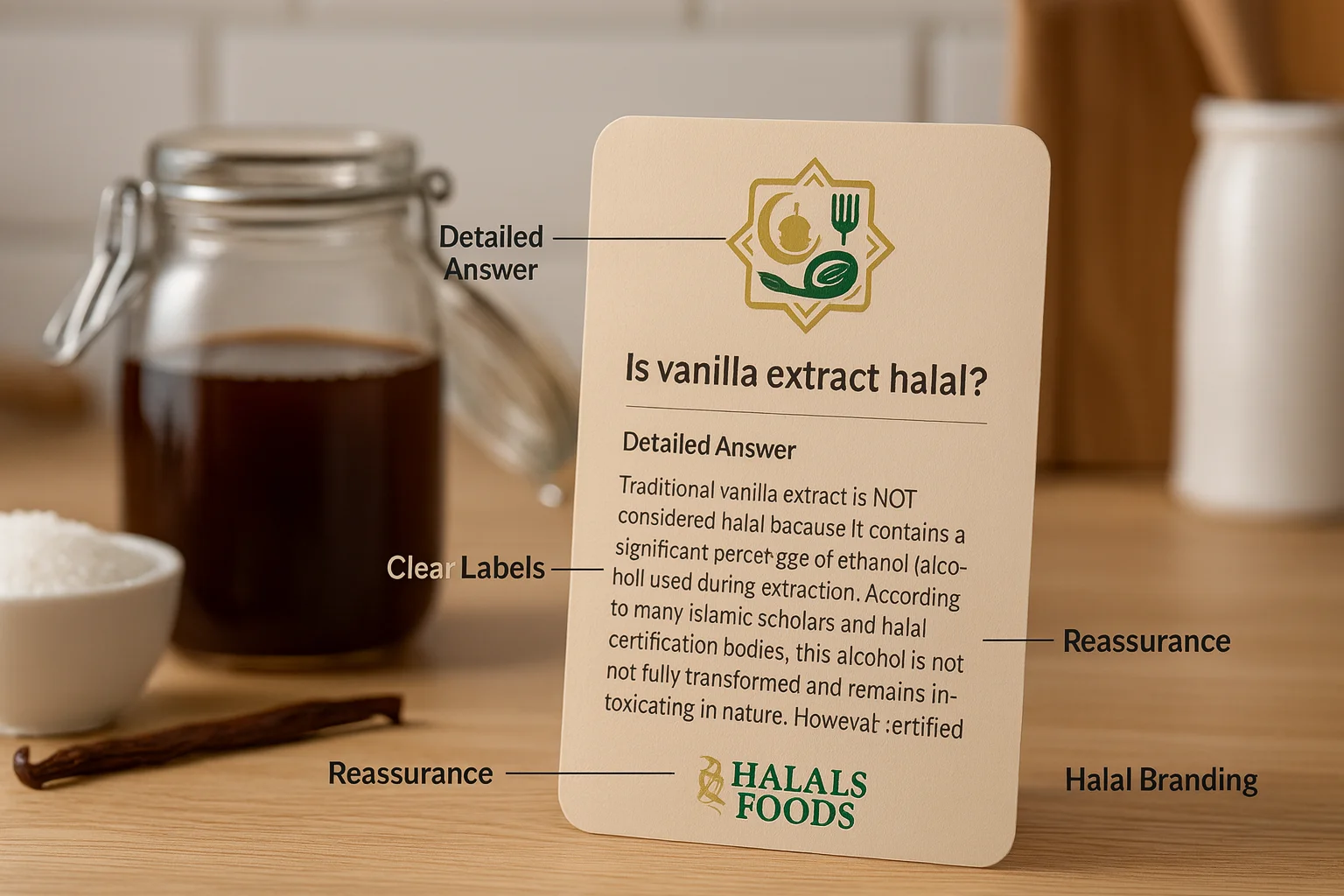
Is vanilla extract halal if it contains alcohol?
At this point, the concern becomes very real.
Because in Islam:
- Intoxicants (khamr) are haram
- Anything that intoxicates in large amounts is forbidden—even in small amounts
This is based on a well-known hadith:
“Whatever intoxicates in large quantities, a small quantity of it is also haram.”
Now think about it carefully…
👉 Vanilla extract contains 35% alcohol
👉 That alcohol is intentionally added
👉 It remains in the product
So naturally, scholars take this very seriously.
But Wait… What About the “It Burns Off” Argument?
This is probably the most common justification.
People say:
👉 “Don’t worry, when you bake, the alcohol disappears.”
Sounds comforting… but is it true?
Let’s be real.
Here’s what science actually says:
- Alcohol does not fully evaporate during cooking
- Even after baking, some percentage remains
- In many recipes, vanilla is added after cooking
So the idea that it “completely disappears” is not accurate.
And from a halal perspective:
👉 Even a remaining amount matters if the source is haram.
Let’s Simplify It: Ingredients Breakdown
To make things crystal clear, here’s a simple view:
Vanilla Extract Components:
- Vanilla beans → ✅ Halal
- Alcohol (ethanol 35%) → ❌ Problematic
So the issue is not vanilla itself.
👉 It’s the alcohol used in the extraction process
You Might Be Thinking… “But We Use So Little”
This is another very common thought.
“Just a few drops in cake… how can that matter?”
But Islamic rulings don’t work like that.
The principle is:
👉 If the base ingredient is haram, quantity doesn’t make it halal
Even if:
- You use only a few drops
- You can’t taste the alcohol
- It doesn’t intoxicate you
The ruling is based on the source and nature, not just the effect.
Where the Confusion Really Begins
Here’s something interesting…
Not all scholars say the exact same thing.
And that’s where people get confused.
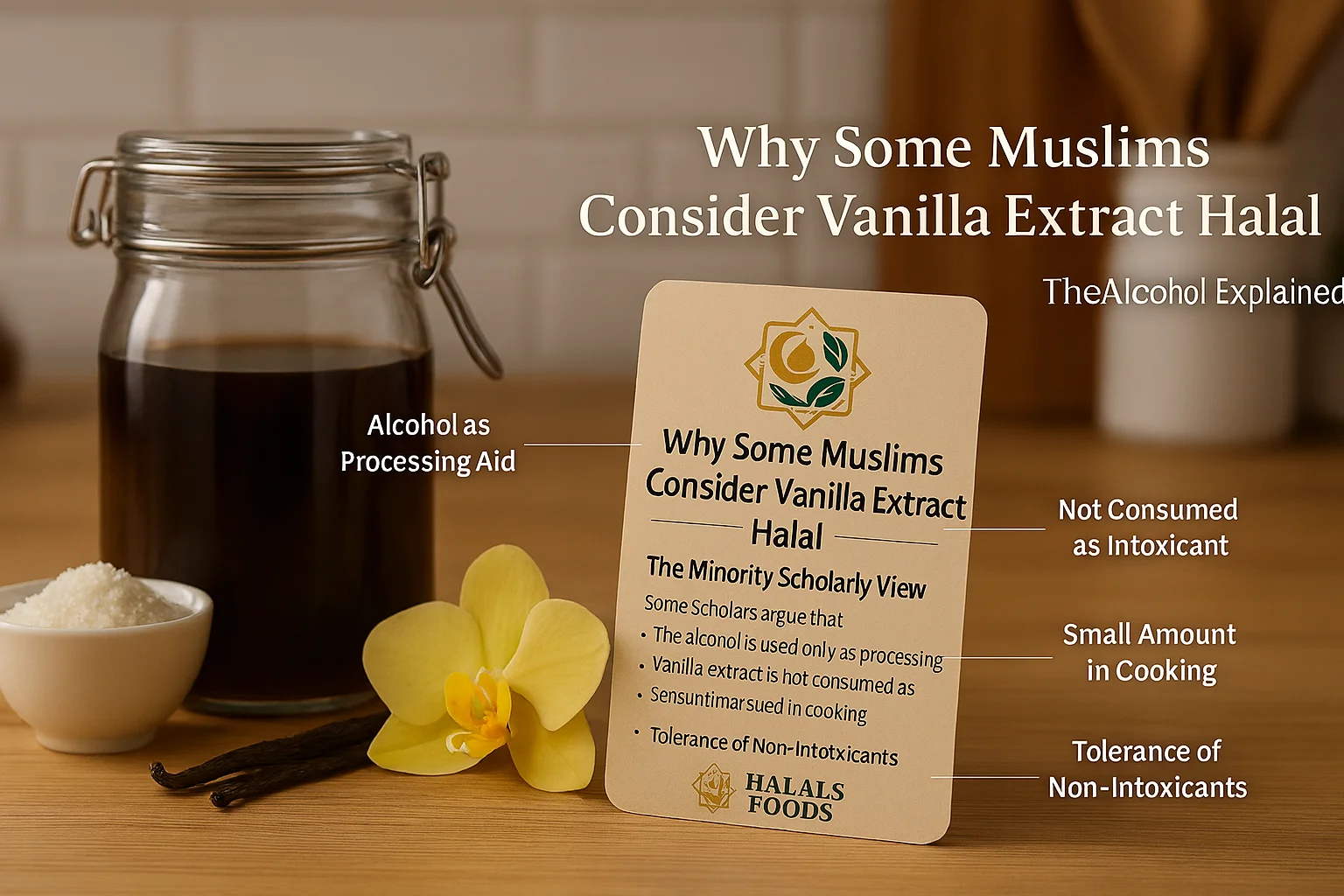
Some scholars argue:
- Alcohol is used as a processing agent
- Vanilla extract is not consumed as a drink
- The final dish is not intoxicating
Because of this, a minority opinion allows it under certain conditions.
But Here’s the Important Detail Most People Miss
Even those scholars who allow it usually say:
👉 It’s not ideal
👉 It should be avoided if alternatives exist
And today?
Alternatives are everywhere.
Modern Reality: We Have Better Options Now
This isn’t the 1900s anymore.
Today, you can easily find:
- Alcohol-free vanilla flavor
- Halal-certified vanilla
- Vanilla powder
- Vanilla paste
So the question changes from:
👉 “Is it allowed?”
To:
👉 “Why take the risk when halal options exist?”
Let’s Talk About Real Life (Because This Matters)
Imagine this situation:
You bake a cake for your family.
You used vanilla extract without thinking.
Now later you find out it contains 35% alcohol.
That feeling of doubt?
That hesitation?
That’s exactly why this topic matters.
Because halal is not just about legality…
👉 It’s about peace of heart
The Industry Side Most People Don’t See
Here’s another layer many ignore.
Vanilla extract is often produced in factories that also handle:
- Alcohol-based flavorings
- Rum extracts
- Liquor infusions
This creates risk of:
👉 Cross-contamination
👉 Shared equipment
👉 No halal control
So even beyond ingredients, the process itself raises concerns
Why Halal Certification Matters More Than Ever
You might notice something:
Most vanilla extract bottles do NOT have halal certification.
That’s not random.
There’s a reason.
Halal organizations usually reject it because:
- Alcohol is a primary ingredient
- It is not transformed (no istihala)
- It remains intoxicating in nature
So when a product lacks halal certification, it’s not always harmless.
Sometimes…
👉 It’s a silent warning.
Let’s Pause for a Second…
At this point, you now understand:
- What vanilla extract contains
- How it’s made
- Why alcohol is the issue
- What science says about evaporation
- Why scholars differ
But we still haven’t fully answered something important…
👉 If it’s so questionable…
👉 Why do so many Muslims still use it confidently?
And more importantly…
👉 Are all types of vanilla the same?
Because here’s the twist most people don’t expect…
Not every “vanilla” product has the same ruling.
Some are clearly haram.
Some are clearly halal.
And some sit right in the grey zone.
👉 In PART 2, we’ll break down:
- Different types of vanilla (extract vs flavor vs powder)
- Which ones are 100% halal
- Which brands you should avoid
- Scholar opinions in more depth
- Final clear verdict you can actually follow in daily life
Because the real answer to Is vanilla extract halal isn’t just yes or no…
…it’s understanding the full picture.
Not All “Vanilla” Is the Same — And This Changes Everything
Let’s clear one big misunderstanding right away:
👉 Every vanilla product is NOT equal
This is where many Muslims get it wrong.
They hear “vanilla” and assume all forms carry the same ruling.
But in reality, the halal status completely depends on how that vanilla is made.
So if you’re still wondering Is vanilla extract halal, the real answer starts here:
👉 You must differentiate between types of vanilla products
The 5 Types of Vanilla (Most People Don’t Know This)
Here’s a simple breakdown that will instantly remove confusion:
1. Vanilla Extract
- Contains: ~35–40% alcohol
- Purpose: Strong flavor extraction
- Halal status: ❌ Mostly NOT halal
This is the standard product found in supermarkets.
2. Vanilla Flavoring (Imitation Vanilla)
- Contains: May or may not contain alcohol
- Often synthetic
- Halal status: ⚠️ Depends on ingredients
👉 Always check label: if ethanol is listed → avoid
3. Vanilla Paste
- Thick, syrup-like
- Made with vanilla seeds + sugar + binder
- Usually low or no alcohol
👉 Halal status: ✅ Generally halal (verify brand)
4. Vanilla Powder
- Made from dried vanilla beans
- No alcohol used
👉 Halal status: ✅ 100% halal
5. Vanilla Essence
- Cheap, artificial version
- Alcohol content varies
👉 Halal status: ⚠️ Check carefully
Quick Comparison Table (Simple + Practical)
| Type | Alcohol Content | Halal Status |
|---|---|---|
| Vanilla Extract | 35–40% | ❌ Not halal |
| Vanilla Flavor | Low / varies | ⚠️ Check |
| Vanilla Paste | Very low / none | ✅ Usually halal |
| Vanilla Powder | 0% | ✅ Halal |
| Vanilla Essence | Varies | ⚠️ Check |
So Now Ask Yourself Again…
👉 Is vanilla extract halal?
At this point, it should be much clearer:
- The issue is NOT vanilla
- The issue is alcohol content
Why Many Scholars Say “Avoid It Completely”
Let’s go deeper—but in a simple way.
Most scholars reject vanilla extract because:
1. Alcohol Is Intentionally Added
Not accidental. Not trace.
👉 It’s a core ingredient
2. It Remains in the Final Product
No chemical transformation.
👉 Ethanol stays ethanol.
3. It Matches the Definition of Khamr
- Intoxicating in large quantity
- Present in measurable form
👉 This triggers the hadith ruling directly.
4. No Necessity (Darurah)
This is very important.
Islam allows exceptions in necessity.
But here?
👉 Halal alternatives are easily available
So the “need” argument doesn’t apply anymore.
But Why Do Some Scholars Still Allow It?
Let’s be fair and balanced.
Some scholars take a more flexible view.
Their reasoning:
- It’s not consumed as alcohol
- Used in very small amounts
- Final food is not intoxicating
They treat it as a processing ingredient, not a drink.
But Here’s the Reality Check
Even those scholars usually say:
👉 “If halal alternatives exist, choose them”
So in practice…
👉 Both strict and lenient opinions point toward the same safer choice.
What About Cakes, Biscuits, and Ice Cream?
Now comes the practical concern.
You might ask:
👉 “If I eat bakery items, what about those?”
Here’s the honest answer:
Many commercial products:
- Use vanilla extract
- Use alcohol-based flavorings
- Do NOT mention it clearly
So unless the product is:
👉 Halal certified
👉 Or clearly alcohol-free
There is always uncertainty
This Is Why Halal Labels Matter So Much
In countries like the USA or UK:
- Halal is NOT strictly regulated
- Alcohol-based ingredients are common
- Labels can be vague (“natural flavors”)
So you cannot rely on assumptions.
👉 Certification = clarity
👉 No certification = doubt
A Simple Rule You Can Follow Daily
Instead of overthinking every product, just follow this:
👉 If it says “vanilla extract” → Avoid
👉 If it says “alcohol-free vanilla” → Safe
👉 If it’s halal certified → Best option
That’s it.
No confusion.
Real-Life Scenario (This Will Help You Decide)
Imagine two options:
Option A:
Cake made with vanilla extract (35% alcohol)
Option B:
Cake made with halal vanilla powder
Now ask yourself honestly:
👉 Which one gives you peace of mind?
That feeling matters.
Because halal is not just about rules…
👉 It’s about confidence in what you eat
Something Most Articles Don’t Tell You
Here’s the part people usually skip…
Even if someone follows the lenient opinion:
👉 Continuously choosing doubtful things can affect your mindset
You slowly become comfortable with grey areas.
And over time…
👉 Your halal sensitivity weakens
That’s why many scholars emphasize:
👉 Stay away from doubtful matters when possible
The Psychological Side of Halal Choices
Let’s be real for a moment…
When you knowingly avoid something doubtful:
- You feel lighter
- You feel confident
- You feel aligned with your values
But when you ignore doubts?
- There’s always hesitation
- A small discomfort stays
And that’s not something you want in your daily food.
Internal Linking Suggestions
You can also read:
- “Is gelatin halal or haram”
- “Is rennet halal in cheese”
- “Are natural flavors halal”
These topics connect closely with hidden ingredients and halal awareness.
Final Verdict — Clear & Straight
After everything we’ve discussed, here is the honest answer:
👉 Is vanilla extract halal?
❌ In most cases: NO, it is not halal
Because:
- Contains 35% alcohol
- Alcohol is intentionally used
- It remains in final product
- Not accepted by major halal authorities
The Smarter Choice Moving Forward
Instead of debating endlessly, take a practical approach:
👉 Choose:
- Vanilla powder
- Halal-certified flavoring
- Alcohol-free vanilla
👉 Avoid:
- Standard vanilla extract
Final Thought (Let’s End This Realistically)
You don’t need to make life difficult.
Islam is not about stress.
But it does guide you toward what’s clean, clear, and safe.
And in this case?
👉 The safe path is obvious.
So next time you’re holding that small bottle in your hand…
You won’t feel confused anymore.
Because now you truly understand:
👉 Is vanilla extract halal — not just as a question… but as a clear decision.
Related Halal Food Guides You May Find Helpful
People searching for “Is [ Is Rennet Halal or Haram? ]” are also curious about other foods and ingredients. Below, you’ll find related halal food articles that clearly explain ingredient sources, how products are made, and whether they meet halal requirements.
more related [ Is E120 Halal ]