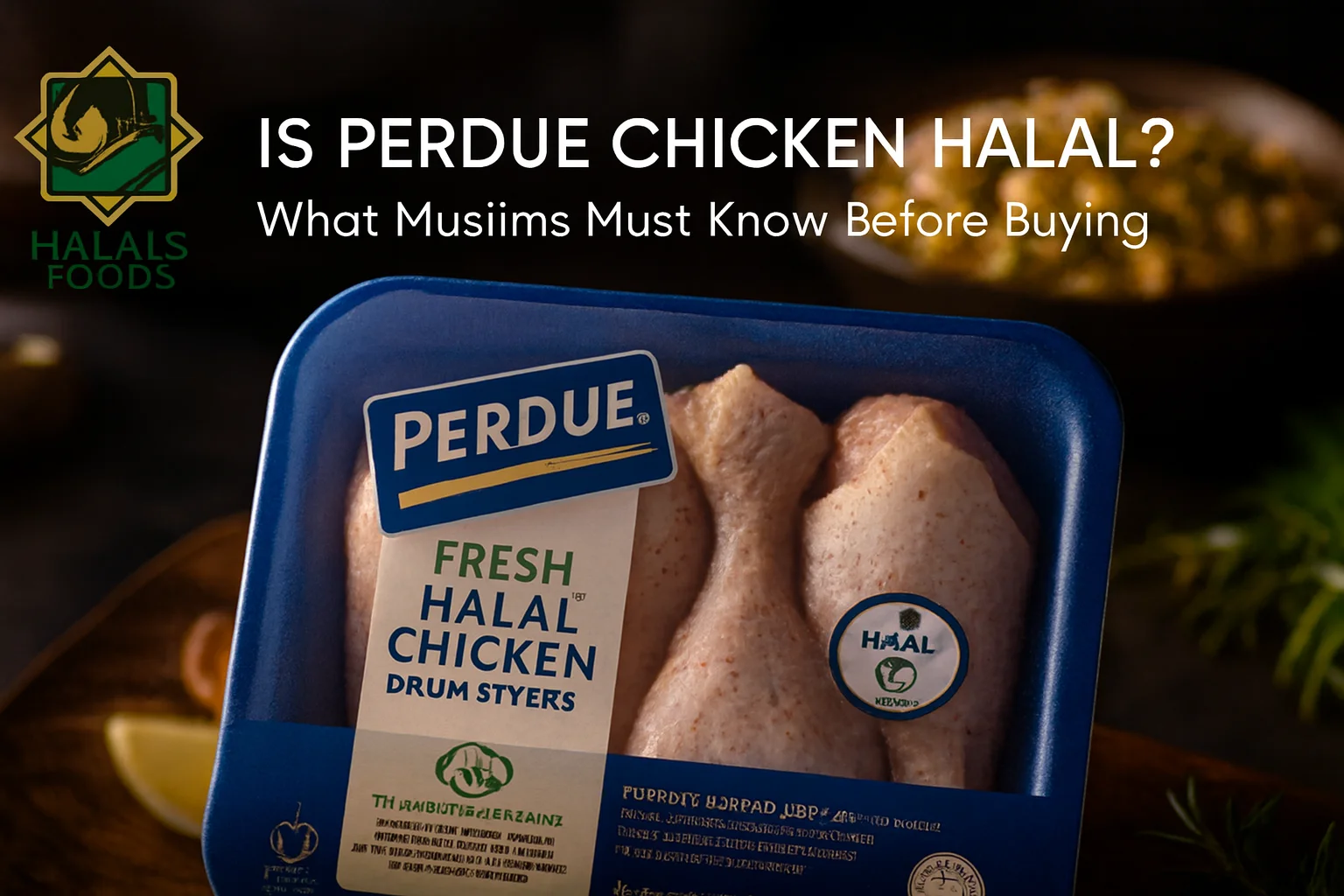
Let’s be real for a second…
When you walk into a grocery store in the USA, you see Perdue chicken everywhere. Clean packaging, bold claims like “No Antibiotics Ever”, “100% vegetarian fed”, and everything looks… trustworthy.
But here’s the uncomfortable question most people quietly think about:
👉 Is Perdue chicken halal?
Because for Muslims, this isn’t just about health or quality.
It’s about halal vs haram — something that directly impacts daily life.
And honestly? This topic is way more confusing than it should be.
Why Everyone Is Asking: Is Perdue chicken halal
You might be confused about this, and you’re not alone.
Some people say:
- “It’s just chicken, of course it’s halal.”
- Others say:
- “If it’s not certified, it’s haram.”
And then there’s that middle group saying:
- “Maybe it’s okay… Allah knows best.”
So what’s actually true?
Here’s the part most people ignore:
👉 Halal is NOT just about ingredients.
👉 Halal is mostly about HOW the animal is slaughtered.
That’s where everything changes.
Quick, Straight Answer (No Confusion)
If you just want the clear answer:
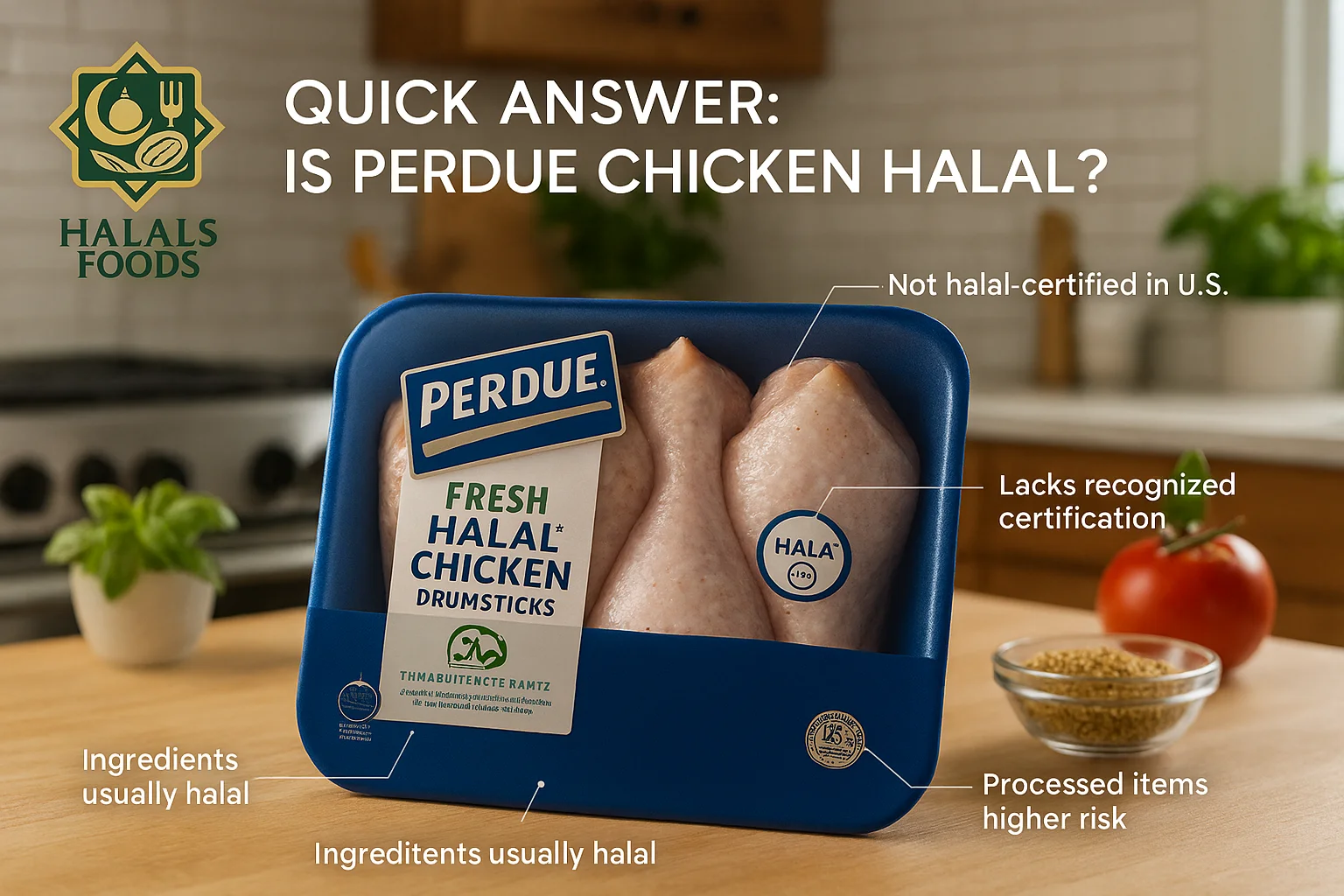
❌ Is Perdue chicken halal? → NO, it is NOT halal-certified in the USA.
Now wait…
That doesn’t mean everything about it is haram automatically.
But it DOES mean:
👉 It does not meet verified halal (Zabiha) standards
And that’s a big deal in Islam.
The Big Misunderstanding: “Ingredients Look Halal, So It Must Be Halal”
Let’s break this myth quickly.
When you check plain Perdue chicken, you’ll usually see:
- Chicken
- Water
- Salt
Nothing suspicious, right?
No pork. No alcohol. No weird additives.
So naturally, many people think:
👉 “This looks halal enough.”
But here’s the reality:
Even 100% clean ingredients = NOT halal if slaughter is wrong.
This is where most Muslims get it wrong.
What Actually Makes Chicken Halal?
Before judging Is Perdue chicken halal, you need to understand basic halal rules.
1. The Animal Must Be Halal
Chicken = Halal animal ✅
So far, so good.
2. Slaughter Must Be Done Properly (Zabiha)
This is the core requirement:
- A Muslim (or اهل الكتاب with strict conditions)
- Must say “Bismillah, Allahu Akbar”
- Cut throat (not kill by machine blindly)
- Blood must be drained
- Animal must be alive at time of slaughter
Now ask yourself:
👉 Does Perdue guarantee ANY of this?
We’ll get to that…
3. No Cross-Contamination
Even if slaughter was okay:
- Same machines?
- Same factory?
- Mixed processing?
That creates doubt (shubha).
How Perdue Chicken Is Actually Processed (Reality Check)
Here’s where things get serious.
Perdue is a mass production poultry company.
We’re talking:
- Thousands of chickens per hour
- Automated slaughter systems
- Industrial processing lines
This is not a small halal butcher saying Bismillah on each chicken.
The Stunning Issue
In most US factories:
- Chickens are electrically stunned
- Then slaughtered quickly
Problem?
👉 In Islam:
- If the chicken dies BEFORE the cut → ❌ Haram
And here’s the problem:
👉 Perdue does NOT confirm birds are always alive before slaughter.
That alone creates major doubt.
Machine Slaughter vs Islamic Method
Let’s be honest…
Do you really think someone is saying Bismillah on each chicken in a high-speed factory?
Highly unlikely.
Most systems:
- Use rotating blades
- Process birds automatically
- No individual attention
From an Islamic perspective:
👉 This breaks the conditions of halal slaughter.
“But It’s an American Company… Doesn’t That Count?”
This is another common argument.
Some people say:
👉 “USA is Christian country → أهل الكتاب → so it’s halal”
Sounds logical at first.
But here’s the deeper reality:
Modern slaughterhouses are NOT like traditional Christian slaughter.
- Workers may not be religious
- Machines do the killing
- No mention of God
- No intention
That’s why many scholars say:
❌ This ruling does NOT apply to modern factory meat
The Silent Red Flag: No Halal Label
Here’s something very important.
Brands LOVE to promote what they have.
- Organic? → Big label
- Vegan? → Big label
- Gluten-free? → Big label
Now think…
👉 If Perdue chicken was halal…
Why is there:
- ❌ No halal logo?
- ❌ No certification?
- ❌ No claim anywhere?
That silence says a lot.
Processed Perdue Products = Even More Risk
Now let’s go deeper.
Things like:
- Nuggets
- Strips
- Marinated chicken
These contain:
- Natural flavors
- Preservatives
- Modified starch
- Enzymes
Here’s the issue:
👉 “Natural flavors” can come from:
- Plants (halal)
- Animals (unknown)
- Alcohol-based extraction (problem)
And guess what?
👉 Perdue does NOT disclose sources.
So now you have:
⚠️ Slaughter doubt + Ingredient doubt = Double uncertainty
Why Some Muslims Still Eat It (Let’s Be Honest)
We should talk about reality, not just theory.
Some Muslims still eat Perdue chicken because:
1. It’s Easily Available
Halal meat is not always nearby.
2. It’s Cheaper
Halal meat can be expensive.
3. “It Looks Fine”
No visible haram ingredients.
4. They Follow Lenient Opinions
Some scholars allow flexibility in non-Muslim countries.
But here’s the thing…
👉 Just because something is common doesn’t make it correct.
The Principle Most People Ignore
There’s a powerful hadith:
“Leave what makes you doubt for what does not make you doubt.”
Now apply that to:
👉 Is Perdue chicken halal
- No certification
- No slaughter confirmation
- No transparency
That clearly falls into:
⚠️ Doubtful (Shubha)
What Smart Muslim Consumers Are Doing Today
Things are changing fast.
More Muslims now:
- Buy from halal butchers
- Order online halal meat
- Check certification logos
- Avoid big non-certified brands
Because awareness is growing.
And honestly…
👉 Once you understand the process, it’s hard to ignore.
A Quick Reality Comparison
Let’s simplify:
| Factor | Perdue Chicken |
|---|---|
| Halal Certified | ❌ No |
| Zabiha Slaughter | ❌ Not confirmed |
| Bismillah Recited | ❌ Not confirmed |
| Machine Slaughter | ✅ Yes |
| Cross Contamination Risk | ⚠️ Possible |
Now ask yourself honestly…
👉 Would you feel 100% confident eating it?
Internal Links You Should Explore
If you want deeper clarity, you can also read:
- Is Tyson Chicken Halal in the USA?
- Is Sanderson Farms Halal?
- Is Beef Gelatin Halal or Haram?
These will help you understand the bigger halal food system.
Before You Decide… Read This Carefully
Here’s where it gets interesting…
Not all scholars completely agree on every detail.
Some allow certain exceptions.
Some strictly reject all non-certified meat.
And this creates confusion for everyday Muslims.
So the real question becomes:
👉 Is there ANY situation where eating Perdue chicken could be acceptable?
👉 What do different Islamic schools actually say about this?
👉 And what should YOU personally do in real life?
So now you’ve seen the surface-level answer.
But let’s go deeper—because this is where most articles stop… and where real clarity actually begins.
You already know the big question:
👉 Is Perdue chicken halal?
But now we’re going to answer the harder questions:
- What do scholars REALLY say?
- Is there any situation where it’s allowed?
- What should YOU actually do in daily life?
Let’s break it down honestly.
The Scholar Divide: Why Opinions Are Not the Same
Here’s something many people don’t realize:
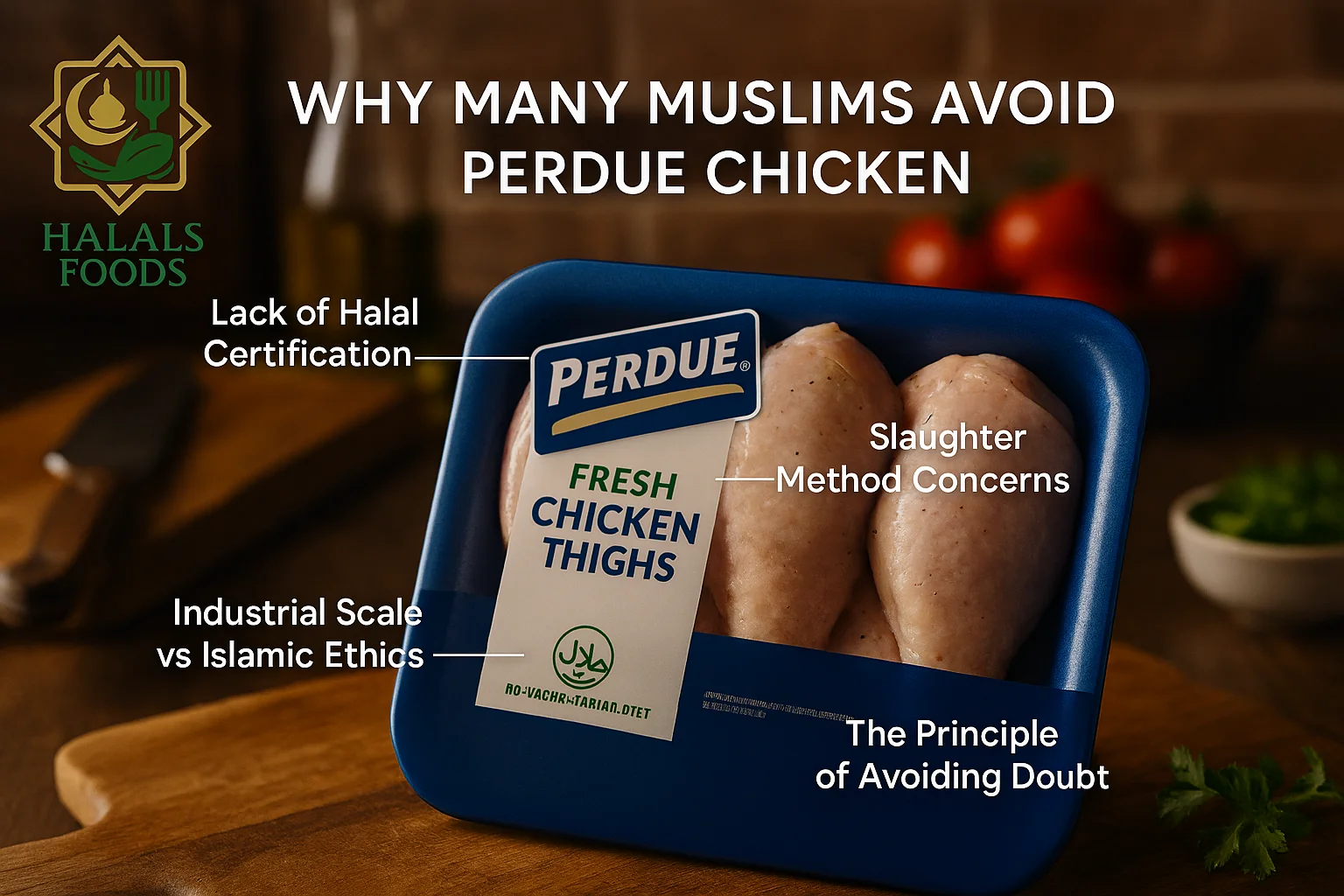
👉 There is no single global fatwa on modern factory chicken.
Different scholars look at:
- Slaughter method
- Country
- Certainty level
- Necessity
And then give rulings based on that.
Strict Opinion (Majority View)
Most modern scholars say:
❌ Is Perdue chicken halal → Not permissible
Why?
Because:
- No confirmed Zabiha slaughter
- No Bismillah per animal
- Machine killing system
- No Muslim supervision
- High doubt (shubha)
This includes many scholars from:
- Hanafi school
- Shafi’i school
- Contemporary halal certification bodies
Their logic is simple:
👉 “If you are NOT sure it’s halal → You should avoid it.”
Lenient Opinion (Minority View)
Some scholars allow flexibility, but with conditions.
They say:
✔ Meat from Ahl al-Kitab (People of the Book) can be halal
✔ Especially in non-Muslim countries
✔ If no clear haram element is present
BUT… here’s what people ignore:
👉 These scholars were referring to traditional slaughter, not factory automation.
Even many lenient scholars today add:
⚠️ If slaughter is machine-based with no God’s name, then it becomes doubtful or impermissible.
The “Necessity” Argument – Is It Really Valid?
Let’s talk about real-life situations.
Some people say:
“I don’t have access to halal meat, so I eat Perdue.”
This is called darurah (necessity) in Islam.
When Necessity Actually Applies
Islam allows exceptions ONLY when:
- You are in extreme difficulty
- No halal option exists
- Your health or survival is affected
Example:
- Stranded area
- No halal food for days
- Only option is non-halal meat
Reality in the USA (Important)
Let’s be honest…
Today in most U.S. cities:
- Halal stores exist
- Online halal delivery exists
- Muslim communities exist
So the “no option” argument is often weak.
👉 Convenience ≠ Necessity
That’s a big difference.
Hidden Risk: Cross-Contamination Most People Ignore
Here’s the part most people completely overlook.
Even if (hypothetically) slaughter was okay…
There’s still:
- Shared machines
- Shared cutting tools
- Mixed processing lines
That means:
👉 Halal meat can get contaminated with non-halal products.
And Perdue:
❌ Does NOT provide halal-segregated processing
So risk remains.
Understanding Halal Certification (Why It Matters More Than You Think)
Let’s simplify this.
Halal certification is NOT just a logo.
It means:
- Muslim inspectors check process
- Slaughter is monitored
- Ingredients are verified
- Regular audits happen
Without certification:
👉 You are relying on assumptions
And Islam discourages that in food matters.
Trusted Halal Authorities (Examples)
Globally recognized organizations include:
- IFANCA
- HFSAA
- HMC
- JAKIM (Malaysia)
Now ask:
👉 Does Perdue have certification from ANY of these?
❌ No
Big Brand vs Halal Brand: The Real Difference
Let’s compare quickly.
Perdue (Mainstream Brand)
- Focus: Mass production
- Goal: Efficiency + profit
- Religious compliance: ❌ Not priority
Halal-Certified Brands
- Focus: Religious compliance
- Slaughter: Supervised
- Transparency: High
👉 That’s the real difference.
It’s not about “better chicken”
It’s about correct process
A Practical Everyday Scenario
Let’s make it real.
You go to a grocery store.
Two options:
- Perdue chicken (cheap, easy)
- Halal-certified chicken (slightly expensive)
Now think:
👉 Which one gives you peace of mind?
Because halal is not just physical…
It’s also spiritual comfort
Emotional Reality: Why This Decision Matters
Let’s be honest…
Food becomes part of your body.
Your energy.
Your عبادات (worship).
So when you knowingly eat something doubtful:
👉 It affects your قلب (heart) too.
This isn’t about fear.
It’s about conscious living.
The Most Balanced Approach (Practical Advice)
If you’re still unsure, follow this simple framework:
✅ Best Option
Always choose:
- Certified halal meat
- Trusted Muslim sources
⚠️ If Unsure
Avoid:
- Non-certified big brands
- Processed unknown products
🚨 Last Resort
Only consider doubtful meat if:
- No halal option exists
- Real necessity is present
Quick Final Answer (Featured Snippet Style)
👉 Is Perdue chicken halal?
❌ No, Perdue chicken is not halal-certified and does not meet standard Islamic (Zabiha) slaughter requirements in the USA.
Final Verdict (Clear & Honest)
After everything we’ve discussed:
- Ingredients → Mostly okay
- Slaughter → Not verified
- Certification → Not موجود (absent)
- Process → Industrial, not Islamic
👉 Final ruling:
❌ Is Perdue chicken halal → NO (Not Halal)
Simple Human Conclusion
Let’s end this simply.
You have two paths:
- Follow certainty
- Or live with doubt
And Islam always guides toward:
👉 Clarity over confusion
👉 Halal over questionable
So next time you see that Perdue package…
You won’t just see chicken.
You’ll understand the full story behind it.
FAQs (People Also Ask)
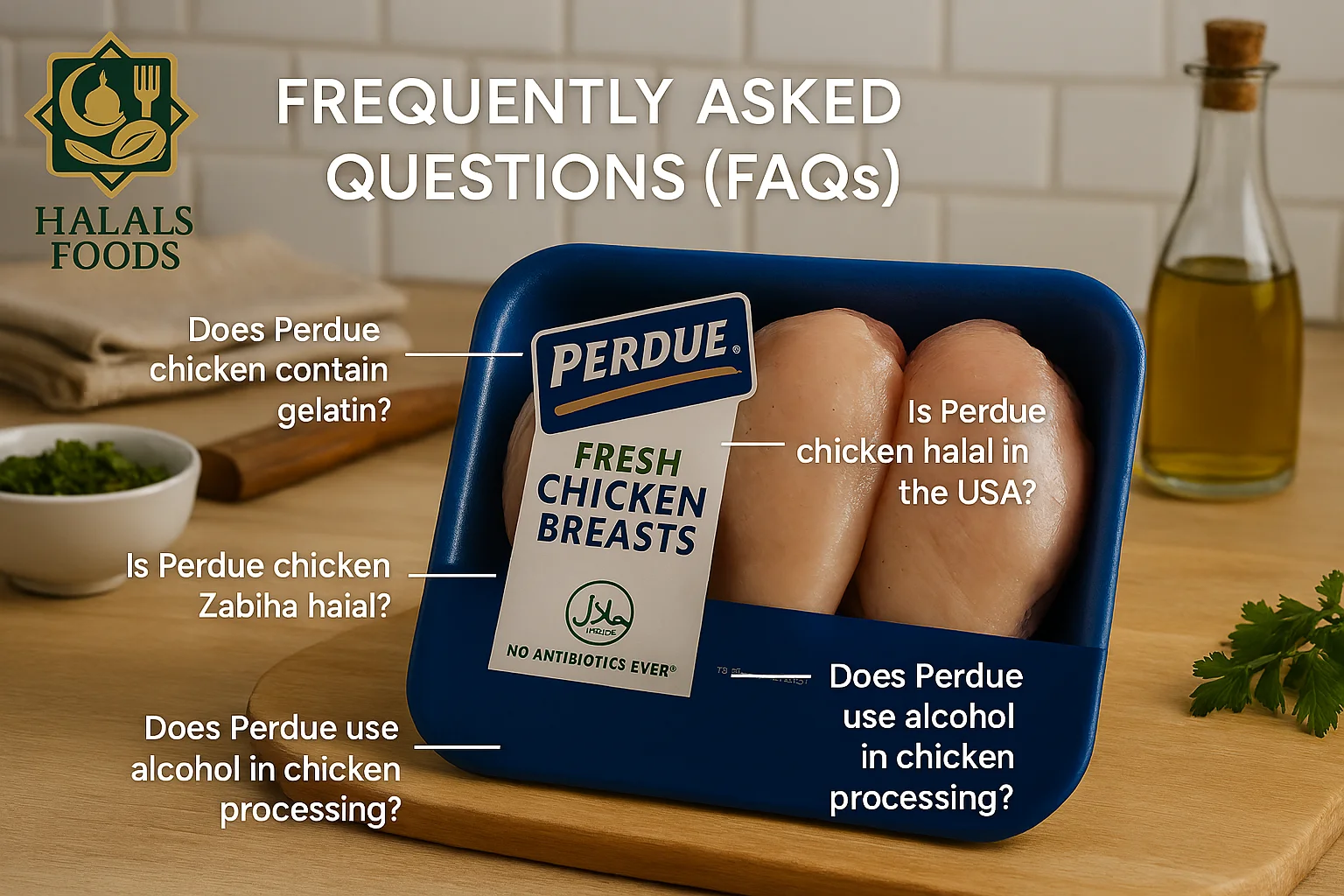
1. Is Perdue chicken halal in the USA?
No. It is not halal-certified and does not follow verified Islamic slaughter.
2. Can Muslims eat Perdue chicken?
Most scholars advise avoiding it due to lack of halal confirmation.
3. Is Perdue chicken Zabiha halal?
No. There is no evidence of Zabiha-compliant slaughter.
4. Does Perdue use alcohol or haram ingredients?
Plain chicken usually doesn’t, but processed products may contain doubtful “natural flavors.”
5. Is it allowed in emergency situations?
Only in genuine necessity, not convenience.
Related Guides You Should Read
People searching for “Is [ Is Tyson Chicken Halal in the USA? ]” are also curious about other foods and ingredients. Below, you’ll find related halal food articles that clearly explain ingredient sources, how products are made, and whether they meet halal requirements.
More.[ Is Sanderson Farms Halal? ]
More [ Is Beef Gelatin Halal? ]