Introduction
Fast food chains like Burger King are extremely popular worldwide, including among Muslim consumers living in non-Muslim countries. With thousands of outlets across the United States and globally, Burger King is often one of the most accessible food options when people are traveling, working late, or living in areas with limited halal restaurants. This convenience raises an important religious question for Muslims: Is Burger King halal?
The answer is not simple because Burger King’s halal status depends on ingredients, meat sourcing, cooking processes, certifications, and regional practices. In this in-depth article, we carefully analyze Burger King’s menu items, official brand statements, halal certification status, and Islamic guidelines so Muslim consumers can make an informed, confident decision.
Quick Answer: Is Burger King Halal?
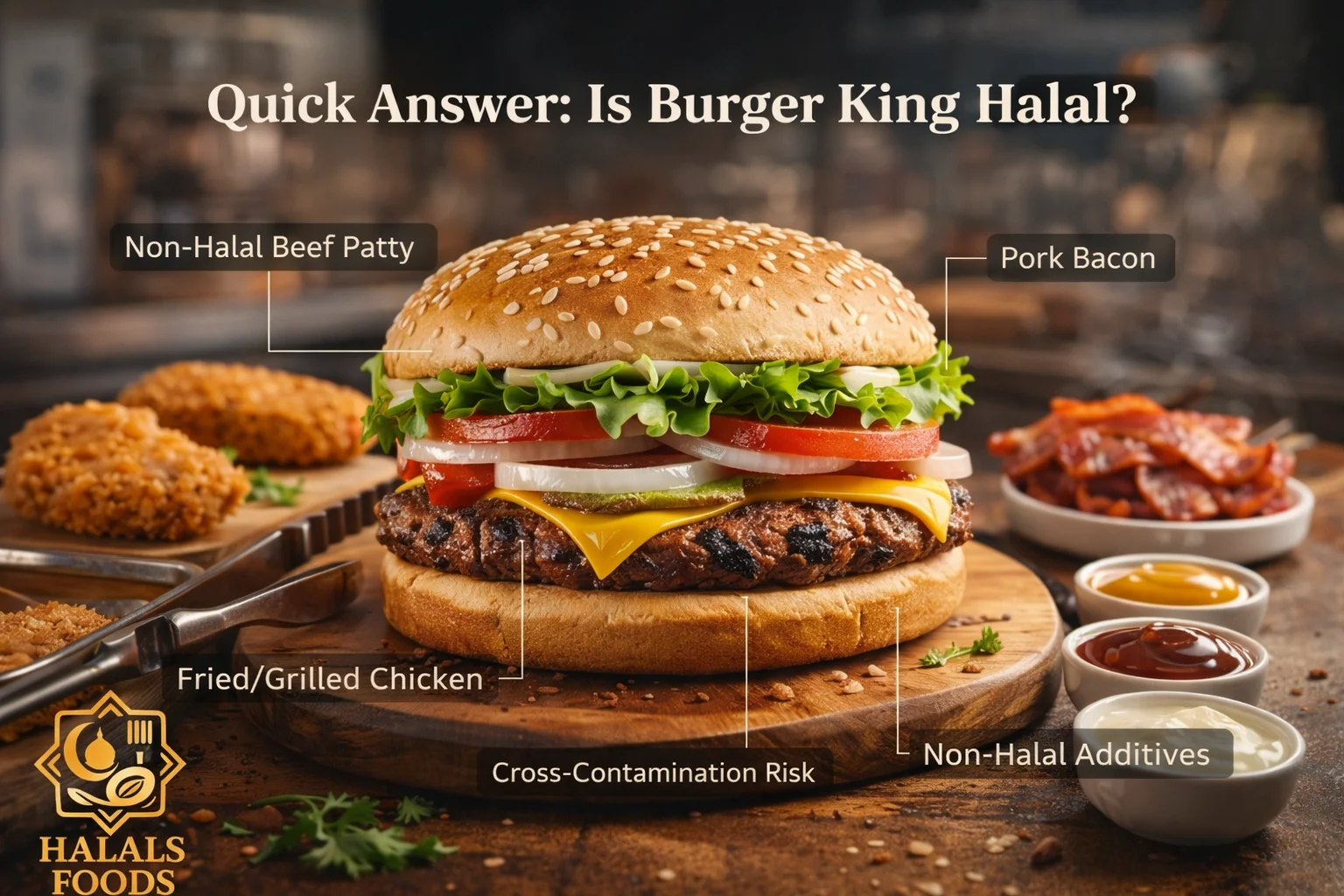
Short answer: ❌ Burger King is NOT halal in most countries, including the United States.
Burger King does not use halal-certified meat in the USA and does not follow Islamic slaughter (Zabiha) requirements for its beef or chicken. Additionally, cross-contamination risks, shared cooking equipment, and non-halal ingredients make most Burger King menu items unsuitable for Muslims seeking halal food. Some Burger King locations in Muslim-majority countries do offer halal-certified menus, but this does not apply globally.
Ingredient Breakdown: Are Burger King Ingredients Halal?
To determine whether Burger King is halal, we reviewed ingredient lists, allergen guides, and product labels available on Burger King’s official website and regional disclosures.
Core Meat Ingredients
Burger King’s primary non-vegetarian menu items include:
-
Beef patties (Whopper, burgers)
-
Chicken patties (fried and grilled)
-
Bacon (pork-based)
-
Sausages (in breakfast items)
From an Islamic perspective:
-
Beef and chicken are halal animals by nature
-
Pork and bacon are strictly haram
However, halal status does not depend on animal type alone. The method of slaughter and processing is equally critical.
Beef Patties: A Major Concern
Burger King beef patties in the USA are sourced from conventional suppliers, not halal-certified slaughterhouses. According to U.S. halal guidelines, halal beef must be:
-
Slaughtered according to Islamic law
-
Killed by cutting the throat, windpipe, and blood vessels
-
Slaughtered while invoking the name of Allah
Burger King does not confirm that its beef meets these criteria.
Chicken Products and Hidden Ingredients
Burger King chicken items often contain additional ingredients beyond meat, such as:
-
Modified food starch
-
Natural flavors
-
Yeast extract
-
Leavening agents
-
Emulsifiers
Natural Flavors and Halal Risk
“Natural flavors” is a legally vague term. It may be derived from:
-
Plants (generally halal)
-
Animals (source undisclosed)
-
Alcohol-based solvents (problematic in Islam)
Without halal certification, these ingredients remain doubtful (shubha).
Gelatin, Enzymes, and Additives
Some Burger King desserts and sauces may contain:
-
Gelatin (often pork-derived in the U.S.)
-
Enzymes (unknown source)
-
Mono- and diglycerides (animal or plant-based)
Islamic rulings require these additives to come from halal sources. Burger King does not provide halal assurance for them.
E-Numbers and Preservatives
Burger King U.S. menus do not openly list E-numbers, but preservatives commonly used include:
-
Sodium phosphates
-
Calcium propionate
These are usually halal if synthetically derived, but again, certainty is missing without certification.
Ingredient conclusion:
Even when pork is avoided, many Burger King ingredients remain doubtful due to lack of halal verification.
Manufacturing Process & Cross-Contamination Risks
How Burger King Food Is Prepared
Burger King operates on a centralized supply chain with standardized preparation methods. In most U.S. locations:
-
Meat is pre-processed by third-party suppliers
-
Food is cooked on shared grills and fryers
-
High-volume cooking prioritizes speed, not religious separation
Shared Grills and Fryers
One of the biggest halal concerns is cross-contamination. Burger King kitchens commonly use:
-
The same grills for beef, bacon, and sometimes pork sausage
-
The same fryers for chicken, fish, and non-halal items
This means halal and haram foods often come into direct contact.
Bacon and Pork Products
Burger King heavily uses:
-
Bacon strips
-
Pork-based breakfast items
These are prepared on the same equipment, increasing contamination risk.
Why This Matters in Islam
According to Islamic principles:
-
Halal food must not be contaminated with haram substances
-
Shared equipment without thorough halal cleansing invalidates halal status
Burger King does not offer dedicated halal kitchens or utensils in the USA.
Halal Certification Analysis
Is Burger King Halal Certified?
In the United States, Burger King is NOT halal certified.
There is no certification from recognized halal authorities such as:
-
IFANCA (Islamic Food and Nutrition Council of America)
-
HFSAA (Halal Food Standards Alliance of America)
-
Halal Monitoring Committee (HMC)
-
Zabiha Halal organizations
Regional Differences in Halal Certification
Burger King’s halal status varies by country:
| Region | Halal Status |
|---|---|
| USA | ❌ Not halal |
| UK | ❌ Mostly not halal |
| Canada | ❌ Not halal |
| Saudi Arabia | ✅ Halal-certified |
| UAE | ✅ Halal |
| Malaysia | ✅ Halal (JAKIM) |
This clearly shows that Burger King can offer halal food—but chooses not to in Western markets.
Why Certification Is Critical
Halal certification ensures:
-
Verified slaughter methods
-
Ingredient transparency
-
Muslim oversight and audits
Without certification, halal compliance cannot be assumed.
Official Statements From Burger King
We checked Burger King’s official website, customer support pages, and regional FAQs to understand the brand’s position on halal food.
Burger King USA Statement
Burger King USA clearly states that:
-
Their meat is not halal-certified
-
They do not cater to specific religious dietary laws
-
They cannot guarantee halal compliance
This transparency confirms that Burger King USA does not claim halal status.
Comparison With UK and Canada
-
UK: Burger King states most meat is not halal, though a few trial locations have experimented with halal menus.
-
Canada: Similar to the USA, Burger King Canada does not offer halal-certified meat.
Why This Silence Matters
If a global brand offers halal food, it usually:
-
Displays halal logos
-
Publishes halal FAQs
-
Highlights certification partners
Burger King does this only in Muslim-majority countries, not in the USA.
Why Some Muslims Consider Burger King Halal
Despite clear concerns, some Muslims still choose to eat at Burger King, especially in Western countries. This decision is usually based on contextual reasoning, specific menu choices, and lenient scholarly opinions, rather than full halal compliance.
Ingredient-Focused Interpretation
One common argument is that not all Burger King items contain meat. Some Muslims believe that if they avoid beef, chicken, and pork products, they can safely consume:
-
French fries
-
Hash browns
-
Salads (without meat)
-
Soft drinks
-
Certain desserts
They argue that these items do not directly involve haram meat, making them acceptable.
However, this reasoning often overlooks cross-contamination risks, which remain significant in fast-food kitchens.
“People of the Book” Opinion
Some Muslims rely on the interpretation that meat slaughtered by Christians or Jews may be permissible. Since Burger King sources meat from conventional suppliers in Christian-majority countries, they believe:
-
The meat is not slaughtered explicitly in the name of other deities
-
The animal is killed for food, not sacrificed
This opinion exists in classical fiqh, but many modern scholars argue it does not apply to industrial slaughterhouses, especially when stunning, mechanical killing, and lack of religious intent are involved.
Necessity and Convenience (Darurah)
In areas with limited halal food options, some Muslims invoke darurah (necessity). Burger King’s wide availability, affordability, and convenience make it a fallback option for:
-
Travelers
-
Students
-
Workers with limited lunch breaks
Even scholars who allow this approach emphasize that it should be temporary and avoided when halal alternatives exist.
Vegetarian and Plant-Based Menu Items
Burger King’s plant-based items, such as the Impossible Whopper, are sometimes viewed as halal-friendly. Some Muslims consider them acceptable because:
-
They contain no meat
-
They are marketed as vegetarian
However, Burger King itself states that these items are cooked on the same grills as meat unless requested otherwise, which reintroduces halal concerns.
Why Many Muslims Avoid Burger King
The majority of halal scholars, halal certification bodies, and informed Muslim consumers avoid Burger King entirely, even when choosing non-meat items. Their reasoning is based on Islamic principles of certainty, purity, and accountability.
Non-Halal Meat Supply Chain
Burger King does not use halal-certified suppliers in the USA, UK, or Canada. This means:
-
Slaughter methods are not Islamic
-
Muslim supervision is absent
-
Tasmiyah (mention of Allah’s name) is not ensured
According to mainstream Islamic jurisprudence, this alone is sufficient to rule the meat haram.
High Risk of Cross-Contamination
Burger King kitchens are designed for speed, not religious compliance. Common issues include:
-
Bacon cooked on shared grills
-
Pork sausages in breakfast hours
-
Fryers used for multiple products
Islamically, food that comes into contact with pork or non-halal meat becomes impure (najis).
Alcohol and Flavoring Concerns
Some Burger King sauces and desserts may contain:
-
Alcohol-based flavor extracts
-
Vinegar with uncertain fermentation origin
-
Emulsifiers of unknown source
Without halal certification, Muslims cannot verify compliance.
Scholarly Trend Toward Caution
Modern halal standards emphasize verification over assumption. As halal food has become widely available, scholars increasingly advise Muslims to:
-
Avoid doubtful food
-
Support halal-certified businesses
-
Maintain higher dietary discipline
This makes Burger King an unnecessary risk for most Muslims today.
USA Halal Market Context
Understanding why questions like “Is Burger King halal?” persist requires looking at the broader halal landscape in the United States.
No Government Halal Regulation
In the USA:
-
Halal is not regulated by federal law
-
Certification is voluntary
-
Enforcement depends on private organizations
This creates inconsistency and confusion for consumers.
Role of Halal Certification Bodies
Trusted U.S. halal authorities include:
-
IFANCA
-
HFSAA
-
ISWA Halal
-
Halal Transactions of Omaha
These organizations:
-
Audit slaughterhouses
-
Verify ingredient sources
-
Ensure ongoing compliance
Burger King does not engage with these bodies.
Common Consumer Mistakes
Many Muslims mistakenly assume:
-
“Beef = halal”
-
“Vegetarian = automatically halal”
-
“Big brands are trustworthy”
In reality, halal compliance requires active verification.
Evolving Muslim Consumer Behavior
Muslim consumers are increasingly:
-
Reading ingredient labels
-
Asking restaurants about sourcing
-
Choosing halal-certified chains
This shift explains growing skepticism toward mainstream fast-food brands like Burger King.
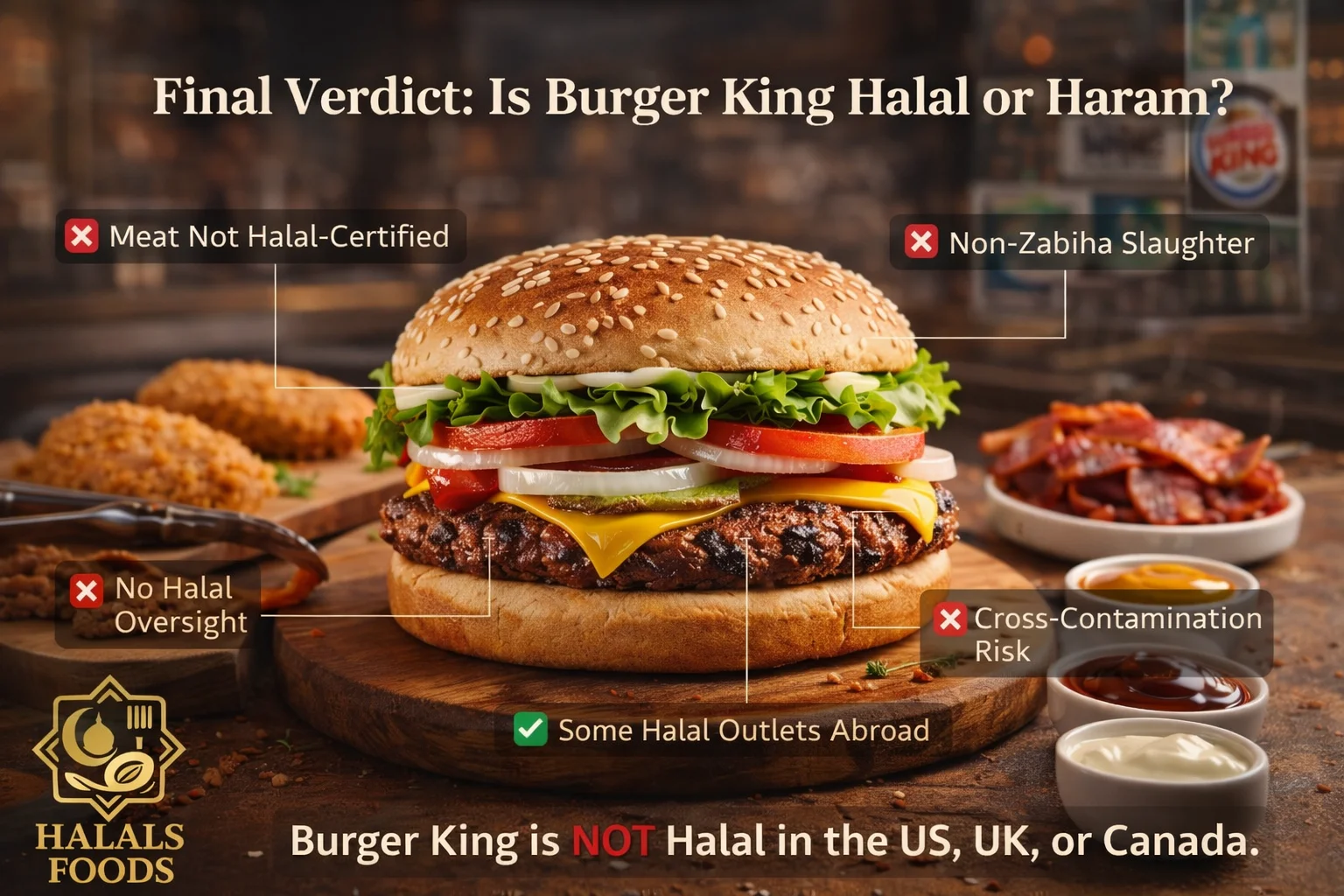
Final Verdict: Is Burger King Halal or Haram?
After reviewing ingredients, cooking methods, cross-contamination risks, halal certification status, and official statements, we can give a clear conclusion.
Summary of Findings
-
❌ Meat is not halal-certified
-
❌ Slaughter method does not meet Islamic standards
-
❌ High cross-contamination risk
-
❌ No halal oversight in Western countries
-
✅ Some halal-certified outlets exist in Muslim countries
Final Conclusion
Burger King is NOT halal in the United States, UK, or Canada.
While Burger King operates halal-certified restaurants in Muslim-majority countries, this does not apply globally. Muslim consumers seeking halal food should avoid Burger King in Western countries and choose halal-certified alternatives whenever possible.
Frequently Asked Questions (FAQs)
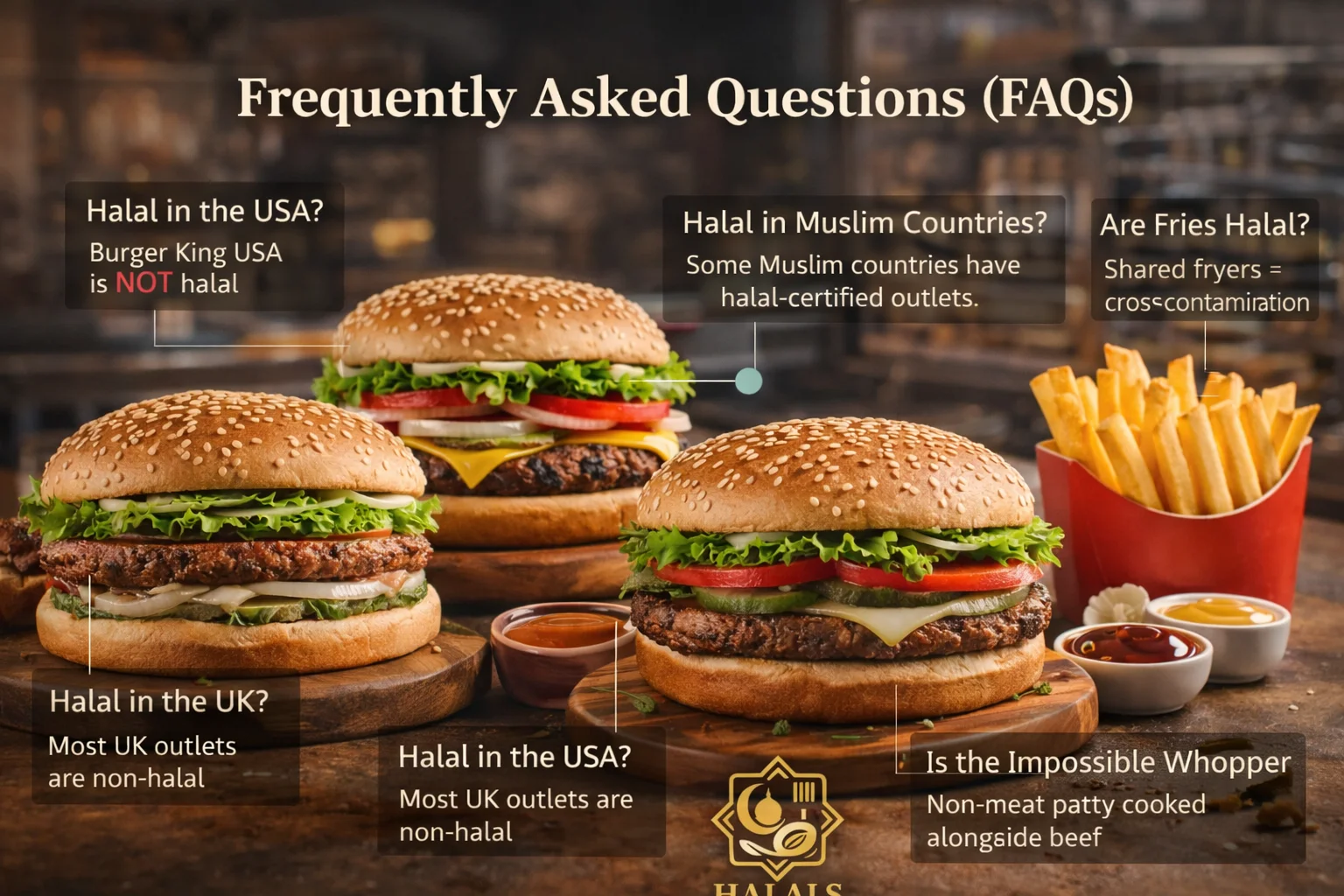
1. Is Burger King halal in the USA?
No. Burger King USA does not use halal-certified meat and does not follow Islamic slaughter guidelines.
2. Is Burger King halal in the UK?
Most Burger King outlets in the UK are not halal, though limited trials have occurred in select locations.
3. Is Burger King halal in Muslim countries?
Yes. In countries like Saudi Arabia, UAE, and Malaysia, Burger King is halal-certified and follows local halal regulations.
4. Are Burger King fries halal?
Ingredients may be halal, but fries are cooked in shared fryers, creating cross-contamination risks.
5. Is the Impossible Whopper halal?
It contains no meat, but it is cooked on the same grills as beef unless requested otherwise, making it doubtful.
6. Does Burger King use alcohol?
Some sauces and flavorings may contain alcohol-based extracts, which are not halal.
7. Is Burger King halal for Hanafi Muslims?
Most Hanafi scholars do not consider Burger King halal due to slaughter and contamination issues.
8. Is Burger King halal for Shafi’i Muslims?
Shafi’i scholars also emphasize proper slaughter and purity, making Burger King non-halal.
9. Does Burger King serve pork?
Yes. Burger King serves bacon and pork-based breakfast items in many locations.
12. References
-
Burger King Official Website – Ingredients & Allergen Information
-
IFANCA – Halal Certification Standards
-
HFSAA – U.S. Halal Slaughter Guidelines
-
USDA – Meat Processing Regulations
Related Halal Food Guides You May Find Helpful
People searching for “Is [ Is McDonald’s Halal in USA? ]” are also curious about other foods and ingredients. Below, you’ll find related halal food articles that clearly explain ingredient sources, how products are made, and whether they meet halal requirements.
More Related Articles [ Is KFC Halal? ]