Introduction
For practicing Muslims, checking food labels is not optional — it is a responsibility. In today’s global food industry, products often contain complex additives, flavorings, and processing agents that are not clearly explained. Many of these can fall under haram ingredients to avoid, especially when derived from pork, alcohol, or non-halal animal sources.
We reviewed dozens of product labels, halal certification databases, and U.S. halal authority guidelines to understand which ingredients Muslims must be cautious about. In this guide, we break down the most common haram ingredients to avoid, explain Islamic rulings behind them, and help you confidently read any product label in the USA or internationally.
Quick Answer: What Are Haram Ingredients to Avoid?
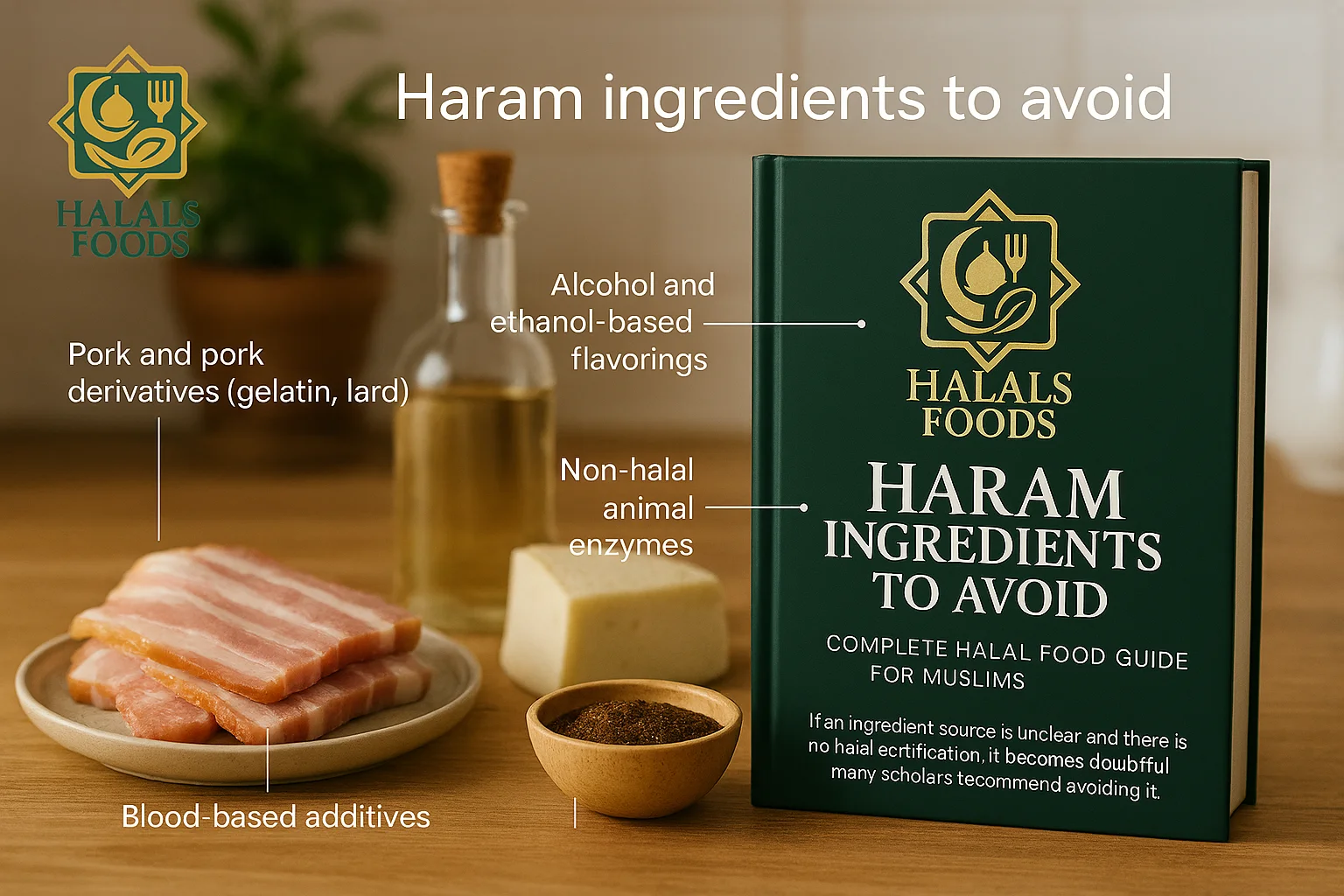
Haram ingredients to avoid include:
-
Pork and pork derivatives (gelatin, lard)
-
Alcohol and ethanol-based flavorings
-
Non-halal animal enzymes
-
Certain E-numbers derived from animals
-
Blood-based additives
If an ingredient source is unclear and there is no halal certification, it becomes doubtful (mashbooh) and many scholars recommend avoiding it.
Ingredient Breakdown: Detailed Analysis of Haram Ingredients to Avoid
Understanding haram ingredients to avoid requires more than spotting “pork” on a label. Many problematic ingredients appear under scientific or coded names.
Let’s break them down.
1. Pork and Pork-Derived Ingredients
This is the most obvious category.
Common names on product labels include:
-
Gelatin (if pork-derived)
-
Lard
-
Porcine enzymes
-
Bacon flavoring
-
Animal shortening (unspecified source)
According to U.S. halal guidelines and IFANCA standards, pork and all its derivatives are categorically haram, regardless of processing changes.
Gelatin is especially concerning. We reviewed several mainstream candy brands, and many use pork-based gelatin unless specified as “beef gelatin” or halal-certified gelatin.
Islamic ruling:
All four major Sunni schools agree pork derivatives remain haram even after transformation.
2. Alcohol and Ethanol-Based Flavorings
Alcohol appears in food more often than many Muslims realize.
It may be listed as:
-
Ethanol
-
Alcohol
-
Natural flavor (may contain alcohol solvent)
-
Vanilla extract
-
Rum flavor
-
Wine vinegar (if not fully converted)
According to many U.S. halal scholars:
-
Intoxicating alcohol added directly is haram.
-
Trace alcohol used as a solvent is debated.
-
If alcohol fully transforms (istihalah), some scholars permit it.
We checked official FDA labeling guidelines. Manufacturers are not always required to specify the percentage of alcohol in flavorings, which creates uncertainty.
This makes alcohol-based flavorings one of the most critical haram ingredients to avoid.
3. Animal Enzymes
Enzymes are used in:
-
Cheese
-
Yogurt
-
Processed snacks
-
Baked goods
They may come from:
-
Pork pancreas
-
Non-halal slaughtered cattle
-
Microbial fermentation
On a product label, you may only see “enzymes.”
According to HFSAA and other halal authorities, animal enzymes must come from halal-slaughtered animals. Otherwise, they fall under haram ingredients to avoid.
Microbial enzymes are generally halal.
4. E-Numbers Muslims Should Check
E-numbers are additives used globally.
Some concerning examples:
| E-Number | Ingredient | Risk |
|---|---|---|
| E120 | Carmine | Derived from insects |
| E441 | Gelatin | May be pork-based |
| E542 | Bone phosphate | May come from animal bones |
| E904 | Shellac | Insect-derived |
E120 (carmine) is derived from crushed cochineal insects. Some scholars allow it, others do not.
This is why identifying haram ingredients to avoid requires research beyond just reading names.
5. Blood and Blood Plasma
Blood is explicitly prohibited in the Quran (Surah Al-Baqarah 2:173).
It may appear in:
-
Blood sausage
-
Blood plasma protein
-
Certain meat processing additives
These are clearly haram without scholarly dispute.
Manufacturing Process & Cross-Contamination Risks
Even if ingredients appear halal, manufacturing processes can introduce contamination.
We reviewed manufacturing disclosures from major U.S. food brands. Many facilities produce:
-
Pork products
-
Alcohol-containing items
-
Non-halal meat products
If equipment is shared and not properly cleaned according to halal standards, cross-contamination may occur.
Why This Matters
According to Islamic jurisprudence:
-
Direct contamination with najis (impurity) renders food haram.
-
Proper cleaning can restore permissibility.
Halal-certified facilities follow strict cleaning protocols.
However, non-certified brands rarely disclose:
-
Whether pork is processed in the same facility
-
Whether alcohol is stored nearby
-
Cleaning standards between batches
This uncertainty makes cross-contamination a major factor in identifying haram ingredients to avoid.
Halal Certification Analysis
Halal certification simplifies the process.
Recognized halal authorities in the USA include:
-
IFANCA (Islamic Food and Nutrition Council of America)
-
HFSAA (Halal Food Standards Alliance of America)
-
ISA (Islamic Services of America)
-
Zabiha Halal
We checked official databases from IFANCA and HFSAA. Products listed under their certification undergo:
-
Ingredient verification
-
Supplier audits
-
Manufacturing inspections
-
Cross-contamination prevention review
Differences by Region
USA:
Halal certification is voluntary, not government-regulated.
UK:
Halal Monitoring Committee (HMC) actively monitors slaughterhouses.
Canada:
Halal Certification Services (HCS) operates similarly to U.S. bodies.
Middle East:
Government-level halal oversight exists in countries like Malaysia (JAKIM) and UAE.
If a product lacks halal certification, it does not automatically mean it contains haram ingredients to avoid — but the burden of verification falls on the consumer.
Official Statements From Brands
When analyzing potential haram ingredients to avoid, we reviewed official brand FAQs and customer service responses.
Many U.S. brands state:
“Our products are not certified halal.”
Some clarify:
“We do not use pork ingredients, but we cannot guarantee halal compliance.”
This distinction matters.
In the UK, brands are often more transparent due to a larger Muslim consumer base.
In Canada, some brands explicitly state whether gelatin is beef or pork-derived.
If a brand does not provide a halal statement, it raises uncertainty. For observant Muslims, lack of clarity often means avoiding the product unless verified.
Why Some Muslims Consider Certain Ingredients Halal
It is important to understand that not every ingredient discussed under haram ingredients to avoid is unanimously agreed upon. Islamic scholarship includes differences of opinion, especially regarding modern food science.
1. The Concept of Istihalah (Transformation)
Some scholars argue that if a haram substance undergoes complete chemical transformation, it may become pure and permissible.
For example:
-
Gelatin derived from pork that has chemically transformed.
-
Alcohol used in flavoring that evaporates during processing.
The Hanafi school historically recognizes transformation (istihalah) in certain cases. Some contemporary scholars extend this reasoning to modern industrial processes.
However, other scholars disagree, especially regarding pork derivatives.
2. Alcohol in Trace Amounts
We reviewed halal authority discussions regarding alcohol used as a solvent in flavor extracts.
Permissive opinions argue:
-
If alcohol is not intoxicating in the final product,
-
And if it is present in extremely small quantities,
-
And if it is not consumed as an intoxicant,
Then the product may be considered halal.
This is why some Muslims do not automatically classify all flavor-based products as containing haram ingredients to avoid.
3. Insect-Derived Additives
E120 (carmine) remains debated.
Some scholars permit insects that are not harmful. Others consider insects impermissible except locusts.
Because of this difference, some Muslims consume products containing carmine while others avoid them.
Why Some Muslims Avoid It Completely
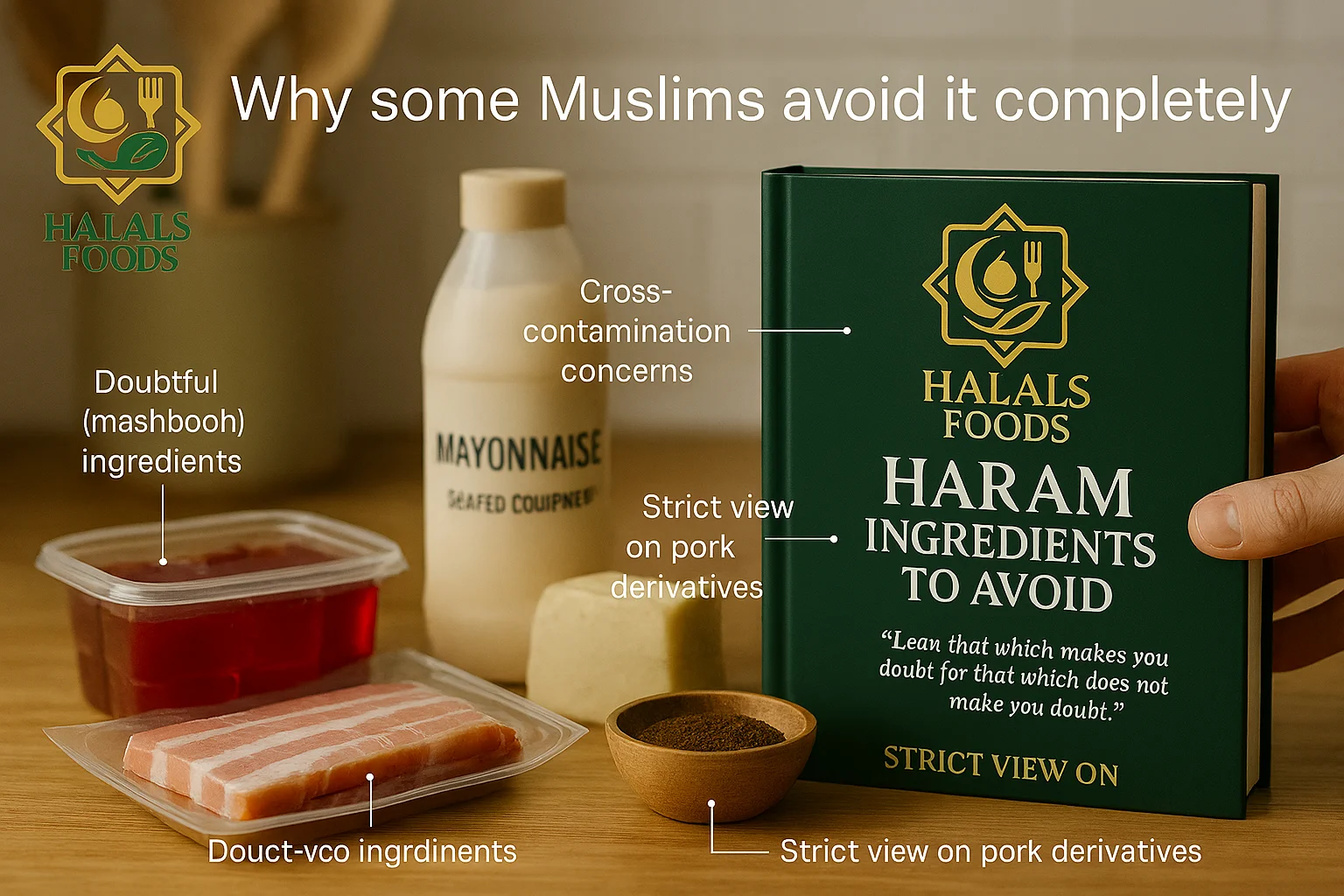
On the other side, many Muslims adopt a precautionary principle (wara’).
1. Doubtful (Mashbooh) Ingredients
If the source of gelatin, enzymes, or emulsifiers is not specified, they classify it under haram ingredients to avoid.
The Prophet ﷺ said:
“Leave that which makes you doubt for that which does not make you doubt.” (Tirmidhi)
For cautious consumers, unclear labeling equals avoidance.
2. Cross-Contamination Concerns
Even if ingredients seem halal, shared equipment with pork or alcohol products can create impurity risks.
Many non-certified factories:
-
Process pork items.
-
Store alcohol-based ingredients.
-
Use shared production lines.
Without halal oversight, observant Muslims may avoid such products entirely.
3. Strict View on Pork Derivatives
The majority scholarly view states:
Pork remains haram regardless of transformation.
Therefore, gelatin derived from pork is included among clear haram ingredients to avoid, even if chemically altered.
USA Halal Market Context
The U.S. halal food market is rapidly growing.
According to industry reports, the American halal market is worth billions of dollars annually. However, halal regulation differs from Muslim-majority countries.
1. No Federal Halal Standard
In the USA:
-
Halal certification is voluntary.
-
The FDA regulates safety, not religious compliance.
-
Brands can label products without halal oversight unless they claim certification.
This means consumers must carefully check:
-
Ingredient lists
-
Halal logos
-
Manufacturer disclosures
2. Common Issues in the U.S. Market
We reviewed multiple product labels across mainstream grocery stores.
Common challenges include:
-
“Natural flavors” without source disclosure
-
Unspecified gelatin
-
Mono- and diglycerides (may be animal-derived)
-
Enzymes without clarification
These ingredients often fall into the category of haram ingredients to avoid if their source cannot be verified.
3. Muslim Consumer Habits
In the USA, many Muslims:
-
Prefer halal-certified brands
-
Shop at Muslim-owned grocery stores
-
Use halal verification apps
-
Contact companies directly
The growing Muslim population has encouraged more transparency, but gaps still exist.
Final Verdict
After reviewing ingredient science, Islamic rulings, halal certification standards, and manufacturing practices, the conclusion is clear:
Muslims must actively identify haram ingredients to avoid by carefully checking:
-
Product labels
-
Ingredient sources
-
Alcohol content
-
Enzyme origins
-
Halal certification status
If a product contains pork derivatives, intoxicating alcohol, blood, or non-halal animal enzymes, it is clearly haram.
If ingredients are doubtful and no halal certification is present, cautious avoidance is recommended.
The safest approach remains choosing verified halal-certified products whenever possible.
Frequently Asked Questions (FAQs)
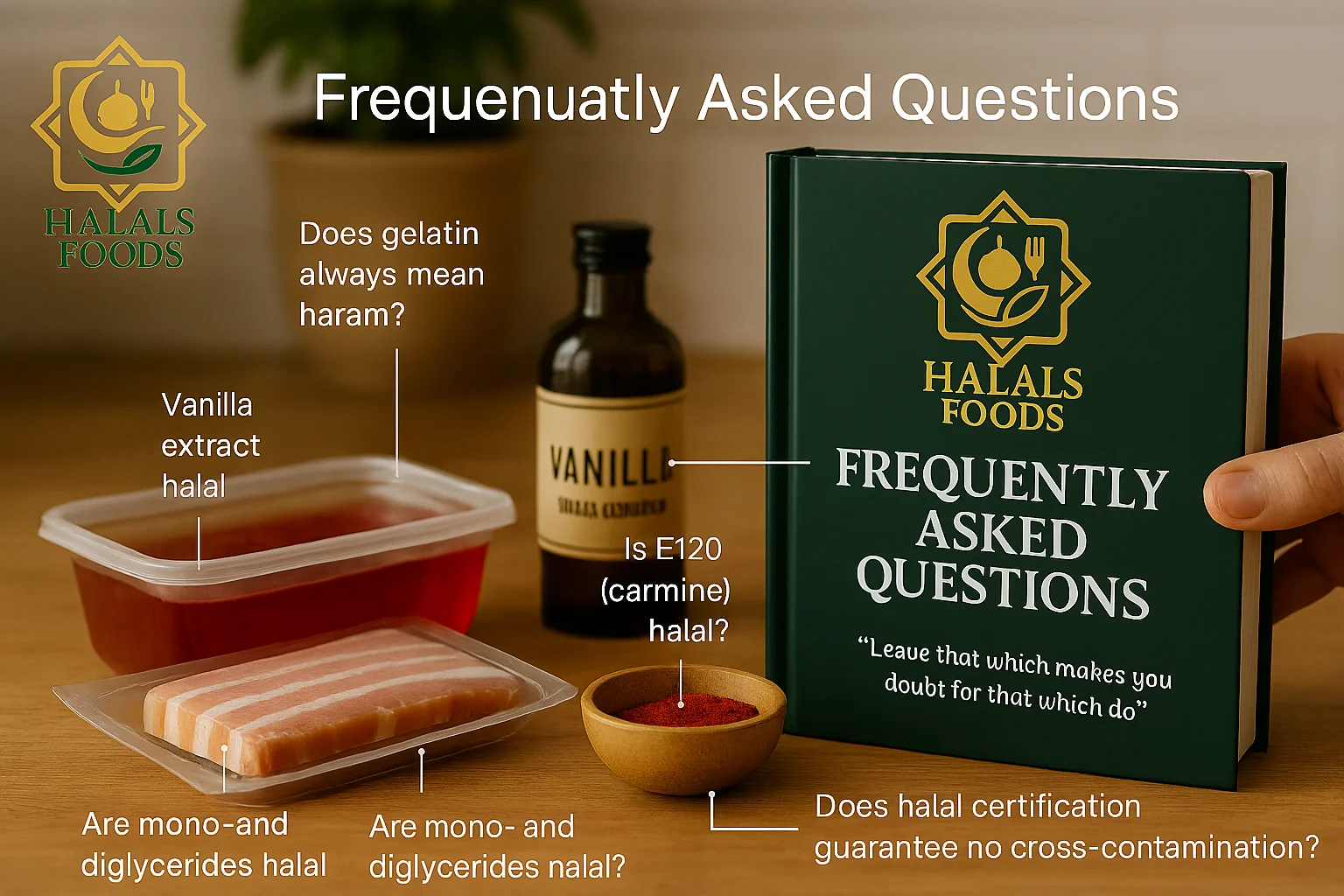
1. Does gelatin always mean haram?
No — but it depends on the source.
If gelatin comes from pork, it is haram.
If it comes from halal-slaughtered beef or fish, it may be halal.
The problem is that many product labels simply state “gelatin” without specifying the source. In such cases, it may fall under haram ingredients to avoid unless verified.
2. Is vanilla extract halal if it contains alcohol?
Vanilla extract in the USA typically contains alcohol as a solvent.
Scholarly opinions differ:
-
Some consider it halal if alcohol is minimal and non-intoxicating.
-
Others consider any added alcohol impermissible.
If unsure, choose alcohol-free vanilla products or halal-certified alternatives.
3. Are mono- and diglycerides halal?
Mono- and diglycerides can be plant-based or animal-based.
If derived from pork fat, they are haram.
If plant-derived, they are halal.
Without halal certification or manufacturer confirmation, they may be categorized among doubtful haram ingredients to avoid.
4. Is E120 (carmine) halal?
E120 is derived from crushed insects.
Some scholars allow it; others prohibit insect consumption except locusts.
If you follow a stricter opinion, you may include it among haram ingredients to avoid.
5. Does halal certification guarantee no cross-contamination?
Yes — reputable halal authorities audit:
-
Ingredient sourcing
-
Equipment cleaning
-
Storage procedures
-
Production lines
Organizations like IFANCA and HFSAA conduct inspections to ensure compliance.
6. Is wine vinegar halal?
If wine fully transforms into vinegar, many scholars consider it halal.
However, if wine is added intentionally during food production and not fully transformed, it may remain impermissible.
Always check the product label and halal certification status.
7. Are microbial enzymes halal?
Generally, yes.
Microbial or plant-based enzymes are considered halal.
Animal-derived enzymes require verification of slaughter method.
8. Can a product be halal in the UK but not in the USA?
Yes.
A brand may obtain halal certification in the UK due to market demand but not certify the same product in the USA.
Always check the packaging specific to your country.
9. Do flavorings always contain alcohol?
Not always.
Some flavorings use:
-
Propylene glycol
-
Glycerin
-
Water-based solvents
But many natural extracts use ethanol.
This is why flavorings are frequently discussed under haram ingredients to avoid.
References
-
IFANCA (Islamic Food and Nutrition Council of America) – Halal Certification Guidelines
-
HFSAA (Halal Food Standards Alliance of America) – Ingredient Compliance Standards
-
FDA U.S. Food Labeling Regulations
-
Quran 2:173 – Prohibition of pork and blood
-
Tirmidhi Hadith – Leaving doubtful matters
People searching for “Is [ Is Rennet Halal or Haram? ]” are also curious about other foods and ingredients. Below, you’ll find related halal food articles that clearly explain ingredient sources, how products are made, and whether they meet halal requirements.
more related [ Is Vanilla Extract Halal ]
more[ Is E120 Halal or Not? ]