
Let’s Be Honest… This Question Isn’t Small
Is gelatin halal — it sounds like a simple question, right?
But here’s the uncomfortable truth: this one ingredient is hiding in foods you probably eat every week… maybe even every day.
Candies. Marshmallows. Yogurt. Ice cream. Capsules. Even beauty products.
And most people don’t even think twice.
But if you’re trying to follow halal properly, this question suddenly becomes serious. Because one wrong assumption can change everything.
Let’s be real for a second…
You’ve probably picked up a product, saw the word “gelatin”, and thought:
“Hmm… is this okay or not?”
That confusion is exactly why we’re breaking this down in the simplest way possible—no complicated jargon, no confusing fatwas thrown at you without explanation.
By the end of this, you’ll not only understand Is gelatin halal, but you’ll also know how to check it yourself in real life.
First… What Exactly Is Gelatin?
Before answering Is gelatin halal, you need to understand what gelatin actually is.
In simple words:
👉 Gelatin is a protein made by boiling animal parts like bones, skin, and connective tissue.
Yes… not the most pleasant thing to imagine.
These parts contain something called collagen, which turns into gelatin after heavy processing.
That gelatin is then used to:
- Give candies their chewy texture
- Make marshmallows soft and fluffy
- Stabilize yogurt and desserts
- Create capsules for medicines
So technically, gelatin itself isn’t “bad”…
But the source it comes from? That’s where everything changes.
Here’s the Part Most People Ignore…
When asking Is gelatin halal, many people focus only on the final product.
But Islam doesn’t just look at the result.
👉 It looks at the origin.
And this is where things get serious.
Because gelatin doesn’t come from one source.
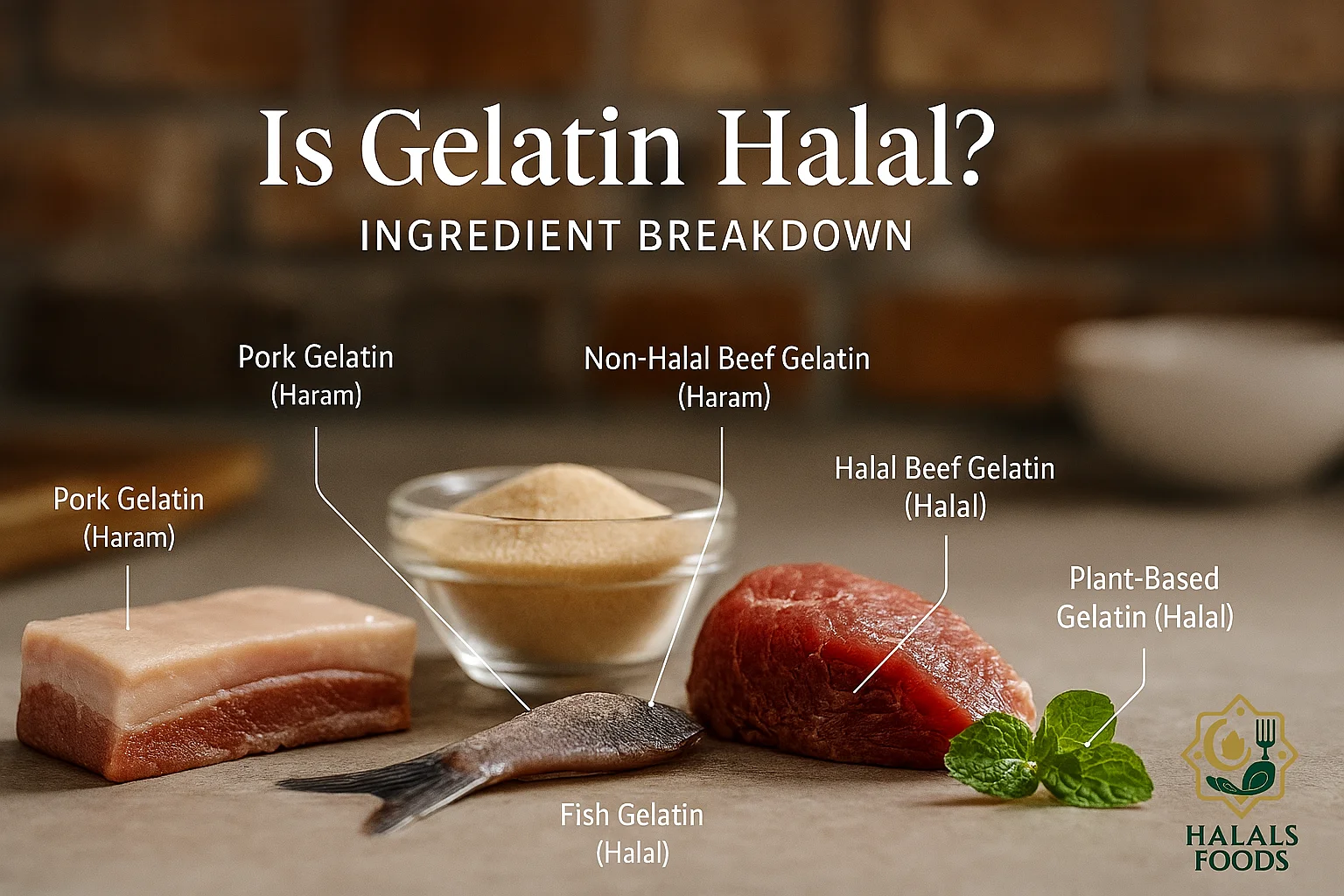
It can come from:
- 🐖 Pork (most common globally)
- 🐄 Beef (halal OR non-halal)
- 🐟 Fish (halal)
- 🌱 Plants (always halal alternatives)
So the real question is not just:
“Is gelatin halal?”
It’s actually:
👉 “Where did this gelatin come from?”
The Big Problem: Most Gelatin Is NOT Halal
Let’s not sugarcoat this.
In countries like the USA, UK, and many Western regions:
👉 Most gelatin is made from pork.
And as you already know:
❌ Pork = strictly haram in Islam
No exceptions. No debate.
So when you see “gelatin” on a label without details…
There’s a high chance it’s not halal.
Types of Gelatin (Simple Breakdown)
Let’s make it crystal clear.
1. Pork Gelatin ❌ (Haram)
This is the most widely used type.
- Found in candies, marshmallows, gummies
- Cheap and easy for manufacturers
- Completely haram according to all scholars
Even after processing, it remains impermissible.
2. Non-Halal Beef Gelatin ❌ (Also Haram)
Now this is where people get confused.
They think:
“Okay, it’s beef… so it must be halal.”
Not true.
If the animal was not slaughtered according to Islamic rules (zabiha):
👉 It becomes haram, just like pork.
3. Halal Beef Gelatin ✅
This is the safe version.
- Comes from properly slaughtered animals
- Used in halal-certified products
- Found in specialty halal brands
4. Fish Gelatin ✅
This one is naturally halal.
Why?
Because fish doesn’t require ritual slaughter.
That’s why many halal gummies and capsules use fish gelatin.
5. Plant-Based Alternatives ✅
These are becoming more popular.
Examples include:
- Agar-agar
- Pectin
- Carrageenan
They don’t come from animals at all—so they’re 100% halal.
The “Hidden Label” Problem
Here’s where things get tricky…
Most products don’t tell you the source.
They simply write:
👉 “Gelatin”
That’s it.
No mention of pork, beef, or fish.
So what do you do?
According to Islamic guidelines:
👉 If the source is unknown = Mashbooh (doubtful)
And the safest approach?
➡️ Avoid it.
Real-Life Example (This Happens Daily)
Imagine you’re buying gummy candies.
You flip the packet.
Ingredients say:
- Sugar
- Corn syrup
- Gelatin
No details.
No halal logo.
No explanation.
Now ask yourself honestly:
👉 Would you take the risk?
This is exactly why the question Is gelatin halal is so important today.
What About E-Numbers? (Another Hidden Trap)
Some companies don’t even use the word “gelatin”.
Instead, they use codes like:
- E441 → Gelatin
And most people have no idea what that means.
So they assume it’s fine.
But again:
👉 Source matters.
If E441 comes from pork or non-halal beef…
It’s still haram.
How Gelatin Is Actually Made (Simplified)
You might think:
“Okay, but it goes through heavy processing… maybe that changes things?”
Here’s the basic process:
- Animal parts are collected
- Cleaned and treated with chemicals
- Heated for long hours
- Collagen extracted
- Turned into powder or sheets
Sounds intense, right?
And this leads to a very common argument…
“But It Changes Completely… So Isn’t It Halal?”
This is where things get controversial.
Some people argue:
👉 “Gelatin becomes a completely new substance after processing.”
This concept is called Istihalah (transformation).
But here’s the reality:
- Majority of scholars do NOT accept this for pork gelatin
- Major halal organizations reject this argument
- Source still matters, even after processing
So the dominant opinion remains:
❌ Pork gelatin = haram (no matter what)
Cross-Contamination: Another Hidden Risk
Even if gelatin is halal…
There’s another issue most people ignore.
👉 Factories.
Many manufacturers produce:
- Pork gelatin products
- Halal gelatin products
…in the same facility.
Using the same machines.
Same mixers.
Same production lines.
Without proper cleaning?
👉 That becomes contamination.
And in Islam:
If halal mixes with haram → it becomes haram.
Here’s Why This Matters More Than You Think
Let’s be real again…
This isn’t just about one candy or one capsule.
Gelatin is everywhere:
- Kids’ sweets
- Vitamins
- Desserts
- Medicines
- Bakery items
So if you ignore this issue…
You might unknowingly consume haram regularly.
Quick Reality Check
If you remember only one thing from this part, remember this:
👉 Is gelatin halal depends 100% on its source.
Not the name.
Not the texture.
Not the taste.
Only the source.
What You Should Start Doing Right Now
Instead of guessing, start checking:
✔ Look for halal certification
✔ Check if source is mentioned (fish or halal beef)
✔ Prefer plant-based alternatives
✔ Avoid unclear labels
It’s that simple.
You Might Be Thinking…
“Okay… but how do I actually KNOW if a product is halal?”
Good question.
Because labels can be misleading…
Brands don’t always tell the full truth…
And not all halal logos are equal.
And trust me…
There are some things most people completely misunderstand about gelatin.
(We’ll clear that next.)
So… How Do You ACTUALLY Know If It’s Halal?
Let’s continue from where we left off.
You already understand that Is gelatin halal depends completely on the source.
But here’s the real-life problem:
👉 You’re standing in a store.
👉 You pick up a product.
👉 It just says “gelatin.”
Now what?
You can’t call the factory. You can’t test it in a lab.
So how do you make a decision on the spot?
Let’s break it down in the most practical way possible.
The 3-Level Halal Check System (Use This Every Time)
Instead of guessing, follow this simple system:
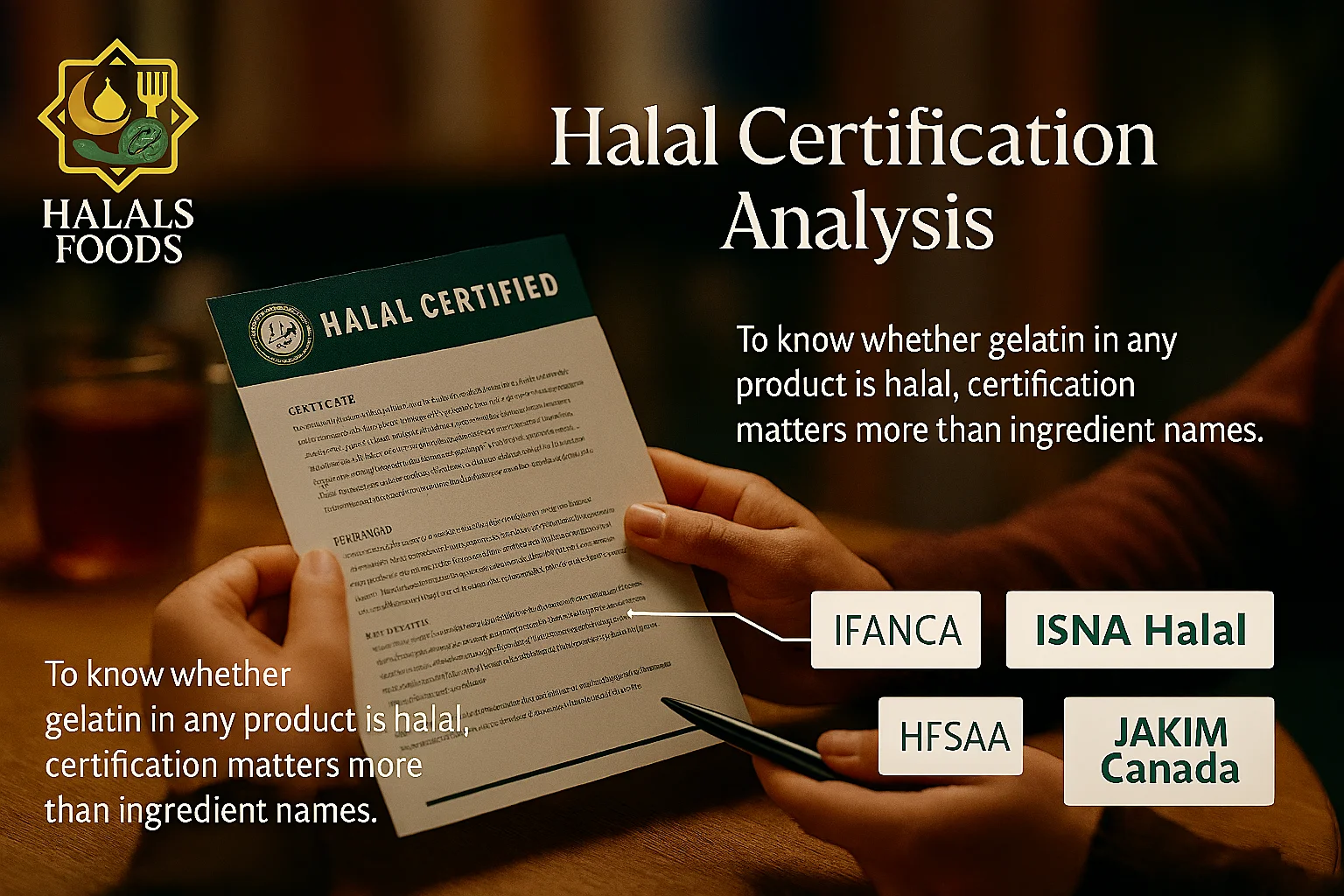
✅ Level 1: Halal Certification (Best Option)
If you see a trusted halal logo, you’re good.
Look for certifications like:
- IFANCA
- HFSAA
- ISNA Halal
- Halal Monitoring Services (HMS)
- JAKIM (Malaysia)
These organizations don’t just “approve” products randomly.
They check:
- Source of gelatin
- Slaughter method
- Factory processes
- Cross-contamination risks
👉 If a product is certified, you don’t need to overthink.
⚠️ Level 2: Clear Source Mentioned
Sometimes products say:
- “Fish gelatin”
- “Halal beef gelatin”
That’s a good sign.
But be careful…
👉 “Beef gelatin” alone is NOT enough.
Because it could still be non-halal slaughter.
❌ Level 3: Unknown Source (Avoid)
If the label just says:
👉 “Gelatin”
Then according to Islamic guidelines:
➡️ It’s Mashbooh (doubtful)
And the safest option?
👉 Avoid it.
Real Talk: Most Products Fail This Test
Let’s not pretend.
If you apply this system in real stores…
👉 You’ll realize most products don’t pass.
Especially:
- Cheap candies
- Marshmallows
- Gummy vitamins
- Jelly desserts
Why?
Because companies don’t prioritize halal transparency.
Big Brands – What They Don’t Clearly Say
Let’s look at reality, not marketing.
🍬 Haribo (USA & UK)
- Mostly uses pork gelatin
- Halal versions exist… but not everywhere
👉 Important: Same brand, different countries = different ingredients
🥣 Kellogg’s
Some cereals and snacks contain gelatin.
- Source often unclear
- Not halal unless specified
🍮 Jell-O (Kraft Heinz)
- Uses pork gelatin
👉 Straightforward: Not halal
💊 Capsules & Medicines
This is where things get tricky.
Most capsules use:
- Pork gelatin
- Non-halal bovine gelatin
Halal options exist, but:
👉 You have to actively look for them
Here’s the Part Many Muslims Overlook…
Medicine.
People are careful with food…
But when it comes to capsules, they assume:
“It’s just medicine, it’s fine.”
Not always.
👉 If halal alternatives are available, you should choose them.
However:
✔ In necessity (darurah), scholars allow exceptions
✔ But only when no halal option exists
So don’t ignore it completely.
Why Scholars Are So Strict About This
Some people feel:
“Why make it so complicated?”
Fair question.
But here’s the reasoning:
1. Clear Prohibition of Pork
No grey area here.
👉 Anything derived from pork = haram
2. Slaughter Matters
Islam doesn’t just say “eat animals.”
It specifies how they must be slaughtered.
Without that?
👉 It becomes impermissible.
3. Purity (Taharah)
Islam places strong emphasis on purity.
Cross-contamination is not a small issue.
The Istihalah Debate (Let’s Clear This Properly)
You’ve probably heard this argument:
👉 “Gelatin is chemically changed, so it should be halal.”
Sounds logical… but here’s the reality:
Minority Opinion
Some scholars say:
- Transformation makes it pure
- Original source no longer matters
Majority Opinion (Stronger View)
Most scholars and global halal bodies say:
❌ Not enough transformation
❌ Source still matters
❌ Pork gelatin remains haram
Practical Takeaway
Instead of getting lost in debates:
👉 Follow the safer, widely accepted opinion
Especially when halal alternatives exist.
Why Many Muslims Still Get Confused
Let’s be honest…
It’s not just lack of knowledge.
It’s also:
1. Misleading Labels
Companies don’t clarify sources.
2. Assumptions
“No pork mentioned = must be halal”
👉 Wrong.
3. Convenience
People don’t want to check every product.
4. Lack of Awareness
Many don’t know gelatin is even an issue.
Safer Alternatives (Simple Solutions)
Good news…
You don’t have to give up everything.
Just switch smartly.
🍭 Instead of Regular Gummies:
Choose:
- Halal-certified gummies
- Vegan gummies
🍮 Instead of Gelatin Desserts:
Use:
- Agar-agar
- Pectin-based desserts
💊 Instead of Gel Capsules:
Look for:
- Vegetable capsules (cellulose)
- Fish gelatin capsules
Real-Life Scenario (You’ll Relate to This)
You’re at a supermarket.
You pick up marshmallows.
You check ingredients:
👉 “Gelatin”
No logo.
No source.
Now you have 3 choices:
- Ignore it and buy anyway
- Put it back
- Look for halal version
The correct choice?
👉 Option 2 or 3
Because uncertainty in halal matters is not something to take lightly.
USA & Western Market Reality
Let’s be very clear here:
In most Western countries:
👉 The majority of gelatin is NOT halal.
Reasons:
- Pork is cheaper
- Easier to process
- Widely available
Halal gelatin?
👉 Still a niche market.
Growing… but not dominant.
Internal Reads You Shouldn’t Miss
To understand halal food better, you can also read:
- “Is McDonald’s Halal in the USA?”
- “Is KFC Halal or Haram?”
- “Halal Certification Explained for Beginners”
These will help you make smarter food choices overall.
Final Clear Answer (No Confusion)
Let’s answer it directly.
❓Is gelatin halal?
👉 YES — if:
- It comes from halal-slaughtered animals
- It is fish-derived
- It is plant-based
- It is halal-certified
👉 NO — if:
- It comes from pork
- It comes from non-halal beef
- It is produced with contamination
👉 DOUBTFUL — if:
- Source is not mentioned
Final Verdict (Simple & Practical)
If you want the safest approach:
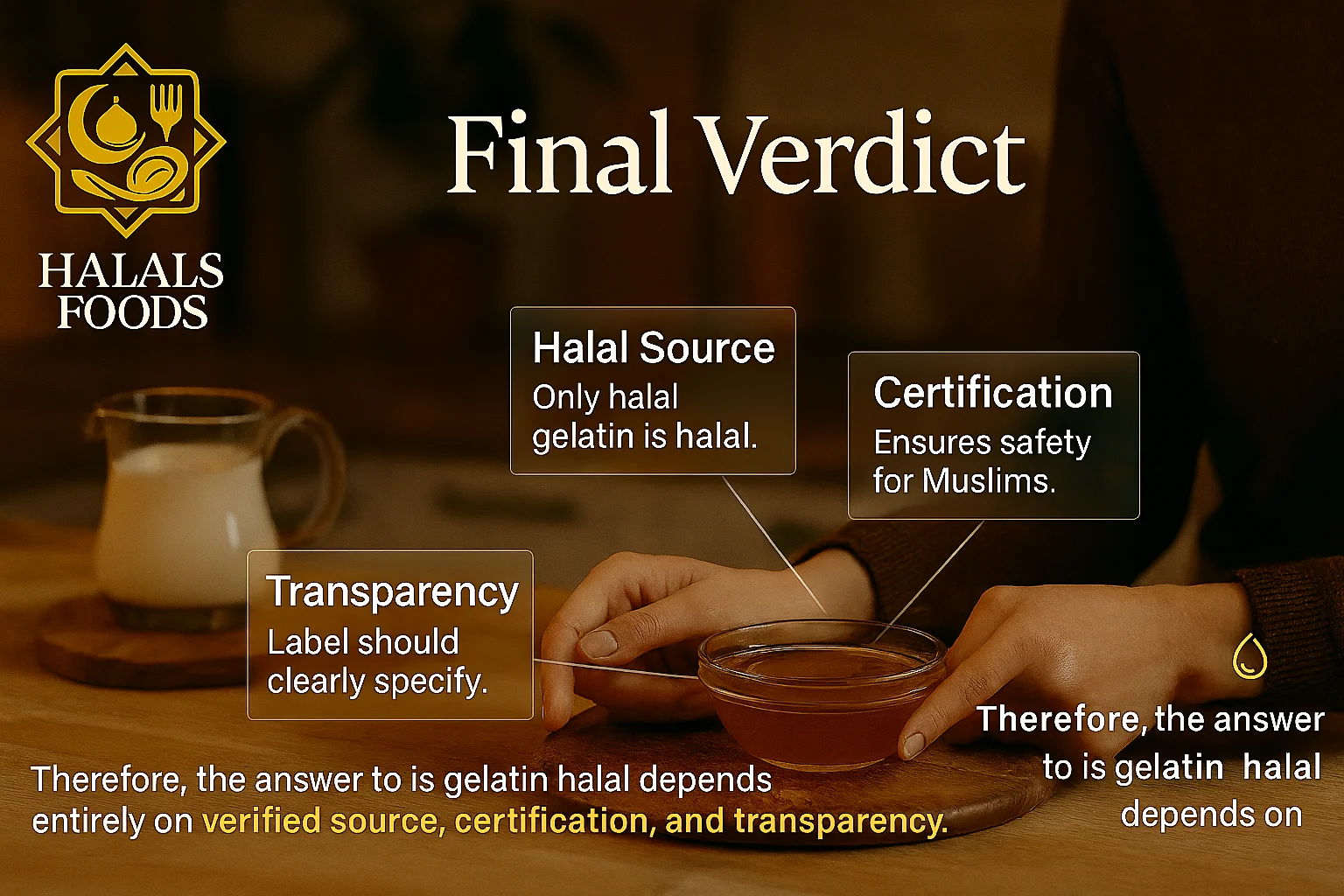
👉 Only consume gelatin when it is clearly halal-certified or plant-based.
Everything else?
👉 Avoid.
One Last Thought…
Let’s be real for a moment…
In today’s world, it’s easy to ignore small ingredients.
But those “small” things add up.
And being careful doesn’t mean being extreme.
It just means being aware.
So next time you see that label…
👉 Don’t just read it.
👉 Understand it.
Because now, you truly know the answer to:
Is gelatin halal
Related Halal Food Guides You May Find Helpful
People searching for “Is [ Is Rennet Halal or Haram? ]” are also curious about other foods and ingredients. Below, you’ll find related halal food articles that clearly explain ingredient sources, how products are made, and whether they meet halal requirements.