Let’s be real for a moment…
You walk into a grocery store, pick up a pack of fresh chicken, and think:
“It’s just chicken… how could it not be halal?”
And that’s exactly where the confusion begins.
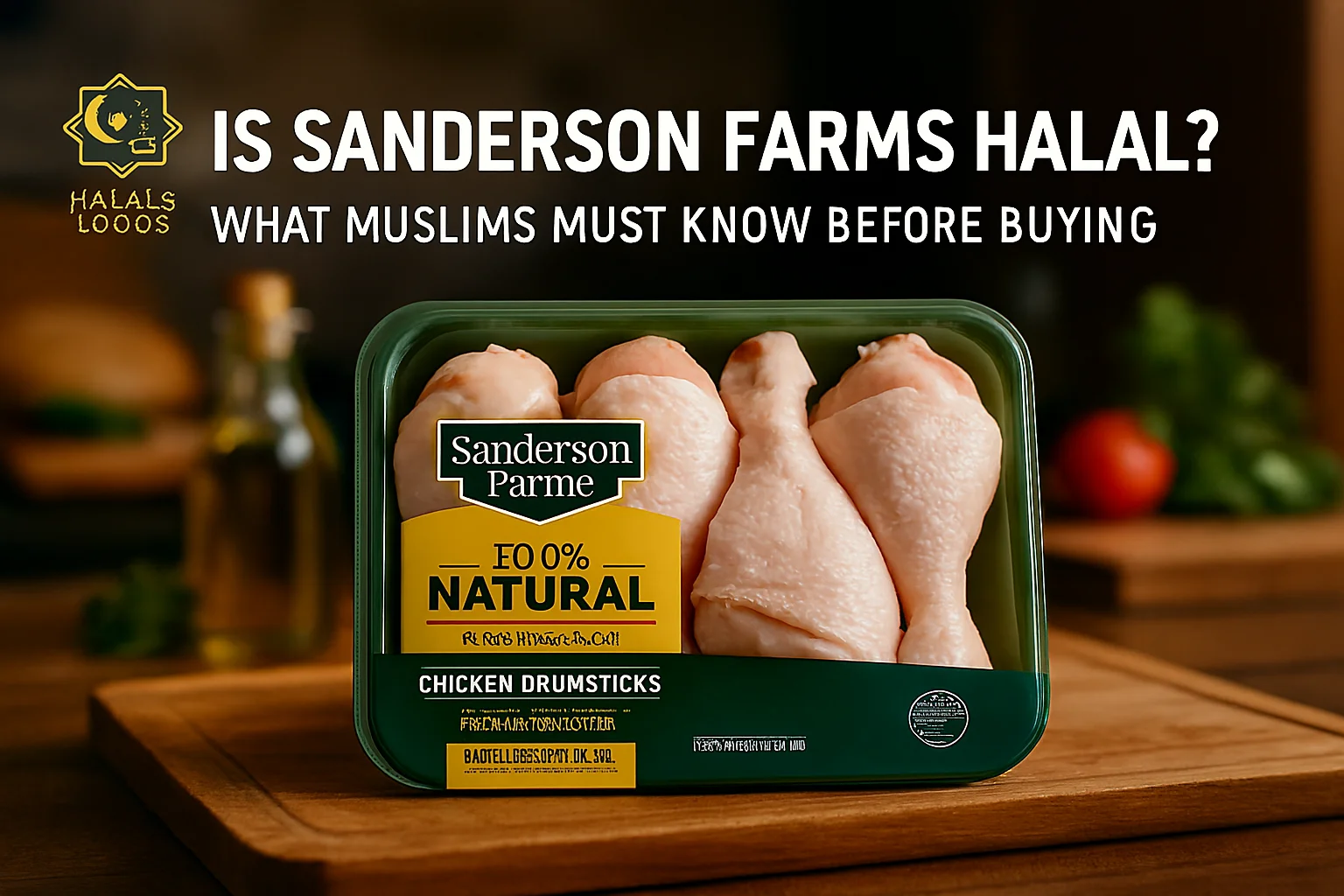
The question Is Sanderson Farms halal isn’t just about ingredients. It’s deeper than that. It touches belief, trust, and something many people overlook — the process behind the food.
And honestly? Most people never go that far.
Why Everyone Is Asking: Is Sanderson Farms halal
If you live in the U.S. (or even follow imported brands), you’ve probably seen Sanderson Farms everywhere.
- Big supermarkets
- Clean packaging
- “All-natural” labels
- No obvious haram ingredients
So naturally, many Muslims assume:
“It looks fine… so it must be halal.”
But here’s the part most people ignore…
Halal is NOT just about what you see on the label.
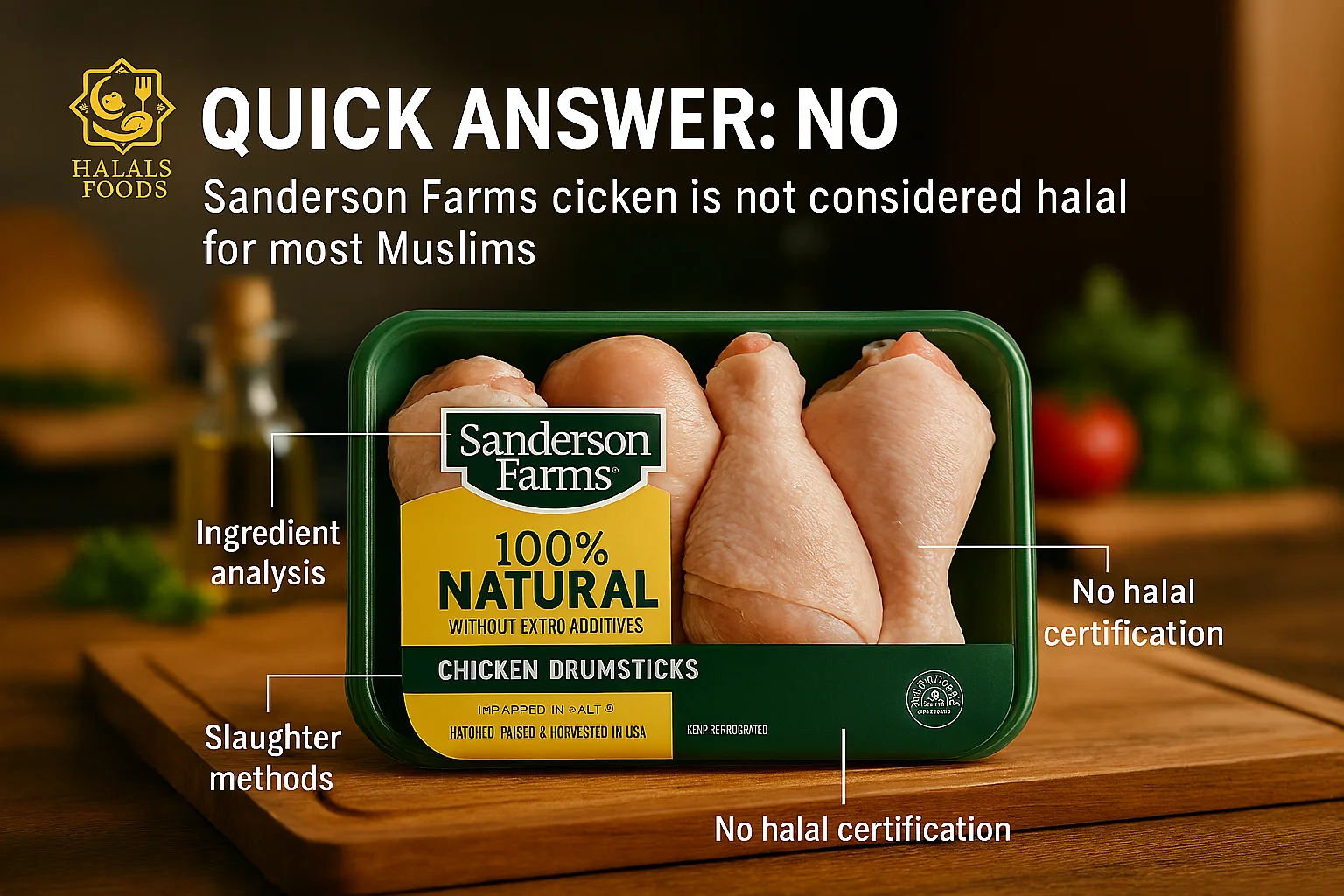
Quick Reality Check (Straight Answer)
Before we go deeper, here’s the short answer:
👉 No, Is Sanderson Farms halal? — It is NOT considered halal by the majority of scholars.
But don’t stop here.
Because understanding why it’s not halal is what really matters.
The Biggest Misunderstanding About Halal Chicken
You might be thinking:
“If there’s no pork, no alcohol… what’s the issue?”
That’s a very common belief.
But Islamic dietary law has two layers:
1. What the food contains
2. How the animal is slaughtered
And guess what?
👉 The second one is far more important.
Let’s Talk Ingredients First (Because Everyone Looks Here)
At first glance, Sanderson Farms chicken is simple.
Typical contents include:
- Raw chicken
- Water (in some products)
- Salt or sodium solution
No pork.
No alcohol.
No gelatin.
So yes — ingredient-wise, it looks clean.
That’s why many people stop their research here and say:
But here’s the problem…
Why Ingredients Alone Don’t Make It Halal
Imagine this:
You have a perfectly healthy chicken.
But…
- It was not slaughtered in the name of Allah
- The blood wasn’t properly drained
- The method didn’t follow Islamic rules
In that case?
👉 It becomes haram, even if the meat itself is pure.
This is a core principle in Islam.
What Islam Actually Requires for Meat to Be Halal
For meat to be halal, it must meet specific conditions:
- The animal must be halal (chicken is halal ✔️)
- Slaughter must be done by a مسلمان (or أهل الكتاب with conditions)
- Allah’s name must be mentioned (Tasmiyah)
- Blood must be fully drained
- The animal must be alive at the time of slaughter
Now pause for a second…
Ask yourself honestly:
👉 Do big industrial companies follow all this?
How Sanderson Farms Actually Processes Chicken
Here’s where things start getting real.
Sanderson Farms is a large-scale industrial poultry company.
Their system is designed for:
- Speed
- Mass production
- Efficiency
Not religious compliance.
Their process typically includes:
- Automated mechanical slaughter
- High-speed conveyor systems
- Pre-slaughter stunning
- No religious invocation
And this is not hidden — it’s standard in the U.S. poultry industry.
Why This Process Is a Problem in Islam
Let’s break it down simply.
1. Mechanical Slaughter
Machines cut the chickens automatically.
👉 Issue: No شخص (person) is intentionally performing each slaughter.
2. No Tasmiyah (Allah’s Name)
There is no guarantee that “Bismillah Allahu Akbar” is said.
👉 Issue: This is required by most scholars.
3. Stunning Before Slaughter
Chickens are often stunned before being killed.
👉 Issue:
If the chicken dies before proper slaughter → it becomes haram.
4. Speed Over Accuracy
Thousands of chickens processed per hour.
👉 Issue: Proper Islamic method becomes almost impossible.
“But It’s Still Chicken…” — The Emotional Argument
This is where many people struggle.
They say:
“It’s just chicken… not pork.”
And yes, that feeling is understandable.
But Islam doesn’t work on assumptions.
It works on clear rules.
Even the Sahaba (RA) were careful about meat sources — and their food system was far simpler than ours today.
The Missing Piece: Halal Certification
Now let’s talk about something very practical.
When a product is truly halal, it usually has:
- A halal certification logo
- A recognized authority backing it
- Clear transparency
So what about Sanderson Farms?
👉 It has NO halal certification.
Not from:
- IFANCA
- HFSAA
- HMC
- JAKIM
- Any major authority
And that’s a big red flag.
Why Certification Actually Matters
Some people say:
“Certification is just a label.”
Not really.
Certification means:
- Regular inspections
- Verified slaughter method
- Ingredient tracing
- Muslim supervision
Without it?
👉 You’re just guessing.
“Maybe It’s Halal But Not Certified?” — Let’s Address This
This is another common thought.
But here’s the reality:
Sanderson Farms itself has confirmed:
- They follow standard USDA processing
- They do NOT claim halal
- They do NOT produce halal chicken
So it’s not just “missing a label.”
👉 It’s simply not made for halal consumption.
Why Some Muslims Still Eat It
Now, let’s be fair and honest.
Not everyone avoids it.
Some Muslims still consume Sanderson Farms chicken.
Why?
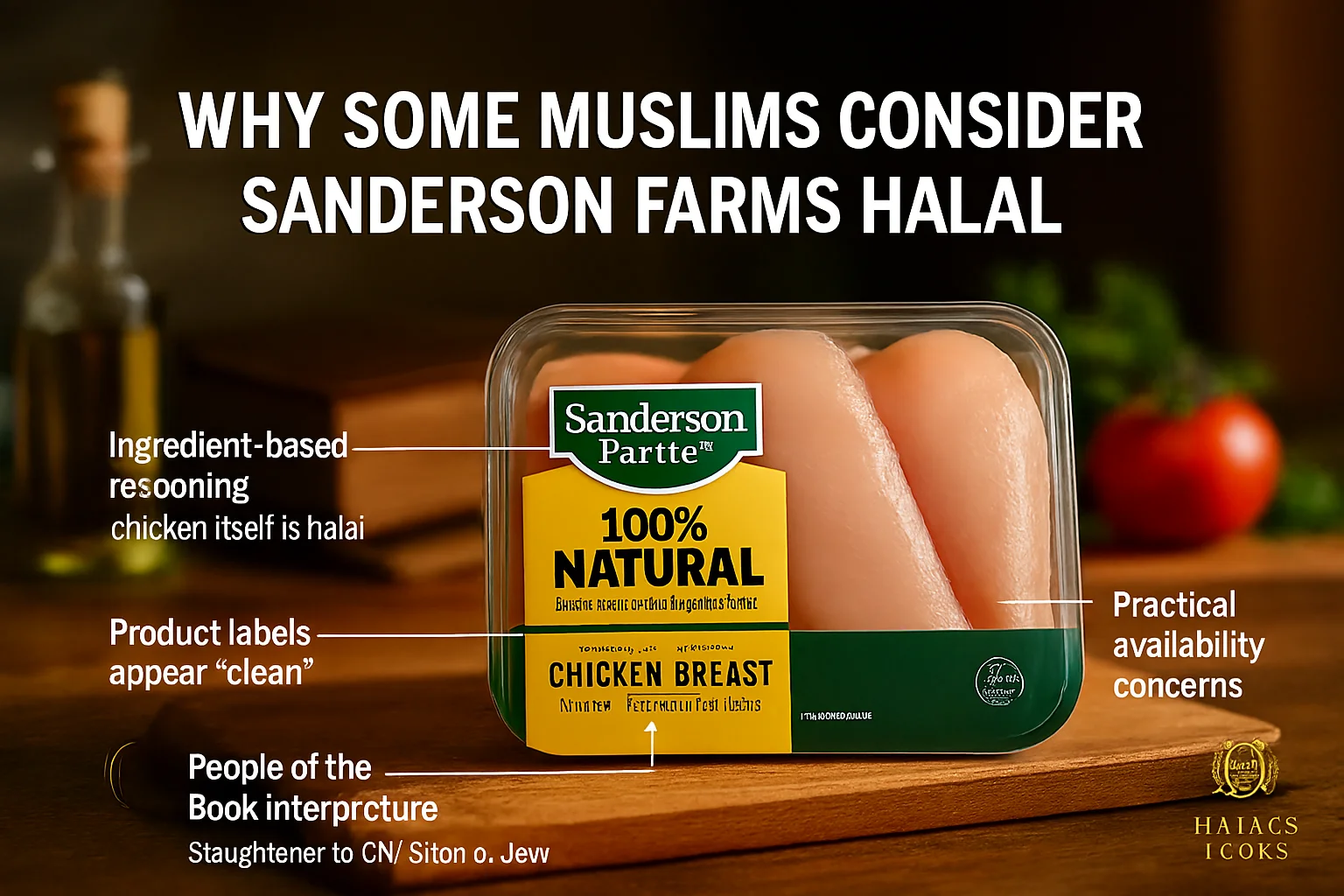
1. Ingredient-Based Thinking
They see no haram ingredients → assume halal.
2. Lack of Awareness
They don’t know about slaughter requirements.
3. Convenience
Halal meat isn’t always easily available.
4. اختلاف (Difference of Opinion)
Some follow minority views about People of the Book.
But here’s the key point:
👉 Understanding why people do something doesn’t make it correct.
The Real Question You Should Ask Yourself
Instead of just asking:
“[[Is Sanderson Farms halal]]?”
Ask this:
👉 “Am I confident this meat meets Islamic requirements?”
Because at the end of the day…
This isn’t just about food.
It’s about accountability.
A Simple Way to Think About It
If there is doubt, and halal alternatives exist…
What’s the safer choice?
The Prophet ﷺ said:
“Leave that which makes you doubt for that which does not make you doubt.”
And honestly?
This applies perfectly here.
Internal Links You Can Add
You can also read:
- Is KFC Halal or Haram
- Is Gelatin Halal in Food Products
- Halal vs Haram Meat Explained Simply
What Most Articles Don’t Tell You
Here’s something interesting…
Many articles stop at:
- Ingredients
- Certifications
But they don’t explain the real issue:
👉 The system behind modern meat production.
And once you understand that system…
Your entire perspective changes.
So What’s the Next Step?
Now you understand:
- Ingredients are not enough
- Slaughter method is critical
- Certification matters
- Sanderson Farms does not meet halal standards
But there’s still more to uncover…
Because the topic gets even deeper when we look at:
- Scholarly opinions in detail
- “People of the Book” debate
- Real-life halal alternatives
- Common myths Muslims still believe
And this is where things get even more interesting…
So now you already know the basics…
- Ingredients alone don’t decide halal
- Slaughter method is everything
- Sanderson Farms doesn’t follow zabiha
But here’s where things get a bit more complicated — and honestly, more real.
Because many Muslims still ask:
“Okay… but what about different Islamic opinions?”
Let’s go deeper.
The Big Debate: Can “People of the Book” Meat Be Halal?
This is probably the most misunderstood part of the whole discussion around Is Sanderson Farms halal.
Some people say:
“Christians slaughter the meat, so it should be halal.”
Sounds logical, right?
But here’s the part most people don’t fully understand…
What the Quran Says (Simplified)
Allah allows meat from Ahl al-Kitab (People of the Book) — meaning Jews and Christians.
But classical scholars didn’t stop there.
They added conditions, such as:
- The slaughter must still be done properly
- Allah’s name should be mentioned (or at least not replaced)
- The method should not contradict Islamic slaughter
Now Compare That to Modern Industry
Let’s be honest…
Do large companies like Sanderson Farms:
- Ensure a Christian slaughterman individually cuts each chicken? ❌
- Recite God’s name for every animal? ❌
- Follow a religious method intentionally? ❌
Instead, what happens?
👉 Machines do the job.
👉 Thousands of chickens per hour.
👉 No religious intention at all.
So even scholars who allow People of the Book meat often say:
“Modern industrial meat does NOT qualify.”
What Major Scholars Say (Simplified View)
Across different schools (Hanafi, Shafi’i, Hanbali), the majority opinion today is:
👉 Mass-produced, non-zabiha meat in Western countries is NOT halal.
Why?
Because:
- Slaughter conditions are not met
- Doubt is very high
- Religious intention is missing
So when asking Is Sanderson Farms halal, this scholarly context matters a lot.
“What If I Have No Other Option?” (The Reality Question)
Now let’s talk about real life.
Not theory.
Because someone might say:
“I live in a place where halal meat is hard to find.”
This is a genuine concern.
The Concept of Necessity (Darurah)
Islam is practical.
In extreme situations:
- If halal food is unavailable
- And you are at risk (health, survival, etc.)
Then exceptions can apply.
But let’s be very clear:
👉 This is for true necessity, not convenience.
Ask Yourself Honestly
- Are halal stores completely unavailable?
- Or just a bit far?
- Or slightly expensive?
Because there’s a difference between:
👉 “I can’t find halal food”
vs
👉 “It’s just easier to buy this”
And Islam encourages effort when halal is accessible.
Common Myths About Is Sanderson Farms halal
Let’s clear some confusion that spreads a lot.
❌ Myth 1: “It’s halal because it’s just chicken”
Reality:
👉 Halal depends on slaughter, not species alone.
❌ Myth 2: “No pork = halal”
Reality:
👉 Absence of pork doesn’t make meat halal.
❌ Myth 3: “All American meat is People of the Book”
Reality:
👉 Industrial systems are not religious slaughter systems.
❌ Myth 4: “Bismillah once is enough for all chickens”
Reality:
👉 Most scholars reject this for mass machine slaughter.
❌ Myth 5: “If Muslims are eating it, it must be okay”
Reality:
👉 Practice does not always equal correctness.
A Simple Example That Changes Perspective
Imagine two scenarios:
Scenario A:
A Muslim butcher says “Bismillah” and slaughters one chicken properly.
Scenario B:
A machine processes 10,000 chickens per hour with no ذكر of Allah.
Now ask yourself:
👉 Which one feels closer to halal?
That feeling you get?
That’s your fitrah (natural instinct).
What About Cross-Contamination?
Some people ask:
“At least there’s no pork involved, right?”
Yes, Sanderson Farms mainly processes poultry.
But halal isn’t just about avoiding pork.
It also includes:
- Clean processing
- Separation (in strict halal systems)
- Full compliance
And since there’s no halal-certified system in place, the overall process still doesn’t meet halal standards.
Halal Alternatives (What You SHOULD Do)
Okay, so now the important part:
👉 What’s the better choice?
Look for Certified Halal Brands
Always check for:
- Halal logo
- Certification authority name
- Transparent labeling
Buy from Local Halal Butchers
This is often the best option.
Why?
- You can ask questions
- You know the source
- More trust
Check Frozen Halal Sections
Many stores now carry halal-certified products.
Sometimes people just don’t notice them.
Smart Buying Tip Most People Ignore
Here’s something practical:
👉 Don’t just read the front label.
Turn the package around.
Look for:
- Certification marks
- Processing details
- Fine print
Because marketing words like:
- “Natural”
- “Farm fresh”
- “Clean”
👉 Mean NOTHING in terms of halal.
Emotional Reality: Why This Topic Feels Difficult
Let’s be honest again…
Food is emotional.
- It’s habit
- It’s culture
- It’s convenience
So changing what you eat isn’t always easy.
Especially when something is:
- Cheap
- Available everywhere
- Familiar
But halal isn’t about ease only.
It’s about conscious choice.
The Deeper Perspective Most People Miss
This isn’t just about:
👉 “Is this chicken halal or haram?”
It’s about:
👉 Your relationship with what you consume
Because every bite matters.
Not in a scary way…
But in a mindful way.
Final Clear Answer: Is Sanderson Farms halal
After everything we’ve discussed:
- Ingredients ✔️ (generally clean)
- Slaughter method ❌ (not zabiha)
- Certification ❌ (none)
- Religious compliance ❌
👉 Final Verdict: Sanderson Farms is NOT halal.
What You Should Do Going Forward
Simple and practical:
- Choose halal-certified meat
- Ask questions when unsure
- Avoid doubtful products
You don’t need to overcomplicate things.
Just stay aware.
Quick FAQs (Featured Snippet Style)
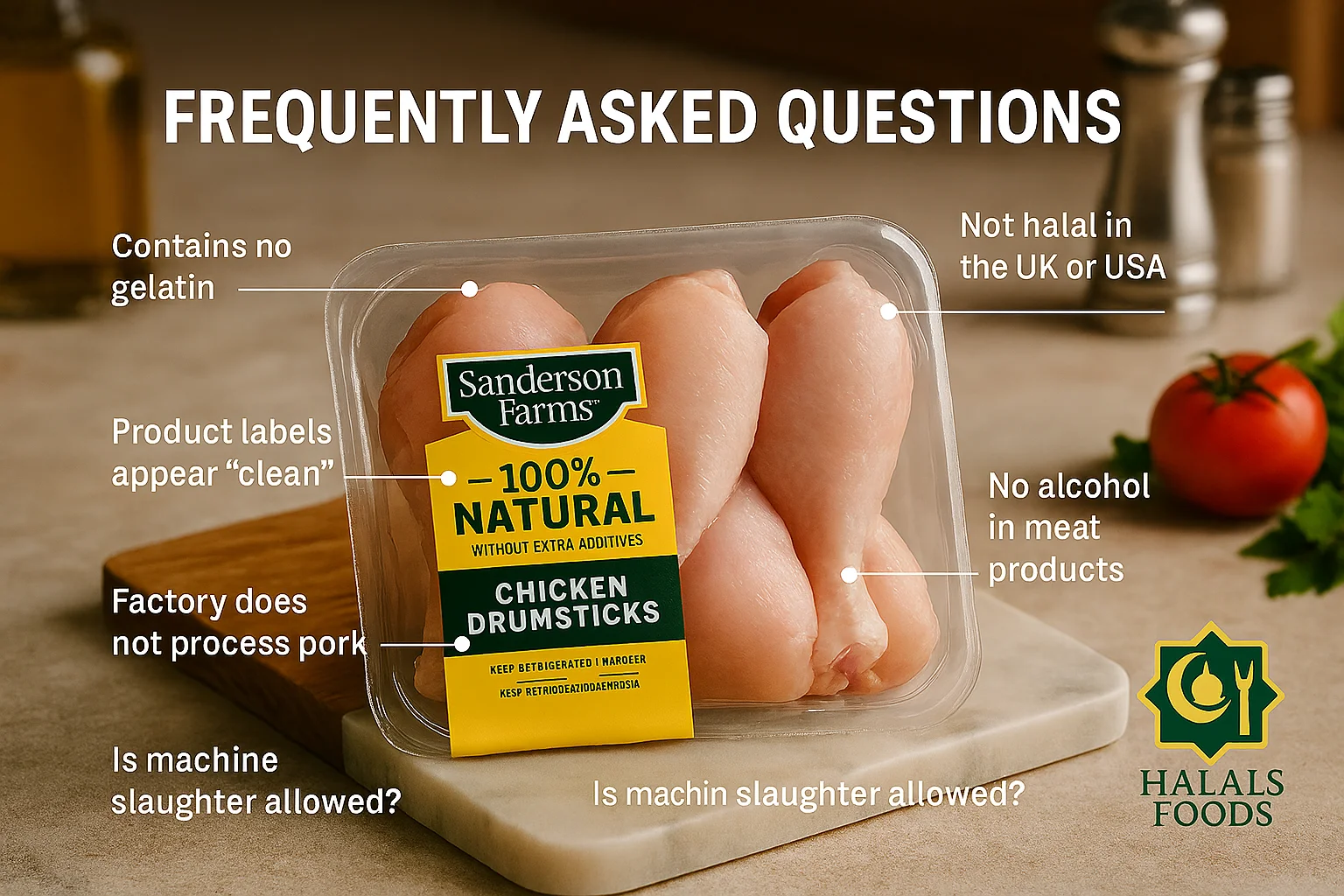
Is Sanderson Farms halal in any country?
👉 No. It is not halal-certified anywhere.
Does Sanderson Farms use halal slaughter?
👉 No. It uses standard industrial methods.
Can Muslims eat Sanderson Farms chicken?
👉 According to most scholars, it should be avoided.
Is there any alcohol or pork in it?
👉 No, but that does NOT make it halal.
Is machine slaughter halal?
👉 Only under strict conditions — which are not met here.
Final Thought
At the end of the day…
No one is forcing you.
But you are choosing.
And once you know the reality behind Is Sanderson Farms halal, the decision becomes much clearer.
Not based on guesswork…
Not based on assumptions…
But based on understanding.
Related Halal Food Guides You May Find Helpful
People searching for “Is [ Is Perdue Chicken Halal? ]” are also curious about other foods and ingredients. Below, you’ll find related halal food articles that clearly explain ingredient sources, how products are made, and whether they meet halal requirements.
More. [ Is Tyson Chicken Halal in the USA? ]
More.[ Best halal chicken brands in USA ]
More. [ Traditional Foods in Saudi Arabia ]