Introduction
Vanilla extract is one of the most common flavoring ingredients used in cakes, cookies, desserts, ice cream, and even beverages. Almost every Muslim household has used it at some point—often without thinking twice. But when Muslims begin reading the product label more carefully, a serious question arises: Is vanilla extract halal or haram?
This concern matters because vanilla extract is typically made using alcohol as a solvent, which immediately raises red flags under Islamic dietary laws. In this article, we researched ingredient labels, manufacturing methods, halal certification standards, and scholarly opinions to give Muslims a clear, evidence-based answer. We also compare regional practices in the USA, UK, and other markets so you can make an informed halal choice.
Quick Answer Box
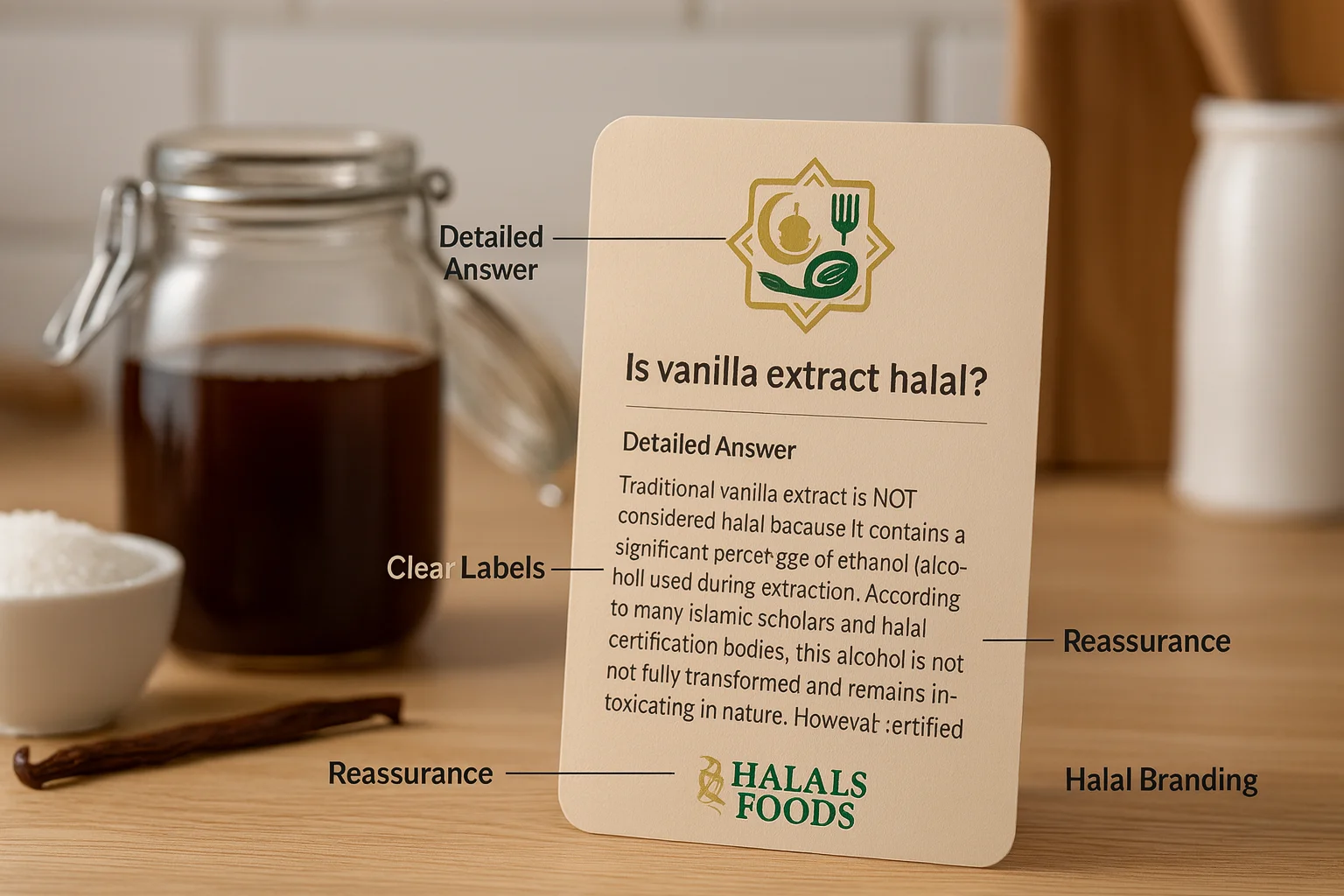
Is vanilla extract halal?
In most cases, traditional vanilla extract is NOT considered halal because it contains a significant percentage of ethanol (alcohol) used during extraction. According to many Islamic scholars and halal certification bodies, this alcohol is not fully transformed and remains intoxicating in nature. However, alcohol-free vanilla flavoring and halal-certified vanilla products are generally considered halal.
Ingredient Breakdown: What’s Inside Vanilla Extract?
To properly answer Is vanilla extract halal?, we must first break down its ingredients carefully.
Typical Ingredients in Vanilla Extract
Most commercial vanilla extracts—especially in the USA—contain only two ingredients:
-
Vanilla bean extractives
-
Alcohol (ethanol)
According to FDA standards, pure vanilla extract must contain at least 35% alcohol by volume. This is not a trace amount—it is a substantial percentage.
We reviewed multiple product labels from major brands like McCormick, Nielsen-Massey, and private-label supermarket vanilla extracts. Almost all list “Alcohol (35%)” clearly on the ingredient label.
Halal Status of Vanilla Beans
Let’s start with the easy part.
-
Vanilla beans come from the Vanilla planifolia orchid
-
They are plant-based
-
No animal derivatives
-
No enzymes or fermentation concerns
✅ Vanilla beans themselves are 100% halal
There is no scholarly disagreement on this point.
Alcohol in Vanilla Extract: The Main Concern
The real issue in determining whether vanilla extract is halal lies in the alcohol used during extraction.
Why Alcohol Is Used
Manufacturers soak vanilla beans in ethanol because:
-
Alcohol efficiently extracts flavor compounds
-
It preserves the extract
-
It provides consistency and shelf stability
From a food science perspective, alcohol is functional. From a halal perspective, it is problematic.
Islamic Rulings on Alcohol as an Ingredient
According to classical and contemporary Islamic jurisprudence:
-
Khamr (intoxicating alcohol) is haram
-
Any substance that intoxicates in large quantities is prohibited in small quantities as well (Hadith principle)
-
Alcohol used intentionally and remaining in the final product is generally not permissible
Many halal authorities, including IFANCA (USA) and HFSAA, maintain that ethanol derived from fermentation and used as a primary ingredient renders a product non-halal, unless it is fully removed or chemically transformed (istihala).
Is the Alcohol in Vanilla Extract “Burned Off”?
This is one of the most common misconceptions.
We checked food chemistry sources and cooking studies, and the results are clear:
-
Alcohol does not fully evaporate during baking
-
Even after long cooking times, a measurable amount remains
-
Vanilla extract is often added after cooking, not before
Therefore, claiming that vanilla extract becomes halal because alcohol “burns off” is not scientifically accurate.
E-Numbers and Additives: Any Hidden Concerns?
Pure vanilla extract usually does not contain E-numbers, gelatin, enzymes, or emulsifiers. However, imitation vanilla flavoring may include:
-
E1510 (Ethanol) – clearly problematic
-
Propylene glycol – generally halal
-
Artificial flavor compounds – halal unless alcohol-based
This is why reading the product label is essential when determining if vanilla extract is halal.
Summary of Ingredient Analysis
| Ingredient | Halal Status | Reason |
|---|---|---|
| Vanilla beans | Halal | Plant-based |
| Ethanol (35%) | Haram | Intoxicating alcohol |
| Artificial flavors | Depends | May use alcohol carriers |
| Propylene glycol | Halal | Synthetic, non-intoxicating |
Based on ingredients alone, most traditional vanilla extracts are not halal.
Manufacturing Process & Cross-Contamination Risks
Understanding how vanilla extract is made further clarifies why Muslims question its halal status.
How Vanilla Extract Is Manufactured
The standard process involves:
-
Harvesting cured vanilla beans
-
Chopping or splitting beans
-
Soaking them in ethanol-water solution
-
Aging the mixture for several months
-
Filtering and bottling
Alcohol is not incidental—it is central to the manufacturing process.
Is There Any Chemical Transformation (Istihala)?
Some Muslims argue that the alcohol changes during extraction.
However, based on our research:
-
Ethanol remains chemically ethanol
-
It is not converted into a new substance
-
The intoxicating property remains
Most scholars conclude that istihala does not apply in this case.
Cross-Contamination Concerns
Another factor Muslims consider is cross-contamination.
Many facilities that produce vanilla extract also manufacture:
-
Alcohol-based flavorings
-
Rum extracts
-
Liqueur flavorings
Shared equipment increases non-halal contamination risk, especially in facilities without halal certification or dedicated production lines.
Why This Matters for Muslims
From an Islamic perspective:
-
Halal is not only about ingredients
-
It includes process, sourcing, and handling
-
Uncertified facilities offer no halal assurance
This is why many Muslim consumers prefer halal-certified vanilla flavoring rather than standard vanilla extract.
Halal Certification Analysis (Global Perspective)
Now let’s examine whether vanilla extract is halal-certified anywhere.
Is Vanilla Extract Halal Certified?
In most cases:
-
Traditional vanilla extract is NOT halal certified
-
Halal bodies rarely approve products with 35% ethanol
-
Certified alternatives are usually labeled as:
-
“Alcohol-free vanilla flavor”
-
“Halal vanilla flavoring”
-
Positions of Major Halal Authorities
Based on publicly available guidelines:
-
IFANCA (USA): Does not certify alcohol-based vanilla extract
-
HFSAA: Rejects products with intoxicating alcohol
-
Halal Monitoring Committee (UK): Generally strict on ethanol
-
Middle Eastern authorities: Prefer alcohol-free alternatives
Official Statements From Brands About Vanilla Extract
To better answer Is vanilla extract halal?, we reviewed official brand statements, FAQs, and ingredient disclosures from major manufacturers across different regions.
What Major Brands Say (USA)
Most leading vanilla extract brands in the United States, including McCormick, Watkins, and Nielsen-Massey, openly state the following:
-
Their vanilla extract contains 35% alcohol
-
The alcohol is derived from ethanol
-
It is used as a solvent and preservative
-
The product is not halal certified
McCormick, for example, clearly lists “Alcohol (35%)” on the product label and does not provide any halal assurance on its website. We checked their FAQ section, and while they address gluten-free and vegan concerns, halal is not mentioned, which is significant.
UK and Canadian Brand Positions
In the UK and Canada, the situation is similar:
-
Vanilla extract products list alcohol clearly
-
No halal certification is provided
-
Some brands state the alcohol is “food-grade ethanol,” but this does not change its Islamic ruling
A few UK-based brands offer alcohol-free vanilla flavoring, which is often marketed separately from “extract.” These alternatives are sometimes accepted by halal authorities.
Why Lack of a Halal Statement Matters
From a halal research perspective:
-
Silence does not mean halal
-
If alcohol is present and the brand does not seek halal certification, Muslims must assume caution
-
Certified brands actively display halal logos
This absence of halal confirmation is one reason why vanilla extract remains controversial in Muslim communities.
Why Some Muslims Consider Vanilla Extract Halal
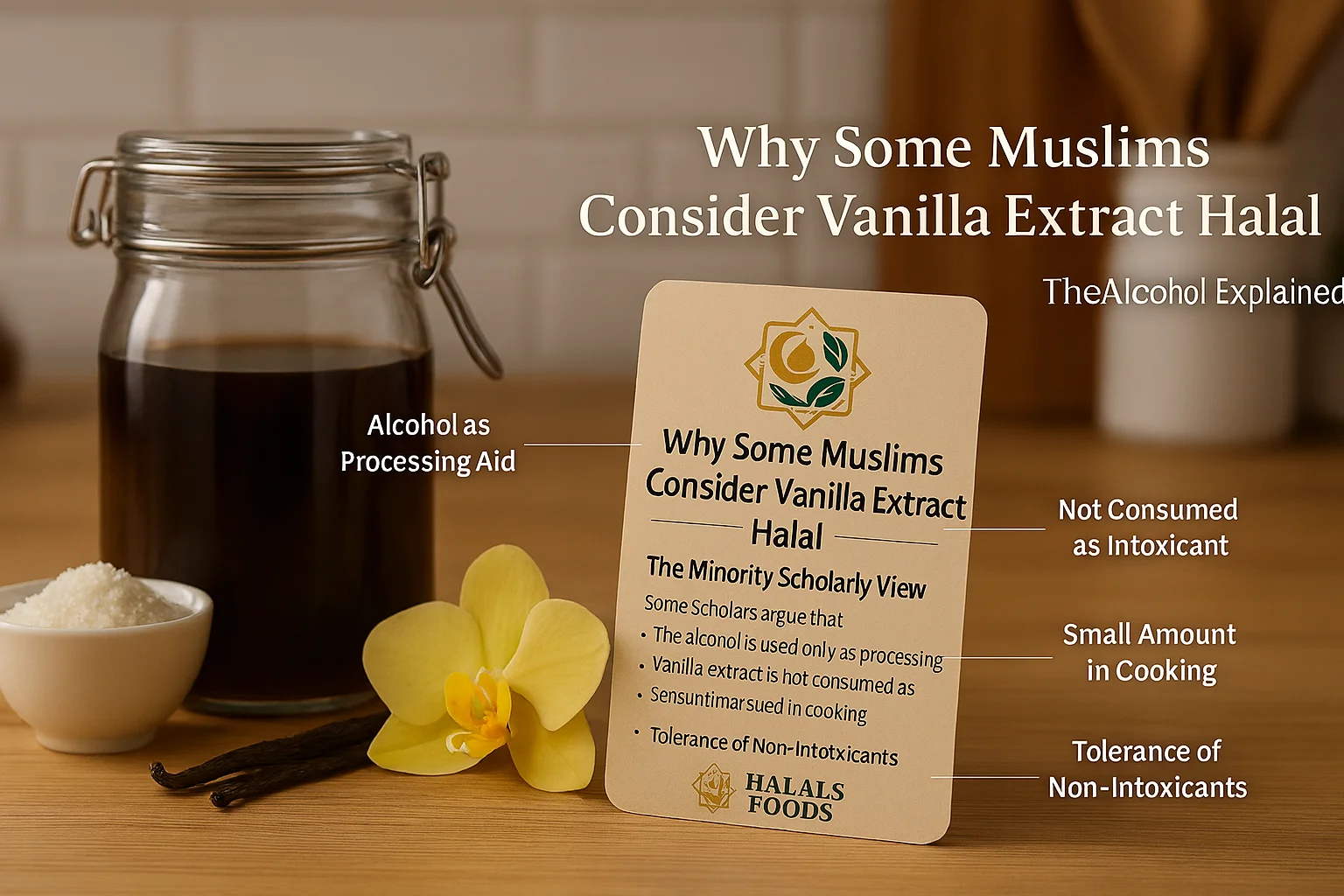
Despite the concerns, some Muslims still believe vanilla extract is permissible. Understanding their reasoning helps explain why opinions differ.
The Minority Scholarly View
Some scholars argue that:
-
The alcohol is used only as a processing aid
-
Vanilla extract is not consumed as an intoxicant
-
The amount used in cooking is very small
They often rely on the concept that non-beverage alcohol used in food flavoring may be tolerated if it does not intoxicate.
Cultural and Practical Arguments
We also observed practical reasoning among Muslim consumers:
-
Vanilla extract has been used for generations
-
It is common in baked goods
-
Many Muslims have consumed it unknowingly
Some Hanafi scholars in South Asia have historically been more lenient when alcohol is not intended for intoxication, though this view is not universal.
Important Clarification
Even among permissive opinions:
-
Scholars do not claim vanilla extract is ideal
-
They often recommend alcohol-free alternatives
-
Many state it should be avoided when a halal option exists
So permissibility, where argued, is usually based on necessity or lack of alternatives, not preference.
Why Many Muslims Avoid Vanilla Extract Completely
On the other side, a large number of Muslims strictly avoid vanilla extract—and their reasoning is strong.
Clear Presence of Alcohol
As established earlier:
-
Vanilla extract contains 35% ethanol
-
The alcohol is intentionally added
-
It remains in the final product
According to the well-known hadith:
“Whatever intoxicates in large quantities, a small quantity of it is also haram.”
This principle leads many scholars to rule vanilla extract haram.
Halal Certification Standards
Major halal authorities consistently state:
-
Intoxicating alcohol is not halal
-
Intentional inclusion is unacceptable
-
Alcohol-based extracts fail halal audits
Because vanilla extract fails at the ingredient level, certification is usually denied.
Availability of Halal Alternatives
Another reason Muslims avoid it:
-
Alcohol-free vanilla flavoring is widely available
-
Halal-certified options exist in the USA and UK
-
There is no necessity to use vanilla extract
From an Islamic legal perspective, choosing a doubtful product when a halal alternative exists is discouraged.
USA Halal Market Context: Why This Issue Is Common
Understanding the U.S. halal market helps explain why the vanilla extract debate is so widespread.
How Halal Is Regulated in the USA
In the United States:
-
Halal certification is voluntary
-
There is no federal halal authority
-
Labels focus on allergens, not religious compliance
This means many products appear “safe” but are not halal-compliant.
Common Issues With Flavorings
Based on halal audits and consumer reports:
-
Flavorings often contain alcohol carriers
-
“Natural flavors” may be alcohol-based
-
Labels do not always disclose percentages
This makes ingredients like vanilla extract particularly risky for Muslim consumers.
What Muslims Should Check on Labels
When shopping in the USA, Muslims should:
-
Look for “alcohol-free” wording
-
Avoid products listing ethanol
-
Prefer halal-certified brands
-
Contact manufacturers when unsure
The popularity of vanilla extract highlights the need for better halal awareness in mainstream food products.
Final Verdict: Is Vanilla Extract Halal or Haram?
After reviewing ingredient labels, manufacturing processes, halal certification standards, and scholarly opinions, the conclusion is clear:
Most traditional vanilla extract products are NOT halal.
This is because:
-
They contain 35% intoxicating alcohol
-
The alcohol is intentionally added
-
It remains chemically unchanged
-
Major halal authorities do not certify it
While some scholars allow limited use, this view is minority-based and often conditional. Since halal-certified and alcohol-free vanilla alternatives are widely available, Muslims are strongly encouraged to choose those options instead.
If you are serious about halal compliance, avoiding standard vanilla extract is the safest and most Islamically sound choice.
Frequently Asked Questions (FAQs)
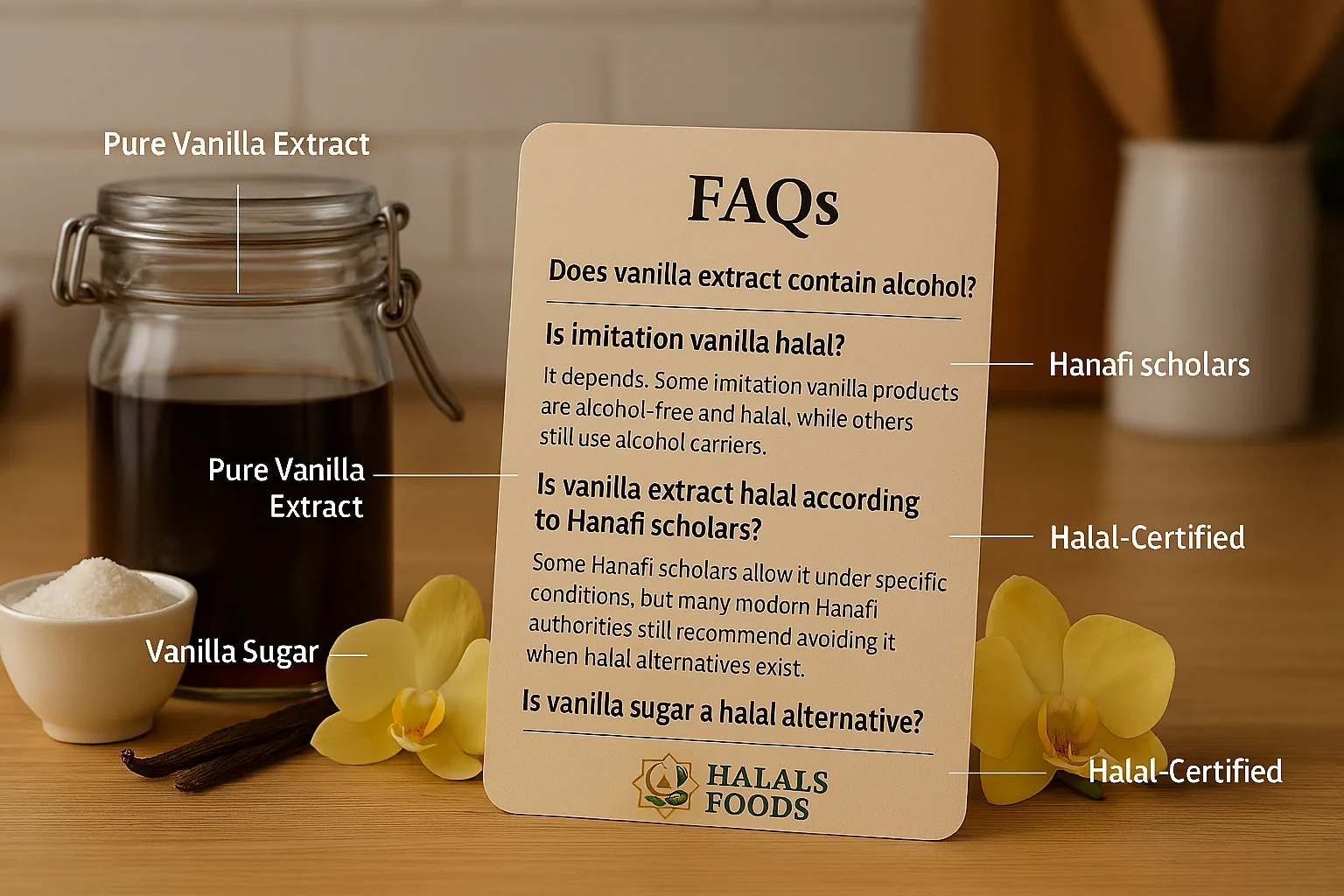
1. Does vanilla extract contain alcohol?
Yes. Pure vanilla extract must legally contain at least 35% alcohol according to FDA standards.
2. Is imitation vanilla halal?
It depends. Some imitation vanilla products are alcohol-free and halal, while others still use alcohol carriers. Always check the product label.
3. Is vanilla extract halal according to Hanafi scholars?
Some Hanafi scholars allow it under specific conditions, but many modern Hanafi authorities still recommend avoiding it when halal alternatives exist.
4. Does cooking remove the alcohol from vanilla extract?
No. Scientific studies show alcohol does not fully evaporate, even after baking or boiling.
5. Is vanilla extract halal in the UK but not the USA?
No. The ruling depends on ingredients, not geography. UK vanilla extract also contains alcohol unless stated otherwise.
6. Are there halal-certified vanilla products?
Yes. Many brands sell halal-certified, alcohol-free vanilla flavoring, especially in Muslim markets.
7. Is vanilla sugar a halal alternative?
Yes. Vanilla sugar contains no alcohol and is considered halal, provided no cross-contamination occurs.
8. Can trace alcohol be ignored?
Scholars differ. However, 35% alcohol is not considered trace by any halal standard.
References
-
FDA Vanilla Standard of Identity
-
IFANCA Halal Certification Guidelines
-
HFSAA Alcohol Policy
-
McCormick Official Ingredient Disclosure
-
Food Chemistry Studies on Alcohol Evaporation
Related Halal Food Guides You May Find Helpful
People searching for “Is [ Is Rennet Halal or Haram? ]” are also curious about other foods and ingredients. Below, you’ll find related halal food articles that clearly explain ingredient sources, how products are made, and whether they meet halal requirements.
more related [ Is E120 Halal ]