Introduction
Salami is a popular cured meat used in sandwiches, pizzas, and charcuterie boards around the world. However, for Muslims who follow Islamic dietary laws, an important question arises: Is salami halal? 🤔
At first glance, salami may seem like just another processed meat product. But when we examined product labels, reviewed ingredient lists, and checked halal certification standards, we discovered that the answer is not always simple. Some salami varieties may be halal, while many others are clearly not permissible.
In this guide, we analyzed common salami ingredients, reviewed halal certification practices, and compared official statements from food brands and halal authorities. By the end, you will clearly understand whether salami is halal, haram, or doubtful depending on how it is produced.
Quick Answer: Is Salami Halal?
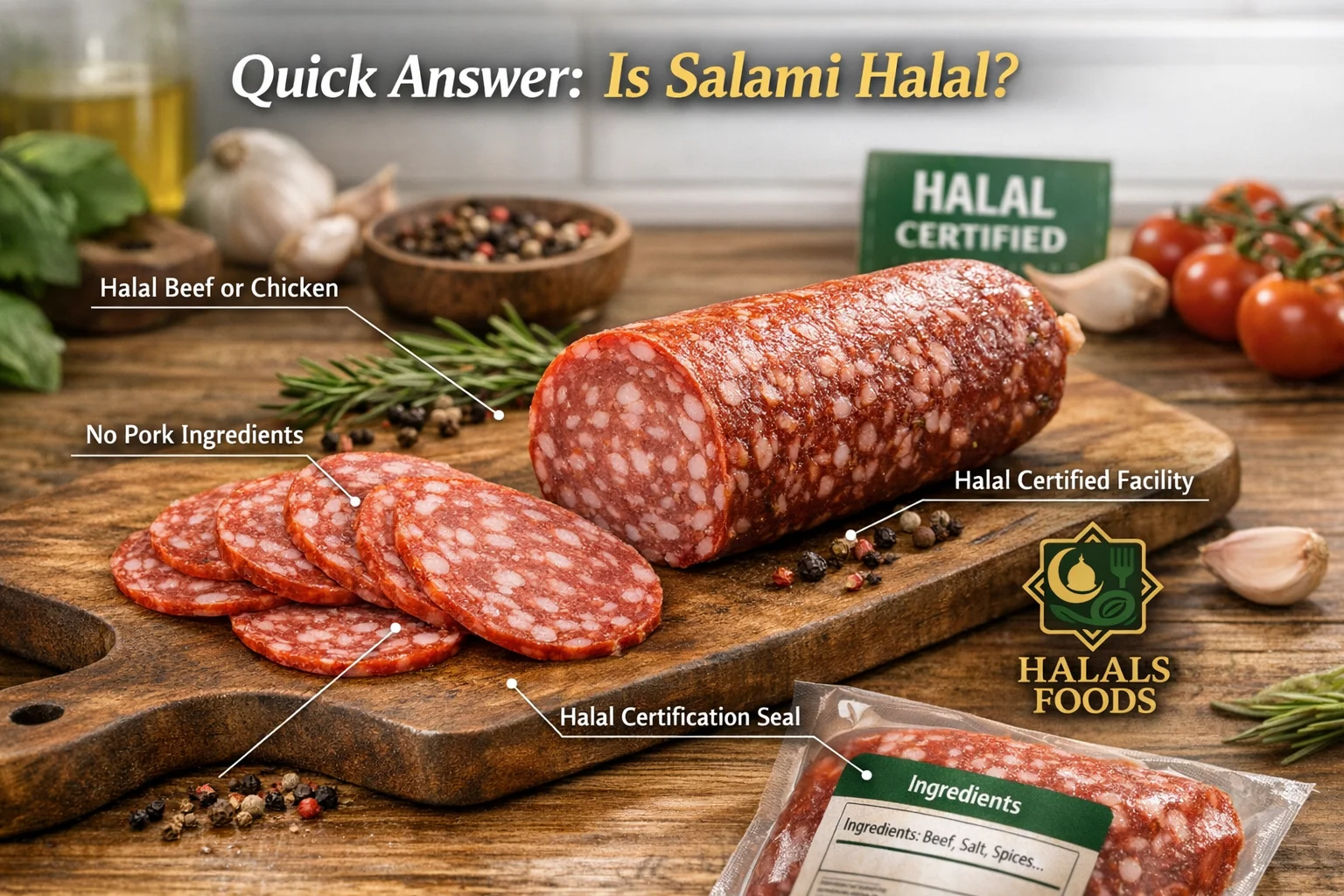
The short answer: Most traditional salami is not halal because it is usually made from pork or pork fat. 🐖
However, halal salami does exist when it is made from:
-
halal-slaughtered beef or chicken
-
no pork ingredients
-
halal-certified processing facilities
Muslims should always check the ingredients, halal certification, and product label before consuming salami.
Ingredient Breakdown of Salami
To properly answer the question Is salami halal, we carefully reviewed typical ingredient lists found on commercial salami products.
While recipes vary slightly by brand, most salami products include the following components.
Common Salami Ingredients
| Ingredient | Halal Status | Explanation |
|---|---|---|
| Pork meat | Haram | Pork is strictly forbidden in Islam |
| Beef | Halal only if slaughtered according to Islamic law | |
| Pork fat | Haram | Very common in traditional salami |
| Salt | Halal | Used for preservation |
| Spices | Halal | Usually black pepper, garlic, paprika |
| Sugar or dextrose | Halal | Helps fermentation |
| Sodium nitrite | Halal | Preservative used in cured meats |
| Lactic acid starter culture | Usually halal | Used for fermentation |
Pork Content in Traditional Salami
Historically, salami was developed in Europe using pork meat and pork fat. This immediately makes many commercial salami products haram for Muslims.
In fact, when we reviewed ingredient labels from several supermarket brands, most listed:
-
pork
-
pork fat
-
or a combination of pork and beef
Since pork is clearly prohibited in Islam, these products cannot be considered halal.
Beef Salami and Chicken Salami
Some manufacturers produce beef salami or chicken salami instead of pork.
However, even these versions are not automatically halal.
According to Islamic dietary laws, meat is only halal if:
-
The animal is halal (beef, chicken, etc.)
-
It is slaughtered according to Zabiha halal guidelines
-
The name of Allah is pronounced during slaughter
-
Blood is properly drained
Without confirmation of these conditions, the meat may still be doubtful (mashbooh).
Additives and E-Numbers
Processed meats like salami often contain additives and preservatives.
Some commonly used additives include:
-
E250 (Sodium Nitrite) – preservative used in cured meat
-
E301 (Sodium Ascorbate) – stabilizer
-
E330 (Citric Acid) – acidity regulator
These ingredients are generally considered halal, because they are chemically synthesized or derived from plant sources.
However, Muslims still need to check for ingredients such as:
-
E441 (Gelatin) – may come from pork
-
Animal enzymes – sometimes derived from non-halal sources
-
Flavor enhancers with alcohol carriers
Fermentation Cultures
Salami is traditionally a fermented meat.
During fermentation, manufacturers add starter cultures, usually bacteria such as:
-
Lactobacillus
-
Pediococcus
These bacteria help create the tangy flavor and preserve the meat.
Most Islamic scholars consider microbial cultures permissible, since they are not animal-derived.
Alcohol in Flavoring
Another issue sometimes discussed when asking Is salami halal is the potential use of alcohol-based flavor extracts.
Some processed meat flavorings may use alcohol as a carrier solvent. However, in most commercial salami products, alcohol content is either:
-
extremely small, or
-
completely evaporated during curing
Islamic scholars differ on this issue, but halal-certified products usually avoid alcohol entirely.
Manufacturing Process & Cross-Contamination
Understanding the manufacturing process is essential when evaluating Is salami halal.
Even if the ingredients themselves appear halal, the way salami is produced can affect its permissibility.
How Salami Is Made
Traditional salami production involves several steps:
-
Meat grinding – beef, pork, or mixed meat is ground.
-
Fat blending – fat is added for flavor and texture.
-
Seasoning – spices, salt, sugar, and curing agents are mixed in.
-
Fermentation – bacteria cultures develop flavor.
-
Curing and drying – the meat is aged for weeks or months.
This curing process gives salami its distinctive taste and firm texture.
Shared Production Equipment
One major concern for Muslim consumers is cross-contamination.
Many large food factories produce multiple meat products on the same production lines.
For example, a facility might manufacture:
-
pork salami
-
pepperoni
-
beef salami
-
turkey deli meats
If equipment is shared between pork and non-pork products without proper cleaning procedures, cross-contamination can occur.
From an Islamic perspective, contamination with pork makes the product non-halal.
Processing Environment
Halal guidelines require that:
-
halal meat must not be processed with pork
-
utensils must be cleaned according to halal standards
-
production lines must be separated when possible
Without these precautions, even beef salami may not qualify as halal.
Industrial Meat Processing Reality
When we reviewed several large processed meat manufacturers, we noticed that many factories handle pork extensively.
This means that unless a salami product is produced in a dedicated halal-certified facility, cross-contamination remains a possibility.
Because of this, Muslim consumers are often advised to choose halal-certified salami brands rather than relying only on ingredient lists.
Halal Certification Analysis
Another important step in answering Is salami halal is examining halal certification.
Halal certification ensures that a product has been independently inspected to confirm compliance with Islamic dietary rules.
What Halal Certification Confirms
A legitimate halal certificate verifies that:
-
animals are slaughtered according to Zabiha halal guidelines
-
no pork or haram ingredients are used
-
processing equipment follows halal standards
-
cross-contamination is prevented
This gives Muslim consumers greater confidence in the product.
Major Halal Certification Bodies
Several respected halal organizations certify meat products around the world.
Some of the most recognized authorities include:
| Halal Authority | Region |
|---|---|
| IFANCA (Islamic Food and Nutrition Council of America) | USA |
| HFSAA (Halal Food Standards Alliance of America) | USA |
| Halal Monitoring Committee (HMC) | UK |
| Halal Certification Authority Australia | Australia |
| JAKIM | Malaysia |
If a salami product carries certification from one of these organizations, it is generally considered reliable for Muslim consumers.
Certified Halal Salami Products
Halal-certified salami is typically made from:
-
halal beef
-
halal chicken
-
halal turkey
These products are specifically produced for Muslim markets and are often labeled clearly as “Halal Beef Salami” or “Halal Turkey Salami.”
However, many mainstream supermarket salami brands do not carry halal certification.
Regional Differences
Interestingly, halal availability varies by region.
For example:
-
United States: halal deli meats are growing but still limited.
-
United Kingdom: halal-certified meat products are more common.
-
Middle East: most meat products are already halal-certified.
Because of these differences, the answer to Is salami halal can sometimes depend on where the product is produced and sold.
Official Statements From Salami Brands
When researching the question Is salami halal, we also reviewed official information from major meat brands and food manufacturers. Brand statements can provide useful insights about ingredients, sourcing, and halal certification policies.
However, most mainstream salami brands do not specifically target the halal market.
What Major Brands Say
When we checked official product pages and FAQ sections from several well-known processed meat brands, we found that many clearly list their ingredients but do not provide halal certification.
For example, typical brand disclosures include statements like:
-
“Contains pork and beef.”
-
“Produced in facilities that also process pork products.”
-
“Not certified halal.”
This type of labeling is common among popular Western brands that produce salami, pepperoni, and deli meats.
Because pork is frequently used in traditional salami recipes, many brands do not attempt halal certification at all.
Brands That Produce Halal Salami
Some companies specifically produce halal deli meats, including salami.
Examples include halal meat brands found in Muslim markets that produce:
-
Halal beef salami
-
Halal turkey salami
-
Halal chicken salami
These companies usually follow strict halal standards and display certification logos from organizations like:
-
IFANCA
-
HFSAA
-
Halal Monitoring Committee (UK)
When reviewing these products, we noticed that halal brands clearly highlight phrases such as:
-
“100% Halal Certified”
-
“Zabiha Halal Slaughter”
-
“No Pork Ingredients”
This transparency helps Muslim consumers feel confident about their purchases.
Regional Differences in Brand Policies
The answer to Is salami halal can also vary depending on the region.
United States
In the United States, most grocery store salami products are not halal certified. However, halal options are increasingly available in:
-
halal grocery stores
-
Middle Eastern markets
-
South Asian markets
United Kingdom
The UK halal market is more developed. Many supermarkets offer halal deli meats including salami produced specifically for Muslim consumers.
Middle East
In Muslim-majority countries, meat products are typically halal by default. Salami products sold there are usually made from halal beef or chicken.
Why Some Muslims Consider Salami Halal
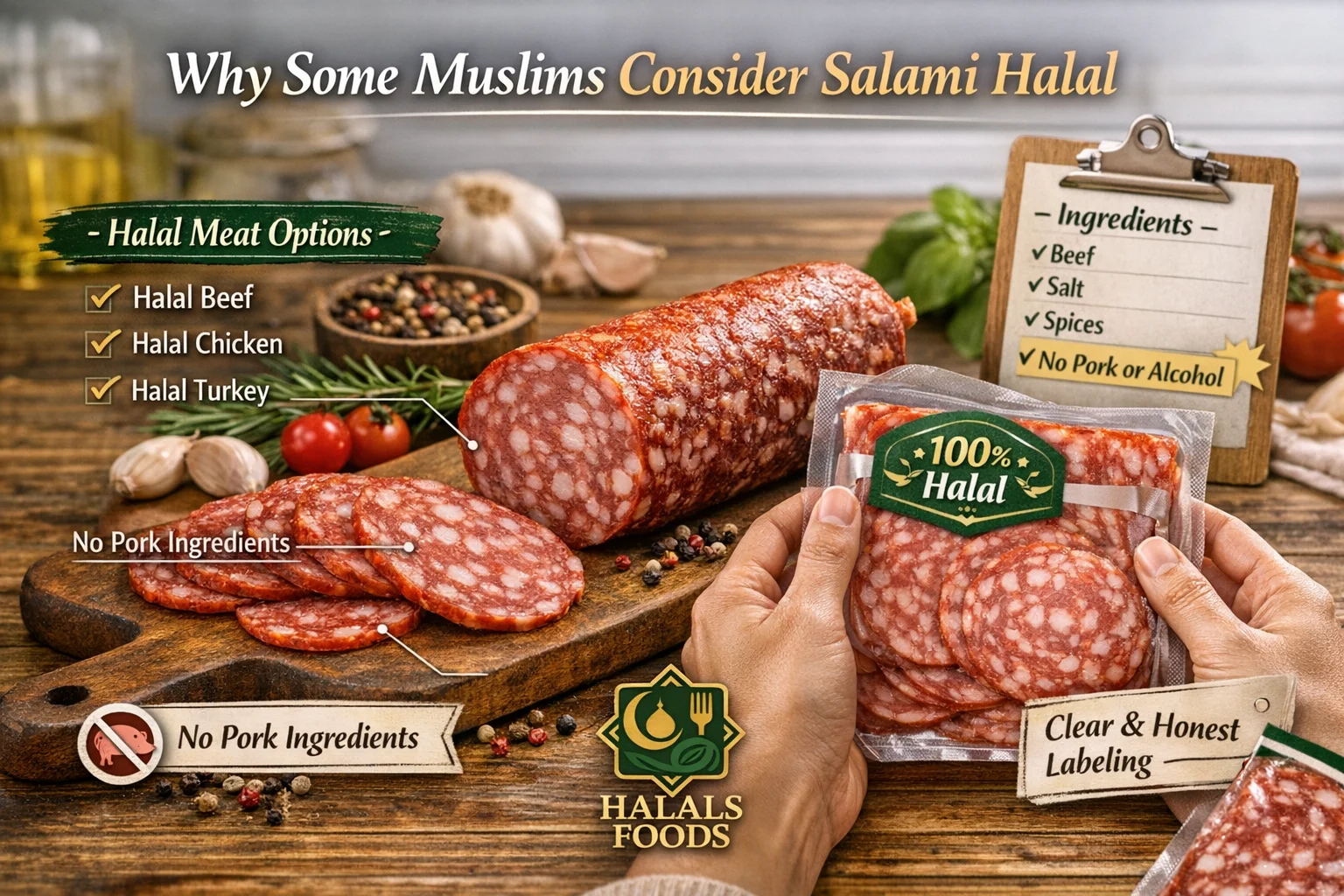
Although many scholars advise caution, some Muslims believe certain salami products may be permissible.
Their reasoning usually depends on the ingredients and source of the meat.
Halal Meat Versions
If salami is made from:
-
halal-slaughtered beef
-
halal chicken
-
halal turkey
and contains no pork ingredients, some scholars consider it permissible.
In this case, the product functions just like any other halal deli meat.
Ingredient Transparency
Some consumers check the product label carefully and conclude that the salami is halal when the ingredients list only includes:
-
beef
-
salt
-
spices
-
preservatives
If the label does not mention pork, gelatin, or alcohol, some Muslims feel comfortable consuming it.
Minority Scholarly Views
A small number of scholars allow meat from People of the Book (Christians and Jews) if slaughtered traditionally and if pork is not involved.
However, this opinion is debated and not universally accepted.
Because modern industrial slaughter often does not follow Islamic guidelines, many scholars still advise caution.
Why Some Muslims Avoid Salami
Despite the existence of halal versions, many Muslims avoid salami entirely unless it is clearly halal certified.
There are several reasons for this caution.
Pork Is Extremely Common
Traditional salami recipes almost always include:
-
pork meat
-
pork fat
Because pork is clearly haram in Islam, this makes most conventional salami products impermissible.
Even salami labeled as “beef salami” sometimes includes small amounts of pork fat for texture.
Doubts About Slaughter Methods
Even if salami contains beef or chicken, the meat may not be slaughtered according to Zabiha halal standards.
Without proper slaughter practices, the meat is considered non-halal.
Cross-Contamination Risks
As mentioned earlier, many processed meat factories produce pork products alongside other meats.
Shared production equipment can result in contamination, which is another reason cautious Muslims avoid uncertified salami.
Lack of Halal Certification
For many Muslim consumers, halal certification provides essential assurance.
When a product has no halal certification, it becomes difficult to confirm whether it meets Islamic dietary requirements.
Therefore, some Muslims choose to avoid it completely.
USA Halal Market Context
Understanding the halal food market in the United States also helps answer the question Is salami halal.
The halal food industry in the U.S. has grown significantly over the past decade due to the increasing Muslim population.
Halal Meat Regulations
Unlike kosher food, halal food in the U.S. is not governed by a single national authority.
Instead, halal certification is managed by independent organizations such as:
-
IFANCA
-
HFSAA
-
Islamic Services of America
These organizations inspect farms, slaughterhouses, and food manufacturing facilities.
Challenges in the Processed Meat Industry
Processed meats like salami present several halal challenges:
-
Complex ingredient lists
-
Shared production equipment
-
Mixed meat sources
-
Imported ingredients
Because of these factors, halal certification becomes especially important for processed meat products.
Muslim Consumer Awareness
Muslim consumers in the U.S. are becoming more aware of halal labeling and ingredient transparency.
Many now follow a simple rule:
If there is no halal certification, avoid processed meat products.
This trend has encouraged more companies to produce halal deli meats and halal salami.
Final Verdict: Is Salami Halal?
So, Is salami halal?
The answer depends entirely on the ingredients and production process.
Most traditional salami is not halal because it contains pork or pork fat. Additionally, many products use meat that is not slaughtered according to Islamic guidelines.
However, halal salami does exist. When it is made from halal-certified beef, chicken, or turkey and produced in a halal-certified facility, it is permissible for Muslims.
The safest approach is to always check:
-
the ingredients list
-
the product label
-
the halal certification logo
Choosing certified halal products ensures that your food complies with Islamic dietary laws.
Frequently Asked Questions
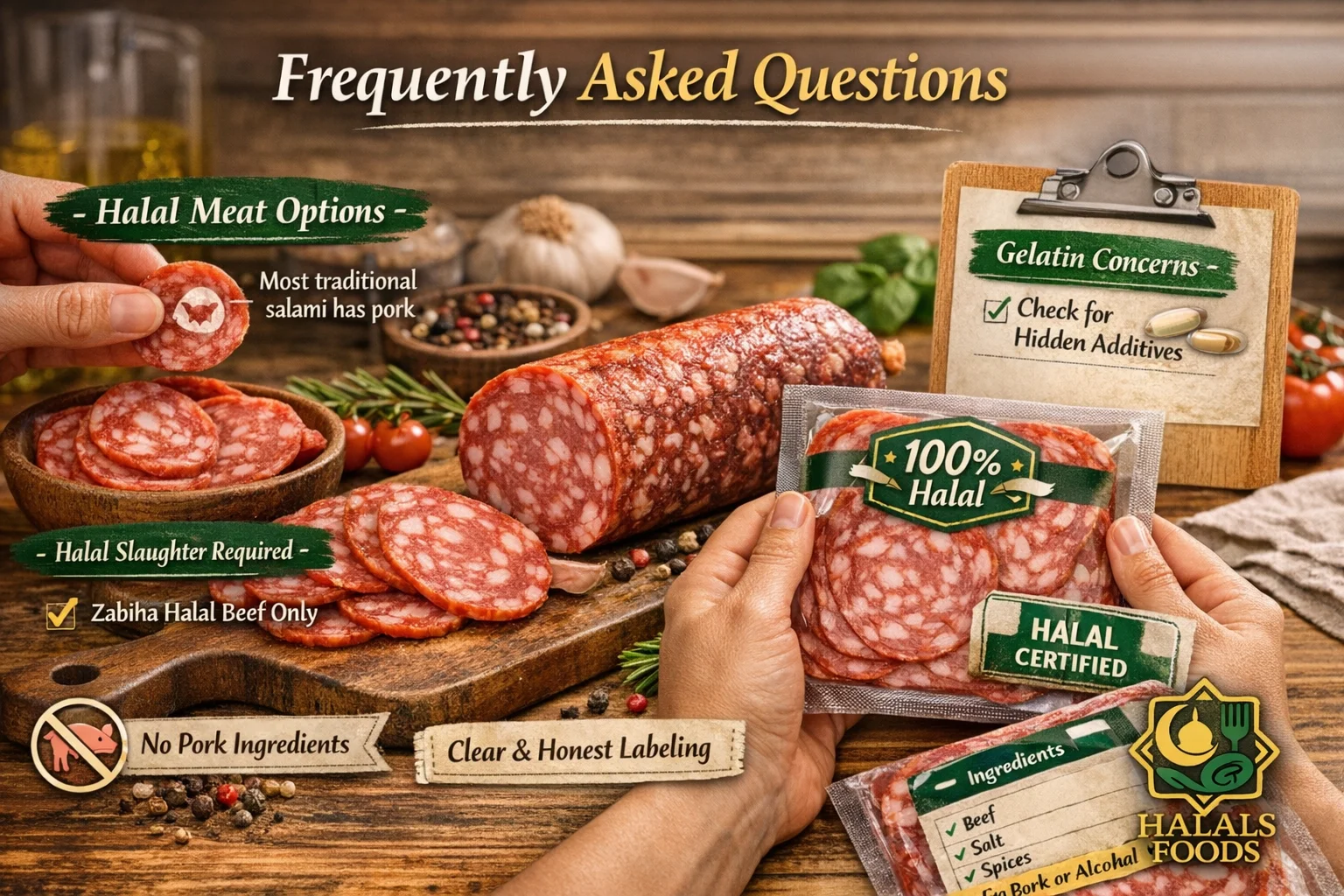
1. Does salami contain pork?
Traditional salami almost always contains pork or pork fat. This is why many salami products are considered haram for Muslims.
However, halal versions made from beef, chicken, or turkey are available in halal markets.
2. Is beef salami automatically halal?
No. Beef salami is only halal if the beef comes from animals slaughtered according to Islamic Zabiha halal guidelines.
Without halal certification, the slaughter method cannot be guaranteed.
3. Does salami contain gelatin?
Most salami does not contain gelatin, but some processed meat products may include additives derived from animal sources.
If gelatin is derived from pork, it is considered haram.
4. Is turkey salami halal?
Turkey salami can be halal if:
-
the turkey is slaughtered according to Islamic law
-
the product does not contain pork ingredients
-
the facility follows halal processing standards
Checking halal certification is the best way to confirm.
5. Is salami halal in the UK but not in the USA?
Halal availability differs by region.
In the UK, many supermarkets sell halal-certified deli meats. In the USA, halal salami is usually found in halal grocery stores or specialty markets.
6. Does salami contain alcohol?
Some processed foods use alcohol-based flavor carriers, but salami typically does not contain significant alcohol.
Halal-certified salami products generally avoid alcohol entirely.
7. Do salami factories also process pork?
Yes, many processed meat factories handle pork products.
This creates a risk of cross-contamination unless the facility is specifically halal-certified.
8. Is salami halal for Hanafi scholars?
Most Hanafi scholars require meat to be slaughtered according to Islamic guidelines.
Therefore, salami without verified halal meat is usually considered not permissible.
9. Are there halal-certified salami brands?
Yes. Several halal meat companies produce certified halal beef or turkey salami.
These products are typically sold in halal butcher shops and Muslim grocery stores.
References
-
IFANCA – Islamic Food and Nutrition Council of America
-
Halal Food Standards Alliance of America (HFSAA)
-
USDA Processed Meat Ingredient Guidelines
-
Islamic dietary law sources on halal meat and slaughter
-
Food manufacturer ingredient labels and product pages
Related Halal Food Guides You May Find Helpful
People searching for “Is [ Is Perdue Chicken Halal? ]” are also curious about other foods and ingredients. Below, you’ll find related halal food articles that clearly explain ingredient sources, how products are made, and whether they meet halal requirements.
More. [ Is Tyson Chicken Halal in the USA? ]
More. [ Is Sanderson Farms Halal ]
More. [ Is Turkey Bacon Halal? ]
More. [ Best halal chicken brands in USA ]