Let’s Be Honest… Eating Halal in US Chains Is Confusing
If you’re a Muslim living in the U.S. — or even traveling there — you’ve probably faced this situation:
You walk into a big fast-food chain…
You’re hungry…
Everything smells amazing…
But then the question hits:
“What can I actually eat here that’s halal?”
This is exactly where most people get stuck.
Some assume:
- “It’s just chicken, it should be fine.”
- “There’s no pork, so it’s halal.”
But here’s the part most people ignore…
👉 Halal is not just about ingredients — it’s about sourcing, processing, and preparation.
That’s why understanding. Halal items you can eat at big US chains requires a deeper look — not just surface-level assumptions.
Why This Topic Is So Important Right Now
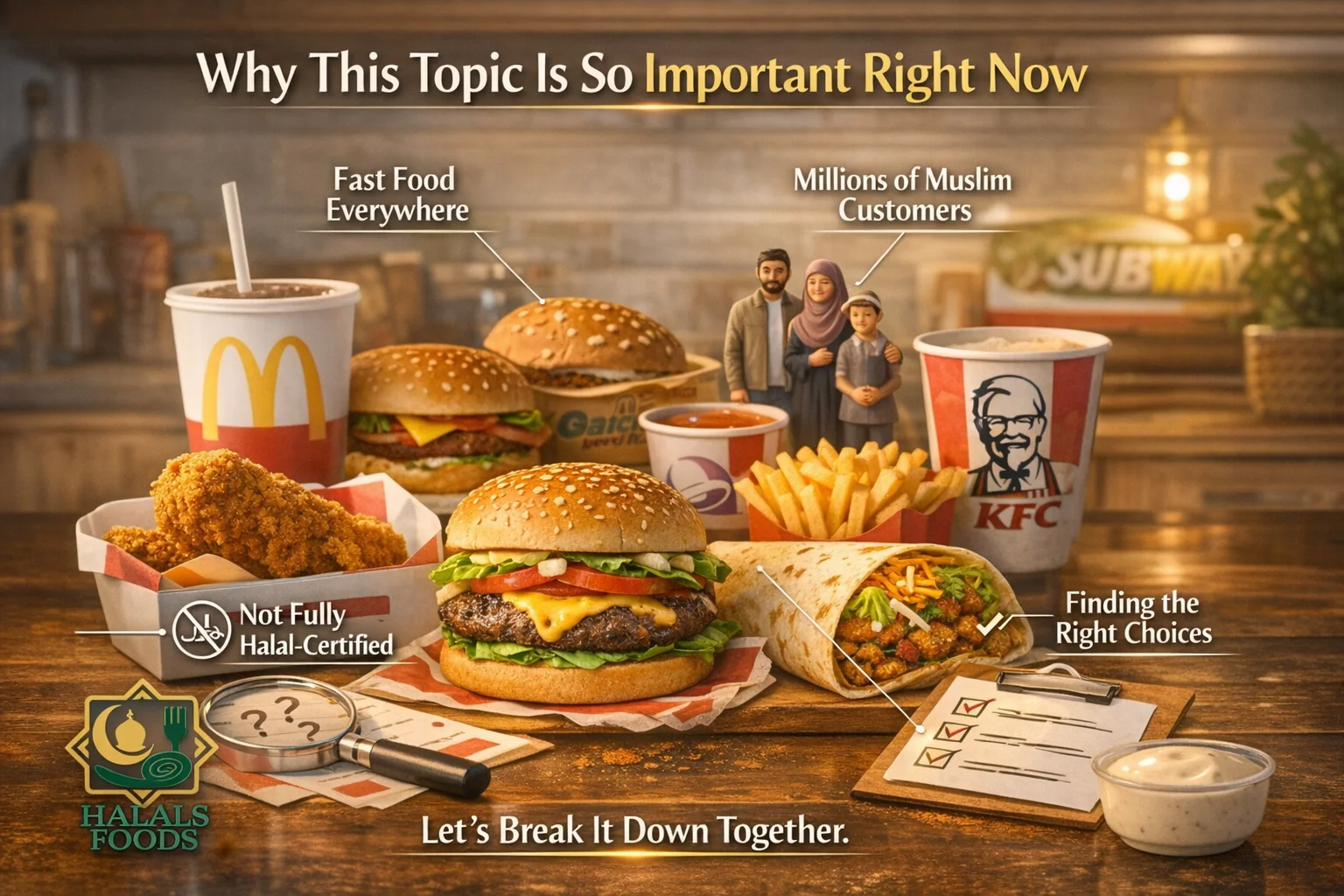
Fast food is everywhere in America:
- McDonald’s
- Burger King
- KFC
- Subway
- Taco Bell
And millions of Muslims interact with these chains daily.
But here’s the issue:
👉 Most big US chains are NOT fully halal-certified.
So the real question becomes:
Can you still find halal-friendly options inside them?
The answer is yes… but with conditions.
And that’s exactly what we’re going to break down step by step.
Understanding Halal in Simple Words (No Complication)
Before jumping into specific foods, let’s simplify the concept.
Halal food must meet 3 main conditions:
1. The Source Must Be Halal
- No pork or pork derivatives
- No haram animals
2. Proper Slaughter (Zabiha)
- Animal must be slaughtered in the name of Allah
- Blood must be drained
3. No Cross-Contamination
- No mixing with haram items
- Separate cooking equipment (ideally)
Now here’s where things get tricky in US chains…
👉 Even if an item is “vegetarian,” it can still become doubtful due to shared fryers or surfaces.
The Big Misconception: “Vegetarian = Halal”
Let’s clear this up.
A lot of Muslims rely on vegetarian menu items thinking they’re automatically halal.
But let’s be real…
👉 That’s not always true.
Here’s why:
- Fries may be cooked in oil used for chicken or bacon
- Cheese may contain animal-based enzymes
- Sauces may include alcohol-based flavoring
So when talking about Halal items you can eat at big US chains, we must think beyond labels.
Safe Zone vs Grey Zone: The Smart Approach
Instead of asking “Is this halal or haram?”, a smarter question is:
👉 “Is this SAFE, DOUBTFUL, or CLEARLY NOT HALAL?”
Let’s break it down:
✅ Safe Zone (Generally Acceptable)
- Plain fries (in dedicated fryers)
- Soft drinks
- Coffee
- Basic salads (without meat or questionable dressing)
- Fish items (with caution)
⚠️ Grey Zone (Needs Checking)
- Cheese products
- Sauces and dressings
- Fried items (shared oil)
- Bread (may contain enzymes)
❌ Not Halal
- Beef/chicken without halal certification
- Bacon or pork items
- Gelatin-based desserts
This mindset will make navigating US chains much easier.
So What CAN You Actually Eat?
Now let’s get practical.
Here are some commonly available Halal items you can eat at big US chains — but remember, always verify locally.
🍟 Fries: The Most Common Go-To
Almost every Muslim ends up ordering fries.
But here’s the twist…
👉 Not all fries are equal.
When fries are okay:
- Cooked in separate vegetable oil
- No animal flavoring added
When to avoid:
- Shared fryer with meat
- Beef flavoring (yes, some chains use it)
💡 Example:
- McDonald’s US fries contain natural beef flavor → NOT halal
- Some other chains may use pure vegetable oil → potentially okay
🥤 Drinks: The Safest Choice
This one is simple.
👉 Most beverages are halal.
You can safely choose:
- Coca-Cola / Pepsi
- Juices
- Iced tea
- Coffee
Just watch out for:
- Alcohol-based flavorings (rare but possible)
🥗 Salads: Healthy… But Check Carefully
Salads seem like the safest option, right?
Well… mostly.
Safe if:
- No meat added
- No bacon bits
- Simple vegetables
Be careful with:
- Caesar dressing (may contain anchovies)
- Cheese (animal enzymes)
- Pre-mixed salads
👉 Always ask or check ingredients.
🐟 Fish Items: A Smart Alternative
Here’s where things get interesting.
In Islam:
👉 Seafood is generally considered halal (with some differences in opinion).
So fish sandwiches can be a great option.
But wait…
The real issue is:
- Frying oil
- Cross-contact with meat
💡 Example:
- McDonald’s Filet-O-Fish → ingredients may be fine
- BUT cooked in shared oil → questionable
🍞 Bread & Buns: The Silent Factor
Most people ignore this completely.
But here’s the truth:
👉 Bread can contain:
- Enzymes (animal or microbial)
- Alcohol traces
Usually:
- Big chains use plant-based or synthetic enzymes
But since it’s not always disclosed…
👉 It falls into the grey zone
🧀 Cheese: The Hidden Risk
Cheese is one of the biggest confusion points.
Why?
Because of rennet.
- Animal rennet → NOT halal (unless halal-certified)
- Microbial rennet → Halal
The problem?
👉 Most US chains don’t clearly specify.
So cheese items:
- Pizza
- Burgers
- Wraps
👉 Often fall into doubtful category
🍦 Desserts: Sweet but Risky
Desserts look harmless…
But they can contain:
- Gelatin (haram if pork-based)
- Emulsifiers
- Alcohol flavoring
Safer choices:
- Basic ice cream (check ingredients)
- Fruit cups
Risky:
- Marshmallow items
- Gel-based desserts
Here’s What Most People STILL Get Wrong
Let’s be real for a second…
Even after knowing all this, many people still say:
👉 “It’s too complicated, I’ll just eat whatever.”
But that’s not a smart approach.
Instead:
✔ Learn a few safe options
✔ Stick to simple items
✔ Avoid doubtful meat
That’s how you stay consistent without stress.
Real-Life Example: A Muslim Ordering Smartly
Let’s say you walk into a big US chain.
Instead of guessing, you can order like this:
- Fries (after confirming oil)
- Soft drink
- Veggie sandwich (no cheese, no sauce)
Simple. Clean. Less doubt.
👉 This is the practical way to handle. Halal items you can eat at big US chains.
Internal Linking Suggestions
You can also read:
- “Is McDonald’s Halal in the USA?”
- “How to Identify Halal Food in America”
- “Is Fast Food Chicken Halal or Haram?”
But Wait… There’s a Bigger Question Coming
So far, we’ve talked about:
- Safe items
- Grey areas
- Smart choices
But here’s where things get deeper…
👉 What about meat from “People of the Book”?
👉 Are some chains secretly halal in certain locations?
👉 Can you trust cross-contamination claims?
And most importantly…
👉 Is it actually okay to eat from these chains regularly?
The Question Everyone Eventually Asks…
So now that you know some. Halal items you can eat at big US chains, a deeper question naturally comes up:
👉 “What about the meat itself?”
👉 “Can I just eat chicken or beef if it’s not pork?”
This is where things get serious.
Because up until now, we’ve been avoiding meat or staying in the “safe zone.”
But let’s face it…
Most people don’t go to fast food chains just for fries and drinks.
They want burgers. Chicken. Nuggets.
So let’s break this down properly — no confusion, no sugarcoating.
The “People of the Book” Argument — Is It Valid Today?
You’ve probably heard this before:
“You can eat meat from Christians and Jews, so US fast food should be okay.”
This idea comes from a Quranic concept:
- Meat from Ahl al-Kitab (People of the Book) is permissible
Sounds simple, right?
But here’s the part most people ignore…
👉 That ruling had conditions.
In classical Islamic understanding:
- The animal must still be slaughtered properly
- The name of Allah should be invoked
- It should not be killed in a prohibited way
Now compare that to modern US slaughter practices:
- Machines do the slaughter
- No individual “Bismillah”
- Stunning methods may kill the animal before slaughter
👉 This creates a major difference.
So… Is Fast Food Meat Halal in the US?
Let’s be clear and honest:
👉 Most mainstream US fast food meat is NOT considered halal by the majority of scholars.
Why?
Because:
- No halal certification
- Industrial slaughter processes
- No religious compliance
So when it comes to:
- McDonald’s burgers
- KFC chicken
- Burger King beef
👉 These are generally not halal unless specifically certified.
But What About “Halal-Certified Locations”?
Here’s where things get interesting…
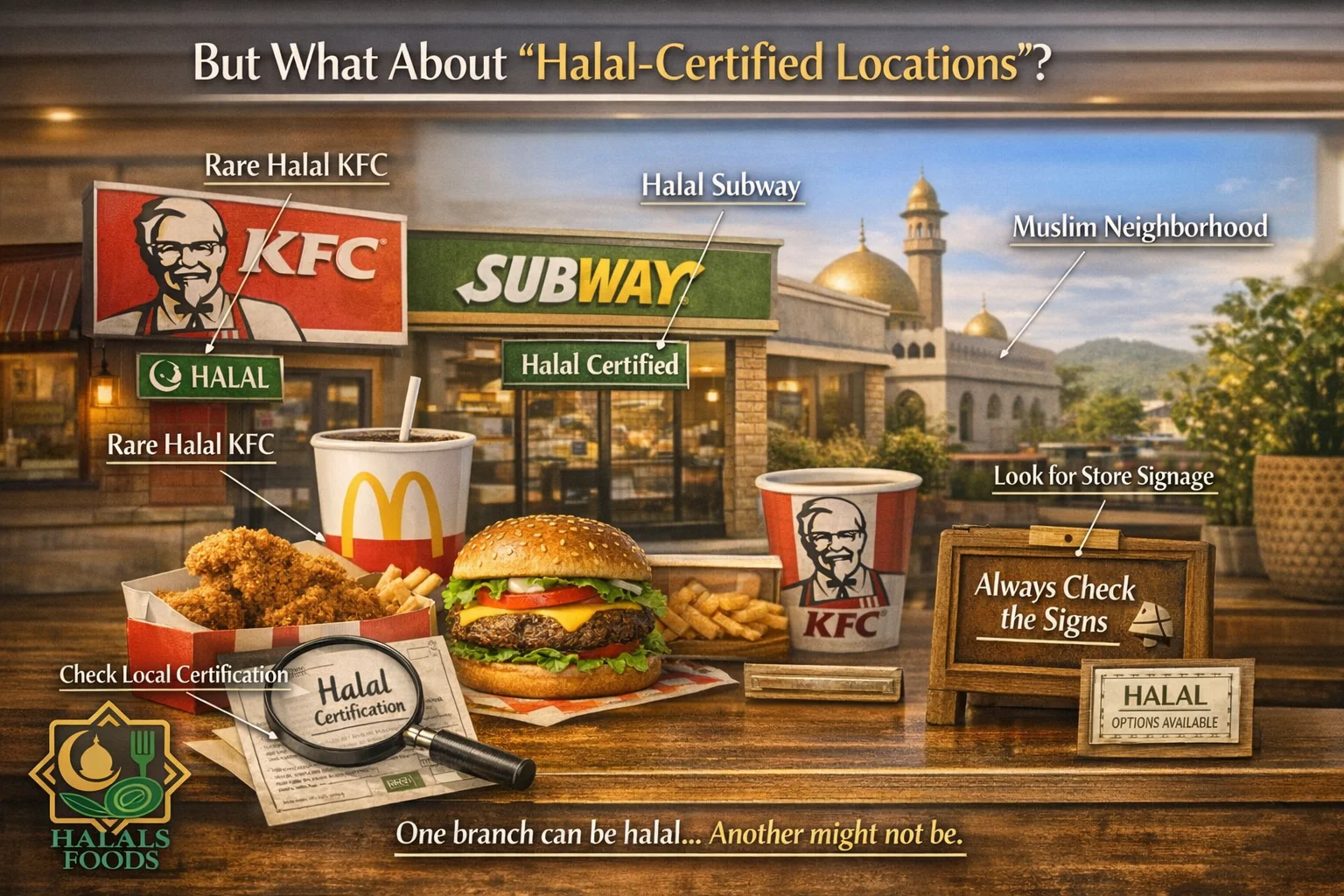
Some US chains DO offer halal in specific locations.
For example:
- Certain KFC branches (very rare in the US)
- Halal-certified Subway franchises
- Local branches in Muslim-majority neighborhoods
👉 But this is NOT the standard across the country.
Important Rule:
Always check:
- Local certification
- Store signage
- Official statements
Because one branch can be halal…
👉 while another branch of the SAME brand is not.
Cross-Contamination: The Hidden Problem
Even if you find something “halal-friendly,” there’s another issue:
👉 Cross-contamination
Let’s be real…
In fast food kitchens:
- Same grills are used
- Same oil is reused
- Same gloves handle everything
So even if you order:
- Fish sandwich
- Fries
- Veggie wrap
👉 It may still come into contact with haram items.
Does That Mean Everything Is Haram?
Not exactly.
This is where balance matters.
Islam doesn’t require perfection — but it does require effort and awareness.
So instead of extremes:
- ❌ “Everything is haram, I’ll starve”
- ❌ “Everything is fine, I’ll eat anything”
👉 The correct approach is:
✔ Avoid clear haram
✔ Be cautious of doubtful
✔ Choose safer alternatives
Smart Strategy: How to Eat Without Stress
Here’s a simple system you can follow anytime:
Step 1: Avoid Meat (Unless Certified Halal)
This removes 90% of the risk.
Step 2: Stick to Simple Items
- Fries (confirmed oil)
- Drinks
- Basic vegetarian options
Step 3: Ask Questions (When Possible)
Even one question can clarify a lot:
- “Is this cooked separately?”
- “What oil do you use?”
Step 4: Don’t Overcomplicate
If something feels too doubtful…
👉 Just leave it.
Real Talk: Living in a Non-Halal Environment
Let’s be real for a moment…
If you live in the US:
- You won’t always find halal food easily
- Social situations can be awkward
- Travel makes it harder
But here’s the mindset shift:
👉 Halal is not about convenience — it’s about consciousness.
Even small efforts matter.
Choosing:
- Fries instead of nuggets
- Fish instead of beef
- Certified places over random ones
👉 These choices build consistency.
Common Questions (Quick Answers)
❓ Can I eat fries from any US chain?
👉 Not always. Check oil and flavoring.
❓ Is fish always halal?
👉 The fish itself is halal, but preparation matters.
❓ Are vegan items always safe?
👉 Mostly safer, but still check for cross-contact.
❓ Is it sinful if I didn’t know?
👉 Unintentional mistakes are treated differently — but learning is important.
❓ Can I rely on “no pork” labels?
👉 No. Halal is more than just avoiding pork.
The Emotional Side Nobody Talks About
You might feel:
- Left out with friends
- Tired of limited options
- Confused by conflicting opinions
That’s completely normal.
But here’s something worth remembering…
👉 Every small halal choice is an act of عبادہ (worship).
Even skipping something doubtful…
👉 That counts.
Practical Examples You Can Use Daily
Let’s make this super real.
Scenario 1: You’re at McDonald’s
- Order: Drink + apple slices
- Avoid: Burgers, nuggets, fries (US version)
Scenario 2: You’re at Subway
- Order: Veggie sandwich (no cheese, careful with sauces)
- Best: Find halal-certified branch
Scenario 3: You’re at a random chain
- Order: Fries (confirm oil) + drink
- Optional: Plain salad
👉 This is how you apply Halal items you can eat at big US chains in real life.
A Smarter Alternative Most People Ignore
Here’s something powerful…
Instead of struggling with big chains:
👉 Look for:
- Local halal restaurants
- مسلم-owned businesses
- Halal food apps
Not only is it safer…
👉 You’re also supporting your community.
Internal Linking Suggestions
You can also read:
- “Is Burger King Halal in the USA?”
- “Complete Guide to Halal Fast Food Options”
- “Is KFC Halal or Haram Globally?”
Final Verdict: So What’s the Truth?
Let’s wrap this up clearly.
✅ You CAN find Halal items you can eat at big US chains.
But:
- They are limited
- They require awareness
- They are often meat-free
❌ Most meat items are NOT halal
Unless:
- Specifically certified
- Verified locally
⚠️ Many items fall into doubtful category
So your best move is:
👉 Stay simple
👉 Stay informed
👉 Stay consistent
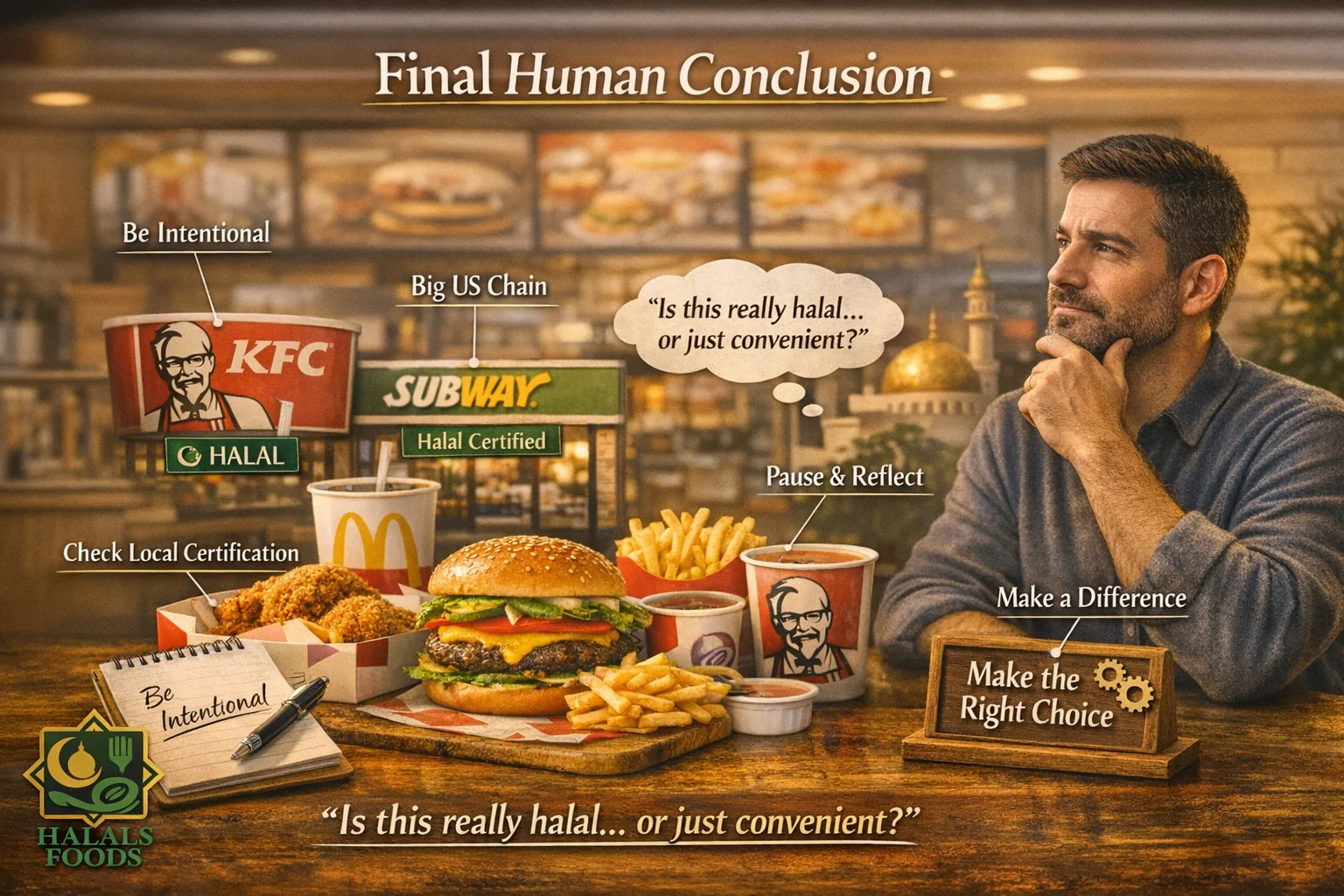
Final Human Conclusion
Let’s be real…
You don’t need to be perfect.
But you do need to be intentional.
Next time you walk into a big US chain…
Don’t just order blindly.
Pause for a second and ask:
👉 “Is this really halal… or just convenient?”
That one question can change everything.
Related Halal Food Guides You May Find Helpful
People searching for “Is [ Is Burger King Halal? ]” are also curious about other foods and ingredients. Below, you’ll find related halal food articles that clearly explain ingredient sources, how products are made, and whether they meet halal requirements.
More Related Articles [ Is KFC Halal? ]
More Related Articles [ Is McDonald’s Halal in USA? ]
More Related Articles [ Is Popeyes chicken halal or Haram ]