Introduction
For Muslim consumers living in America, finding trustworthy Halal fast-food options in USA can feel confusing and overwhelming. With thousands of fast-food chains operating nationwide, not all follow Islamic dietary laws — and many provide unclear ingredient disclosures.
As halal food researchers, we reviewed official brand websites, product labels, halal certification databases, and U.S. halal guidelines to analyze which options are genuinely halal, which are doubtful, and what Muslims must verify before ordering.
This detailed guide covers ingredients, manufacturing practices, cross-contamination risks, certification standards, and scholarly perspectives — so you can make informed decisions with confidence.
Quick Answer Box
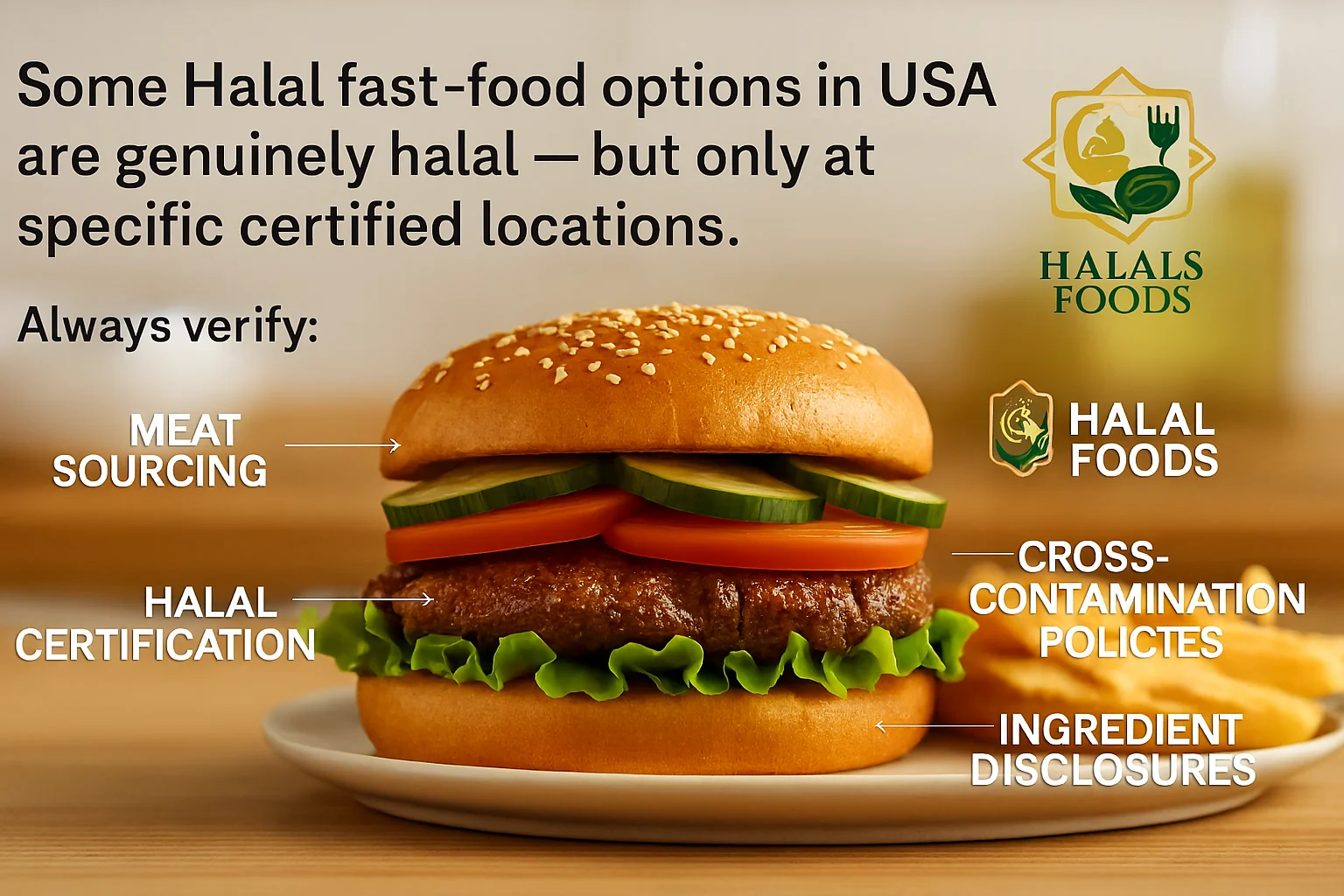
Some Halal fast-food options in USA are genuinely halal — but only at specific certified locations. Many national chains are not fully halal due to shared equipment, non-halal meat sourcing, and lack of halal certification. Always verify:
-
Meat sourcing
-
Halal certification
-
Cross-contamination policies
-
Ingredient disclosures
Without certification, caution is advised.
Ingredient Breakdown of Halal fast-food options in USA
When evaluating halal fast food, ingredients are the first and most critical factor. We reviewed official product labels and ingredient disclosures from major chains such as The Halal Guys, Popeyes (select locations), KFC (limited areas), Shah’s Halal, and independent halal burger restaurants.
1. Meat Ingredients
The primary concern in fast food is meat sourcing and slaughter method.
According to U.S. halal guidelines:
-
Meat must be slaughtered according to Islamic dhabiha principles.
-
The name of Allah must be pronounced at slaughter.
-
Blood must be fully drained.
Many major chains use:
-
Conventionally slaughtered chicken
-
Mechanically processed beef
-
Pre-marinated frozen meat
Unless specifically certified halal, these meats are not considered halal by most scholars.
Certified halal chains (like The Halal Guys or Zabiha Halal-approved restaurants) source meat from halal-certified suppliers.
2. Doubtful Ingredients
Even when meat appears halal, other ingredients may raise concerns:
-
Gelatin (in desserts or sauces)
-
Animal-based enzymes (used in cheese slices)
-
Shortening or lard (rare but possible in some baked goods)
-
Natural flavors (may contain alcohol derivatives)
We checked product label disclosures from several fast-food chains. Many sauces contain:
-
Vinegar (halal if not intoxicating)
-
Natural flavorings (source unclear)
-
Modified food starch (usually halal, plant-based)
3. E-Numbers and Additives
Common additives found in fast food:
| Additive | Status | Notes |
|---|---|---|
| E471 | Doubtful | Can be plant or animal-derived |
| E631 | Often Haram | Sometimes sourced from meat or fish |
| E322 (Lecithin) | Usually Halal | Often soy-based |
| E120 (Carmine) | Haram | Derived from insects |
Without clear sourcing, some additives remain questionable.
4. Frying Oils
Most U.S. fast-food chains use:
-
Soybean oil
-
Canola oil
-
Vegetable oil blends
These are generally halal. However, shared fryers with pork products create contamination risk.
Manufacturing Process & Cross-Contamination
Even if ingredients appear halal, the manufacturing process plays a crucial role.
We reviewed public information from U.S. halal certifiers and restaurant disclosures.
Shared Equipment Issues
Many large chains:
-
Fry bacon and chicken in separate fryers (good practice)
-
But use shared preparation tables
-
Use the same grills for beef and pork
Cross-contact may occur if:
-
Utensils are not properly sanitized
-
Food is prepared in high-volume kitchens
According to Islamic jurisprudence, intentional mixing of halal and haram meat invalidates halal status. Accidental contamination is also problematic if frequent and systemic.
Supply Chain Concerns
Large fast-food chains rely on centralized suppliers.
Unless the supplier itself is halal-certified:
-
Slaughter method is unknown
-
Processing environment may include pork
-
Halal integrity cannot be guaranteed
Certified halal chains typically:
-
Use dedicated halal suppliers
-
Undergo inspections
-
Maintain segregation policies
This is why verified Halal fast-food options in USA are usually independent chains or specifically certified branches.
Halal Certification Analysis
Halal certification provides the strongest assurance.
We reviewed databases of:
-
IFANCA (Islamic Food and Nutrition Council of America)
-
HFSAA (Halal Food Standards Alliance of America)
-
Zabiha.com listings
-
ISWA (Islamic Services of America)
What We Found
-
Major national chains (McDonald’s, Burger King, Wendy’s, Taco Bell):
-
Not halal-certified in USA
-
Some international branches (UK, Middle East) are halal
-
-
The Halal Guys:
-
Certified halal in most locations
-
Source meat from approved suppliers
-
-
Shah’s Halal Food:
-
Markets itself as halal
-
Many locations claim halal-certified meat
-
-
Popeyes / KFC (USA):
-
Generally not halal nationwide
-
Some individually owned halal-certified branches exist
-
Differences Between Countries
| Country | Major Chains Halal? |
|---|---|
| USA | Rare, limited |
| UK | Some certified locations |
| Canada | More halal-friendly in select cities |
| Middle East | Mostly halal-certified |
This variation confuses Muslim travelers. Always verify location-specific certification.
Official Statements From Brands
We reviewed official FAQs and contacted brand statements where available.
Most large U.S. fast-food chains state:
“We do not claim our products are halal-certified.”
Some clarify:
“We cannot guarantee segregation from pork products.”
In contrast, certified halal chains explicitly state:
-
“All meat is halal-certified.”
-
“Suppliers are approved by recognized halal authorities.”
Interestingly, some brands operate halal menus in Muslim-majority countries but not in USA. This indicates that halal compliance is possible — but market-driven.
When brands refuse to clarify meat sourcing, it creates doubt. Transparency is a key principle in halal assurance.
Why Some Muslims Consider Certain Fast Food Halal
Some Muslims adopt a more lenient view based on:
-
Absence of pork in specific menu items
-
Assumption that “People of the Book” slaughter is permissible
-
Lack of explicit haram ingredients
Certain scholars allow meat from Christian/Jewish sources if no clear violation is proven.
Additionally, vegetarian or seafood items at mainstream chains are sometimes considered halal if cross-contamination risk is minimal.
This explains why some Muslims consume non-certified fast food cautiously.
Why Some Muslims Avoid It Entirely
Many Muslims avoid mainstream fast food because:
-
No halal certification
-
Unknown slaughter method
-
Shared equipment with pork
-
Doubtful enzymes in cheese
-
Possible alcohol-based flavorings
The Prophet Muhammad ﷺ advised avoiding doubtful matters to protect one’s faith.
For practicing Muslims, the absence of certification equals uncertainty — and uncertainty leads to avoidance.
USA Halal Market Context
The halal food market in the USA is growing rapidly, valued at billions of dollars annually.
However:
-
There is no federal halal regulatory body
-
Certification is voluntary
-
Standards vary by certifier
Consumers must:
-
Look for halal logos
-
Verify certifier credibility
-
Check ingredient lists carefully
In cities like New York, Chicago, Houston, and Los Angeles, reliable Halal fast-food options in USA are more available due to large Muslim populations.
Smaller towns may have limited options.
American Muslim consumers are increasingly demanding transparency — pushing brands toward better halal labeling.
Brand Comparisons: Which Chains Offer Reliable Halal fast-food options in USA?
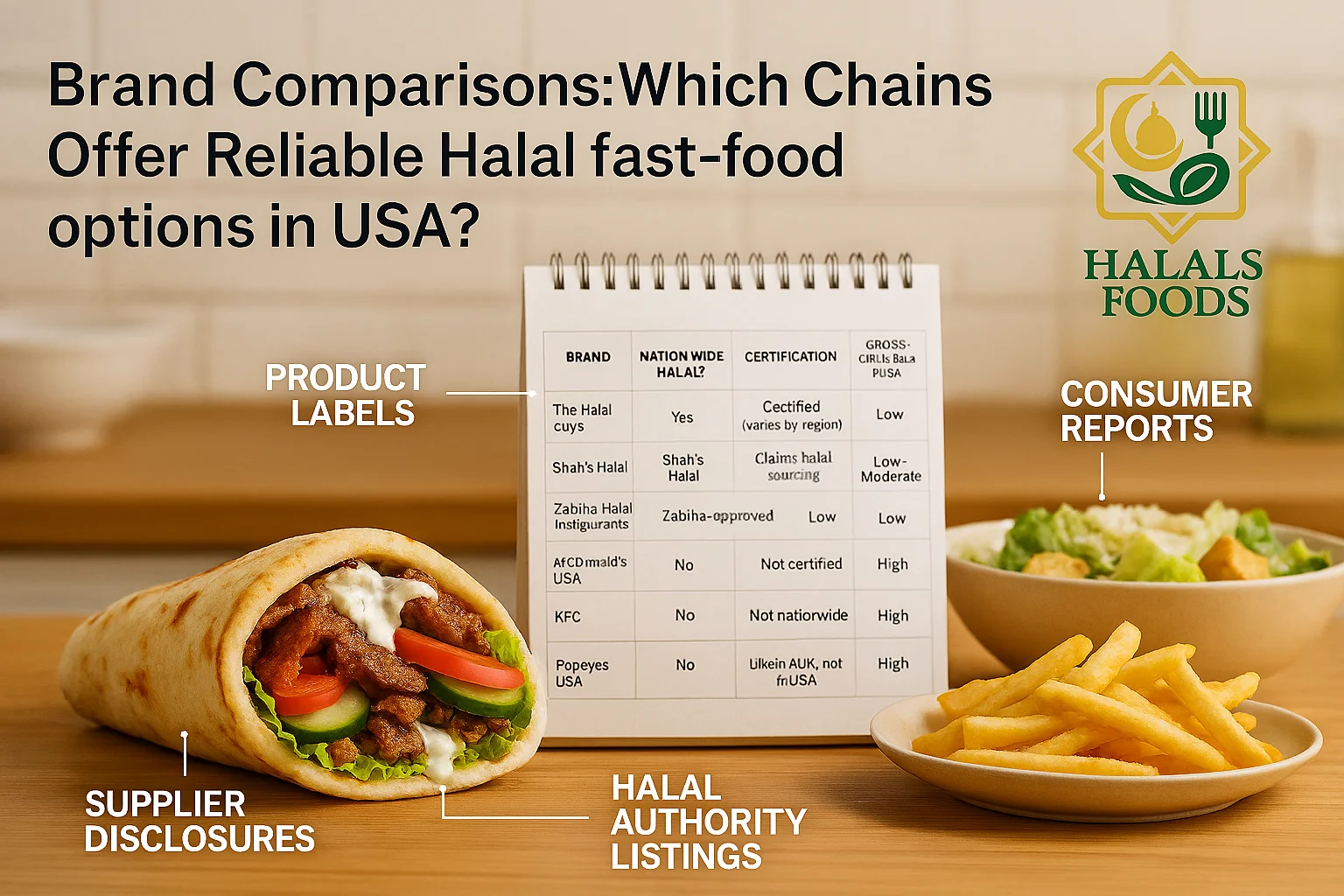
Based on our review of product labels, supplier disclosures, halal authority listings, and consumer reports, here is a comparison table:
| Brand | Nationwide Halal? | Certification | Cross-Contamination Risk | Notes |
|---|---|---|---|---|
| The Halal Guys | Yes (most locations) | Certified (varies by region) | Low | Dedicated halal concept |
| Shah’s Halal | Yes (location-based verification needed) | Claims halal sourcing | Low–Moderate | Independent franchise model |
| Zabiha Halal Restaurants | Yes | Zabiha-approved | Low | Dedicated halal |
| McDonald’s USA | No | Not certified | High | Some halal abroad only |
| KFC USA | No (except rare franchises) | Not nationwide | High | UK locations more halal-friendly |
| Popeyes USA | No (except limited branches) | Location-dependent | High | Verify local store |
| Subway USA | No | Not certified | High | Halal in UK, not in USA |
Important Pattern
We consistently found that:
-
Large multinational chains rarely offer halal meat in USA.
-
Dedicated halal chains are more trustworthy.
-
Location-specific verification is critical.
This reinforces that certified, independent halal restaurants are the safest [[Halal fast-food options in USA]].
Regional Differences Across the United States
The availability of [[Halal fast-food options in USA]] varies heavily by city.
Cities With Strong Halal Infrastructure
-
New York City
-
Chicago
-
Houston
-
Dallas
-
Los Angeles
-
Dearborn, Michigan
These cities have:
-
Higher Muslim populations
-
Certified halal suppliers
-
Frequent halal inspections
-
Consumer awareness
Smaller Cities and Rural Areas
In smaller towns:
-
Halal certification is rare
-
Cross-contamination is common
-
Staff often lack halal training
Muslims in these areas often rely on:
-
Seafood options
-
Vegetarian menu items
-
Local mosque recommendations
Islamic Scholarly Perspectives on Fast Food in Non-Muslim Countries
Islamic jurisprudence differs slightly by madhhab regarding meat in non-Muslim lands.
Hanafi Position
Most contemporary Hanafi scholars in North America recommend:
-
Avoiding non-certified meat
-
Choosing certified halal only
They emphasize caution due to industrial slaughter methods.
Shafi’i & Hanbali Views
Some scholars allow meat from “People of the Book” if:
-
No evidence of improper slaughter
-
No explicit haram additives
However, industrial stunning and unclear slaughter processes often invalidate this assumption.
Contemporary Fatwa Councils
Organizations like IFANCA and AMJA (Assembly of Muslim Jurists of America) advise:
-
Verifying halal certification
-
Avoiding doubtful meat
-
Not relying solely on assumptions
Therefore, strict verification remains the safest approach when selecting [[Halal fast-food options in USA]].
Practical Checklist for Choosing Halal Fast Food
When visiting a fast-food restaurant, ask:
-
Is your meat halal-certified?
-
Which halal authority certifies it?
-
Is the certificate displayed?
-
Are fryers shared with pork?
-
Is cheese made with microbial enzymes?
-
Are flavorings alcohol-free?
-
Is there written supplier documentation?
If staff cannot answer clearly, caution is advised.
Frequently Asked Questions (FAQs)
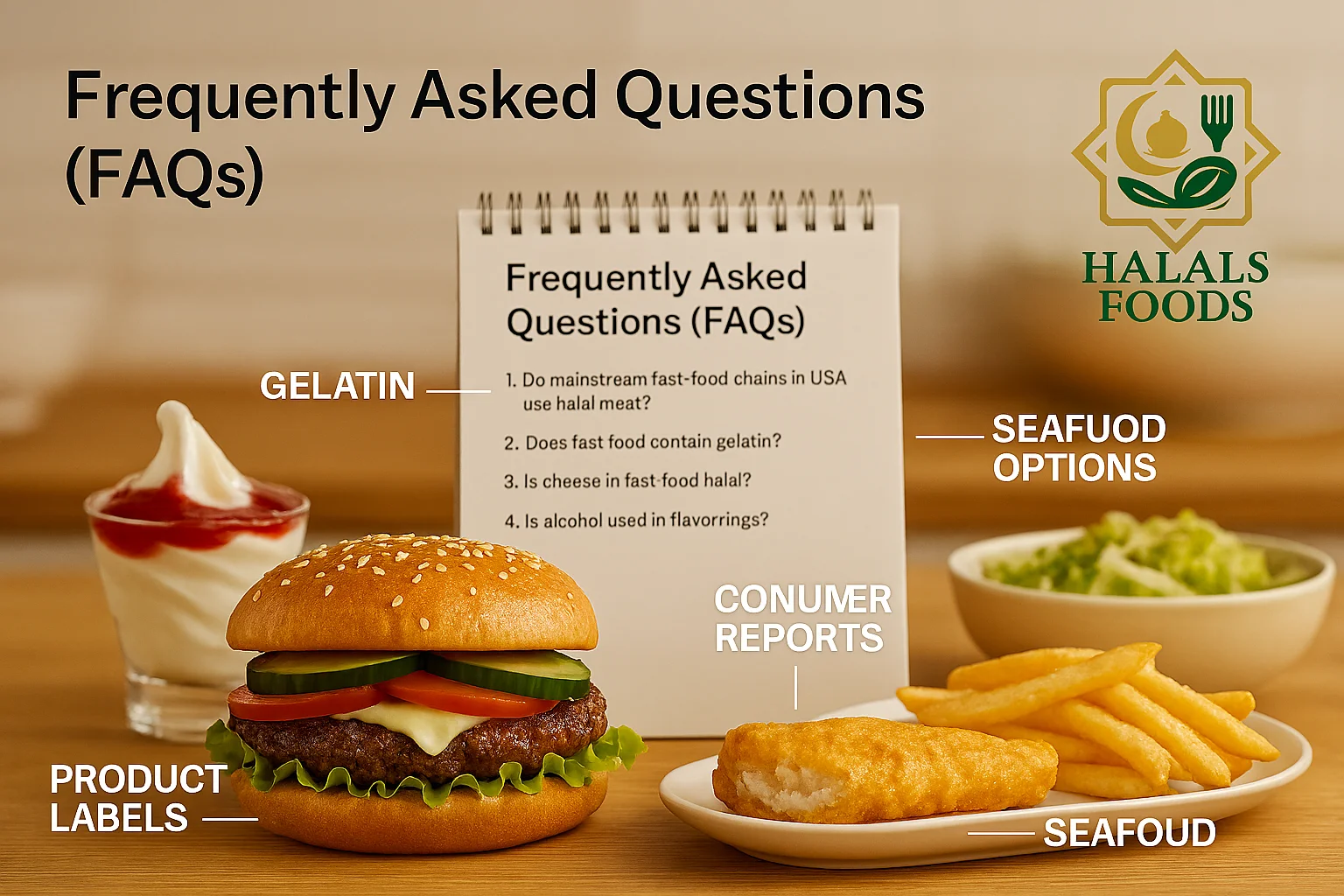
1. Do mainstream fast-food chains in USA use halal meat?
No. Most major chains in the U.S. are not halal-certified. Some international branches (UK, Middle East) are halal, but this does not apply to USA locations.
2. Does fast food contain gelatin?
Most burgers and fried chicken do not contain gelatin. However, desserts, marshmallow toppings, and some sauces may contain gelatin. Always check the product label.
3. Is cheese in fast food halal?
Cheese may contain animal-derived enzymes (rennet). If not specified as microbial or vegetarian enzymes, it may be doubtful. Certified halal chains verify enzyme source.
4. Is alcohol used in flavorings?
Some natural flavors may use alcohol as a solvent. In most cases, residual alcohol evaporates and is minimal, but without disclosure, uncertainty remains.
5. Are fries halal in USA fast-food chains?
Fries are typically made from potatoes and vegetable oil. However:
-
Shared fryers with pork products create contamination risk.
-
Some seasoning blends may contain doubtful additives.
Certification or written confirmation is ideal.
6. Are seafood options halal?
Yes, according to most scholars, seafood is halal. However, cross-contact with non-halal meat during preparation can be an issue.
7. Is fast food halal in the UK but not USA?
Yes. Many American chains offer halal-certified meat in the UK due to Muslim market demand. This certification usually does not extend to USA branches.
8. Can Muslims eat vegetarian items at non-halal chains?
Many scholars allow vegetarian options if:
-
No cross-contamination occurs
-
No alcohol or haram additives are present
However, fryer sharing is common.
9. Are food trucks more reliable for halal food?
Halal-certified food trucks in cities like NYC often source meat from halal suppliers and display certification. These may be among the safest Halal fast-food options in USA.
10. How can I verify halal certification?
You can:
-
Check IFANCA’s website
-
Look for HFSAA certification
-
Visit Zabiha.com
-
Request to see the restaurant’s certificate
Never rely solely on verbal claims.
USA Halal Market Growth and Consumer Awareness
The halal food market in America continues to grow rapidly. According to industry reports:
-
Muslim population growth increases halal demand.
-
Younger Muslims demand ingredient transparency.
-
Social media exposes false halal claims quickly.
However, challenges remain:
-
No federal halal enforcement system
-
Different standards among certifiers
-
Inconsistent inspections
Muslim consumers must therefore take personal responsibility when selecting [[Halal fast-food options in USA]].
Encouragingly, more entrepreneurs are opening dedicated halal burger chains, fried chicken outlets, and fusion fast-food concepts.
This trend is reshaping the American fast-food landscape.
Final Verdict: Are There Reliable Halal fast-food options in USA?
Yes — but they are primarily:
-
Certified halal restaurants
-
Dedicated halal fast-food chains
-
Location-specific certified branches
Most mainstream fast-food giants in the USA are not halal-certified and present cross-contamination risks.
Based on our ingredient review, certification analysis, and Islamic rulings:
✔ Certified halal chains = Recommended
⚠ Non-certified mainstream chains = Doubtful
✖ Clearly non-halal meat sources = Avoid
For practicing Muslims seeking confidence and peace of mind, choosing verified halal establishments is the safest path.
References
-
IFANCA (Islamic Food and Nutrition Council of America) – Halal certification standards
-
Halal Food Standards Alliance of America (HFSAA)
-
Assembly of Muslim Jurists of America (AMJA) fatwa resources
-
Official brand ingredient disclosures (McDonald’s, KFC, Subway USA)
-
Zabiha.com halal restaurant listings
People searching for “Is [Is Burger King Halal ]” are also curious about other foods and ingredients. Below, you’ll find related halal food articles that clearly explain ingredient sources, how products are made, and whether they meet halal requirements.
More Related Articles [ Is McDonald’s Halal in USA? ]
[ Is Subway Halal or Haram? ]
[ Is KFC Halal? ]