1. Introduction
For many Muslims and Jews around the world, food is not just about taste—it is about faith, ethics, and religious obedience. Dietary laws in Islam and Judaism guide followers on what they can eat and how food must be prepared. Two of the most well-known religious dietary systems are halal in Islam and kosher in Judaism.
Because both systems share some similarities—such as avoiding pork and requiring specific slaughter practices—many people often ask about the Difference between halal & kosher and whether kosher food can be considered halal.
We reviewed Islamic dietary guidelines, Jewish kosher laws, certification standards, and ingredient regulations to understand the Difference between halal & kosher in detail. In this guide, we will analyze ingredients, slaughter rules, certifications, manufacturing practices, and scholarly opinions to help Muslim consumers make informed food choices.
2. Quick Answer Box
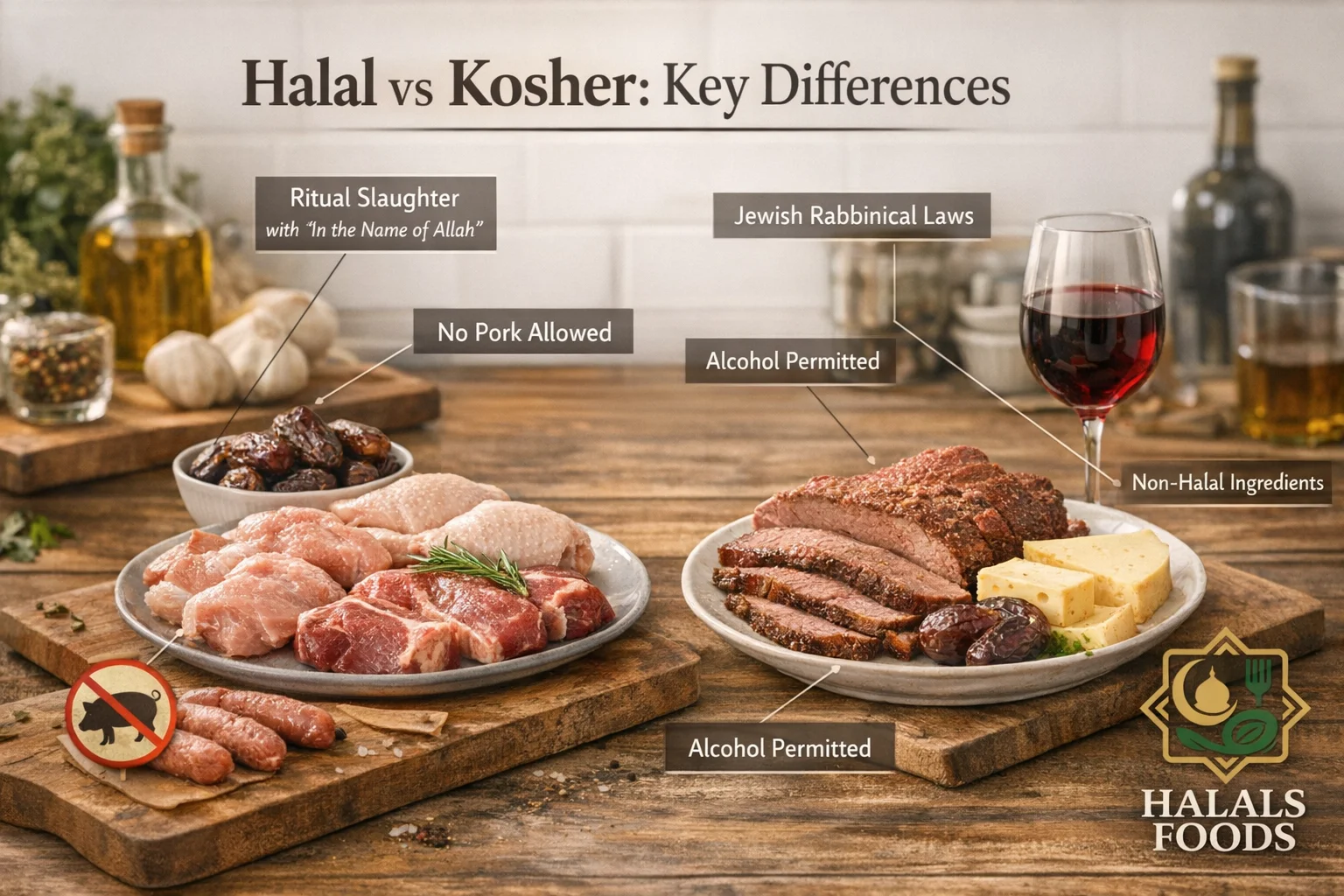
The Difference between halal & kosher lies in religious rules, slaughter practices, and ingredient regulations. Both prohibit pork and require ritual slaughter, but halal requires invoking the name of Allah during slaughter, while kosher follows Jewish rabbinical laws. Kosher foods may contain alcohol and certain ingredients that are not considered halal in Islam.
3. Ingredient Breakdown
Understanding the Difference between halal & kosher begins with analyzing how both dietary systems classify ingredients. While there is overlap between the two, several important distinctions affect whether food is acceptable for Muslims.
Halal Ingredient Rules
In Islam, food must meet several conditions to be halal:
• No pork or pork-derived ingredients
• No alcohol or intoxicants
• Meat must come from halal animals slaughtered according to Zabiha rules
• Blood must be completely drained
• Ingredients must not come from haram sources
Common halal ingredients include:
-
Beef
-
Chicken
-
Lamb
-
Fish
-
Fruits and vegetables
-
Grains
-
Dairy (from halal animals)
However, even these ingredients must be processed in halal-compliant facilities.
Kosher Ingredient Rules
Kosher laws come from the Jewish dietary system called Kashrut. These rules are based on the Torah and rabbinical interpretations.
Kosher food rules include:
• No pork
• No shellfish
• Meat and dairy cannot be mixed
• Animals must chew cud and have split hooves
• Meat must be slaughtered using Shechita, a Jewish ritual slaughter
Kosher-approved animals include:
-
Cow
-
Sheep
-
Goat
-
Certain poultry
-
Fish with fins and scales
However, kosher laws allow some ingredients that Islam prohibits.
Key Ingredient Differences
One major Difference between halal & kosher involves alcohol.
Islam strictly prohibits alcohol in any form, even in small amounts used in flavorings or extracts. Kosher certification, however, allows alcohol as long as it is produced according to kosher standards.
For example:
| Ingredient | Halal Status | Kosher Status |
|---|---|---|
| Pork | Haram | Not Kosher |
| Alcohol | Haram | Often Kosher |
| Gelatin | Must be halal source | Can come from kosher animals |
| Shellfish | Halal | Not Kosher |
Gelatin and Enzymes
Gelatin is one of the most debated ingredients when analyzing the Difference between halal & kosher.
Gelatin may come from:
-
Cow bones
-
Fish skin
-
Pork
Kosher gelatin must come from kosher animals or fish, but Islamic scholars often require halal-slaughtered animals as well. Therefore, kosher gelatin is not always automatically halal.
E-Numbers and Additives
Modern food manufacturing uses many additives known as E-numbers. These can originate from plant, animal, or synthetic sources.
Examples include:
-
E471 (Mono- and diglycerides) – may come from animal fats
-
E120 (Carmine) – derived from insects
-
E422 (Glycerol) – can be plant or animal sourced
Kosher authorities approve additives based on Jewish law, while halal certification agencies evaluate them according to Islamic dietary rules. This is another important Difference between halal & kosher that Muslim consumers must consider when reviewing a product label.
Dairy and Meat Separation
Kosher law strictly prohibits mixing meat and dairy products. Separate utensils, equipment, and even preparation times are required.
Islamic law does not require this separation. Muslims may consume dishes that combine meat and dairy, such as creamy chicken sauces.
This is a significant cultural and dietary Difference between halal & kosher that affects food preparation and restaurant menus.
4. Manufacturing Process & Cross-Contamination
Another important Difference between halal & kosher appears in the manufacturing process and how food facilities handle cross-contamination.
Halal Production Requirements
Halal-certified factories must follow strict guidelines such as:
• No contact with pork products
• No alcohol contamination
• Separate production lines when possible
• Halal-approved cleaning procedures
If a factory produces pork or alcohol-based products on the same equipment, Muslim scholars may consider the food questionable unless strict purification procedures are applied.
Halal certification bodies usually inspect:
-
ingredient sourcing
-
equipment cleaning
-
storage procedures
-
transportation
Kosher Manufacturing Standards
Kosher food facilities are also heavily supervised by rabbis or kosher certification agencies.
Kosher rules focus on:
• separation of meat and dairy
• ensuring all ingredients are kosher-approved
• supervision by a rabbinical authority
Factories may have separate equipment for:
-
meat products
-
dairy products
-
pareve foods (neutral foods like vegetables or fish)
Shared Equipment Concerns
One of the biggest concerns for Muslims when evaluating the Difference between halal & kosher is shared equipment with alcohol or pork derivatives.
For example:
-
A kosher candy factory may use wine-based flavorings
-
Kosher desserts may include alcohol extracts
-
Certain kosher gelatin products may come from non-halal slaughtered animals
These manufacturing differences mean that kosher certification does not automatically guarantee halal compliance.
Why Cross-Contamination Matters
In Islamic dietary law, contamination with haram substances can render a food impermissible.
Examples include:
-
alcohol flavoring mixed into chocolate
-
pork gelatin used in marshmallows
-
shared equipment with bacon processing
Even if the base ingredients are otherwise permissible, contamination can change the halal status.
Therefore, understanding production practices is essential when studying the Difference between halal & kosher.
5. Halal Certification Analysis
Certification is another key area where the Difference between halal & kosher becomes clear.
Halal Certification Bodies
Muslim consumers rely on halal certification organizations to verify that foods meet Islamic dietary standards.
Some widely recognized halal authorities include:
-
IFANCA (Islamic Food and Nutrition Council of America)
-
HFSAA (Halal Food Standards Alliance of America)
-
Halal Monitoring Committee (HMC)
-
JAKIM (Malaysia)
-
ESMA (UAE)
These organizations inspect:
-
ingredient sourcing
-
slaughter procedures
-
food processing facilities
-
labeling compliance
A halal logo from these authorities gives Muslim consumers confidence that the product meets Islamic guidelines.
Kosher Certification Bodies
Kosher food is certified by Jewish authorities, such as:
-
Orthodox Union (OU)
-
OK Kosher
-
Star-K
-
Kof-K
These agencies supervise ingredients and food preparation according to Jewish law.
However, kosher certification does not evaluate food based on Islamic requirements like alcohol prohibition or Zabiha slaughter.
Regional Differences
The Difference between halal & kosher certification can also vary depending on region.
United States
-
Kosher certification is far more common than halal certification.
-
Many supermarkets carry hundreds of kosher products.
United Kingdom
-
Halal certification is more widely available due to the larger Muslim population.
Middle East
-
Halal certification is mandatory for imported meat products.
Because kosher products are more common in Western markets, some Muslims choose them as an alternative when halal options are limited. However, scholars advise verifying ingredients carefully before assuming they are halal.
6. Official Statements From Religious Authorities & Food Organizations
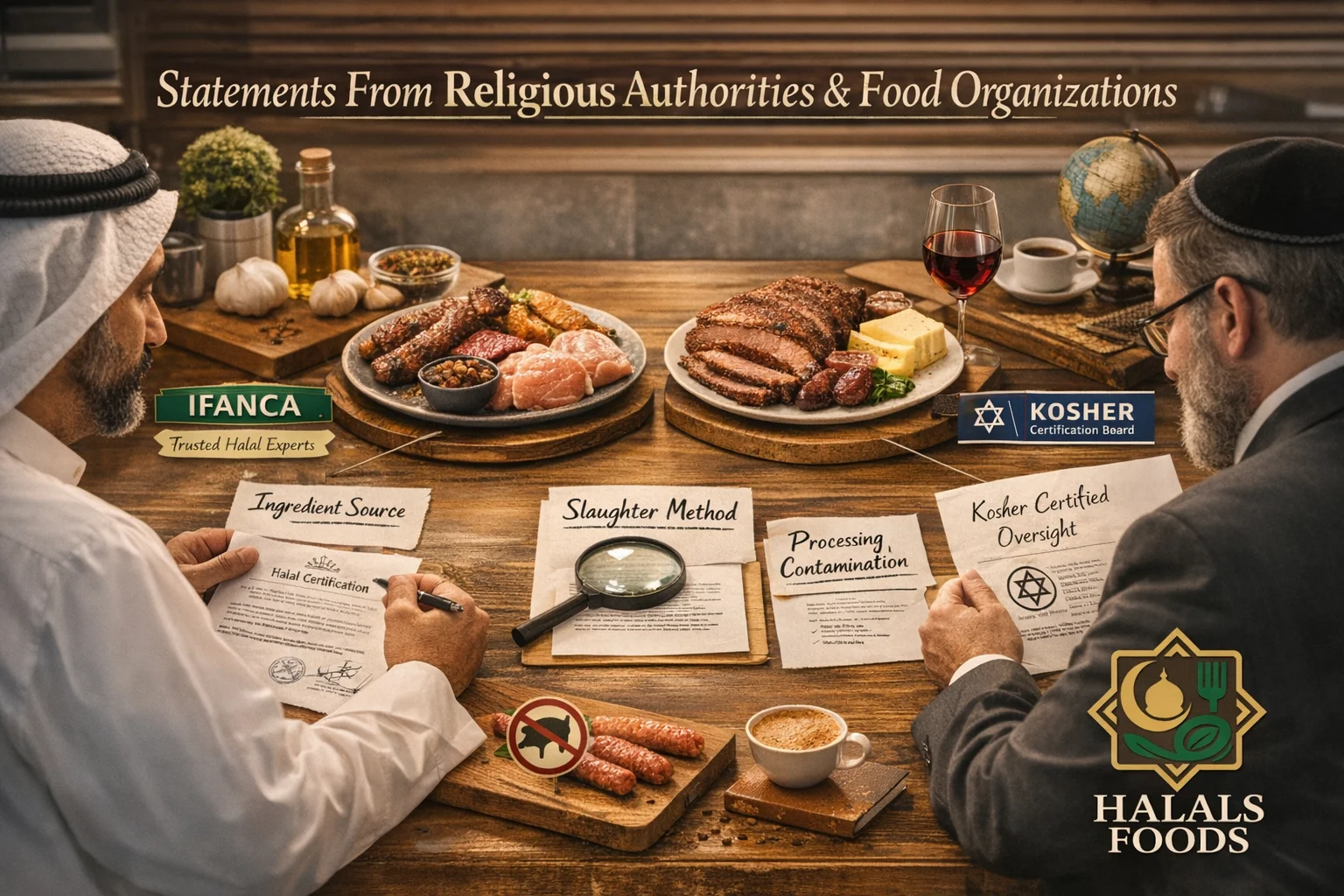
To better understand the Difference between halal & kosher, we reviewed statements from Islamic scholars, halal certification agencies, and kosher food authorities. These official perspectives help clarify whether kosher food can be considered halal and how Muslim consumers should evaluate it.
What Halal Authorities Say
Most major halal organizations emphasize that kosher certification does not automatically mean halal certification.
According to several halal certification bodies such as IFANCA (Islamic Food and Nutrition Council of America) and HFSAA (Halal Food Standards Alliance of America), kosher food can sometimes meet halal requirements, but only if certain conditions are met.
Halal authorities usually evaluate three key areas:
-
Ingredient source
-
Slaughter method
-
Processing contamination
For example, IFANCA explains that kosher meat is not always halal because the slaughter method differs slightly from Islamic Zabiha requirements. Specifically, Islamic law requires the name of Allah to be recited during slaughter, while kosher slaughter follows Jewish blessings.
This distinction is one of the most important factors in the Difference between halal & kosher.
What Kosher Authorities Say
Kosher certification agencies such as Orthodox Union (OU) and OK Kosher focus entirely on Jewish dietary law rather than Islamic law.
Kosher authorities ensure that foods comply with Kashrut, including:
-
No pork products
-
No shellfish
-
Proper ritual slaughter (Shechita)
-
Separation of meat and dairy
However, kosher certification does not review alcohol use the same way halal authorities do. In fact, wine and grape products are widely used in kosher foods.
This explains why some kosher foods contain ingredients that Muslims may avoid.
Regional Differences
When analyzing the Difference between halal & kosher, regional food labeling also matters.
United States
Many packaged foods carry kosher certification because the kosher market is large and established. However, halal certification is growing but still less common.
United Kingdom
The UK has more halal-certified restaurants and meat suppliers due to its large Muslim population.
Canada
Canada has both halal and kosher markets, and many brands now seek dual certification to serve both communities.
These regional differences influence how Muslim consumers interpret the Difference between halal & kosher in everyday food choices.
7. Why Some Muslims Consider Kosher Acceptable
Despite the differences between the two dietary systems, some Muslim scholars and consumers believe certain kosher foods can be permissible under specific conditions.
Understanding these arguments helps clarify the ongoing discussion about the Difference between halal & kosher.
Similarities Between Halal and Kosher
Supporters of the permissive view highlight several similarities:
-
Both prohibit pork
-
Both require ritual slaughter
-
Both forbid blood consumption
-
Both have religious oversight
Because of these similarities, some scholars believe kosher meat may be acceptable if halal meat is unavailable.
This opinion often refers to a Quranic verse allowing Muslims to eat food prepared by “People of the Book” (Jews and Christians).
Ingredient Transparency
Another reason some Muslims accept kosher food is ingredient clarity.
Kosher certification is known for strict ingredient inspections. Many kosher products clearly list all ingredients, making it easier for Muslims to analyze whether they contain haram substances.
For example, a kosher-certified snack that contains only:
-
wheat
-
sugar
-
vegetable oil
-
salt
would generally be considered halal since there are no prohibited ingredients.
Non-Meat Kosher Products
Many Muslim consumers feel comfortable consuming kosher vegetarian or plant-based foods, such as:
-
crackers
-
cereals
-
snacks
-
beverages without alcohol
In these cases, the Difference between halal & kosher becomes less significant because no animal slaughter or questionable ingredients are involved.
However, most scholars still recommend checking product labels carefully.
8. Why Some Muslims Avoid Kosher Food
Other Muslim scholars take a stricter position and advise avoiding kosher foods entirely unless they also carry halal certification.
Their concerns highlight several critical aspects of the Difference between halal & kosher.
Slaughter Method Differences
Islamic Zabiha slaughter requires:
-
the name of Allah to be pronounced during slaughter
-
a Muslim slaughterman (according to many scholars)
-
complete blood drainage
Kosher slaughter (Shechita) follows Jewish prayers instead.
Because the name of Allah is not recited, some Islamic scholars believe kosher meat cannot qualify as halal.
Alcohol in Ingredients
Another major issue in the Difference between halal & kosher is alcohol.
Kosher certification allows alcohol in:
-
flavor extracts
-
cooking ingredients
-
desserts
-
sauces
Islam strictly forbids alcohol consumption, even in small quantities.
This makes certain kosher foods unacceptable for Muslims.
Gelatin and Animal Byproducts
Kosher gelatin can come from animals that are kosher but not slaughtered according to halal rules.
Examples include:
-
cow bones from non-halal slaughter
-
certain animal enzymes
Since halal law requires proper Islamic slaughter, these ingredients may not be permissible.
Cross-Contamination Risks
Kosher food factories may process ingredients that Muslims consider haram, including wine derivatives.
This processing difference further highlights the Difference between halal & kosher in food manufacturing.
9. USA Halal Market Context
Understanding the American food industry also helps explain why discussions about the Difference between halal & kosher are so common.
Growth of the Halal Market
The halal food industry in the United States has grown significantly in recent years.
Muslim consumers in the U.S. spend billions of dollars annually on halal food products, including:
-
halal meat
-
packaged snacks
-
frozen meals
-
restaurant foods
Major retailers such as Walmart, Costco, and Whole Foods now carry halal-certified products.
Why Kosher Products Are More Common
Despite this growth, kosher certification is still far more widespread in American supermarkets.
There are several reasons:
-
Kosher certification has existed in the U.S. for over a century.
-
Many food manufacturers pursue kosher certification to reach a broader market.
-
Kosher products appeal to consumers seeking ingredient transparency.
Because of this availability gap, some Muslim shoppers compare kosher and halal products, leading to questions about the Difference between halal & kosher.
What Muslim Consumers Should Check
When shopping in the U.S., Muslims should carefully review:
-
product label ingredients
-
alcohol-based flavorings
-
gelatin source
-
halal certification logos
Reliable halal certification logos include:
-
IFANCA Crescent-M
-
HFSAA symbol
-
Halal Monitoring Committee
These logos ensure the product fully complies with Islamic dietary law.
10. Final Verdict
After reviewing religious guidelines, ingredient standards, and certification systems, the Difference between halal & kosher becomes clear.
Both dietary systems share similarities such as avoiding pork and requiring ritual slaughter. However, important differences remain in areas like alcohol use, slaughter requirements, and ingredient sources.
Kosher food is not automatically halal. Some kosher foods—especially plant-based items—may be permissible if they contain no haram ingredients. However, kosher meat and products containing alcohol or non-halal gelatin may not meet Islamic dietary requirements.
For Muslim consumers, the safest approach is to look for recognized halal certification and carefully examine product labels before assuming a kosher product is halal.
11. Frequently Asked Questions
Is kosher meat halal for Muslims?
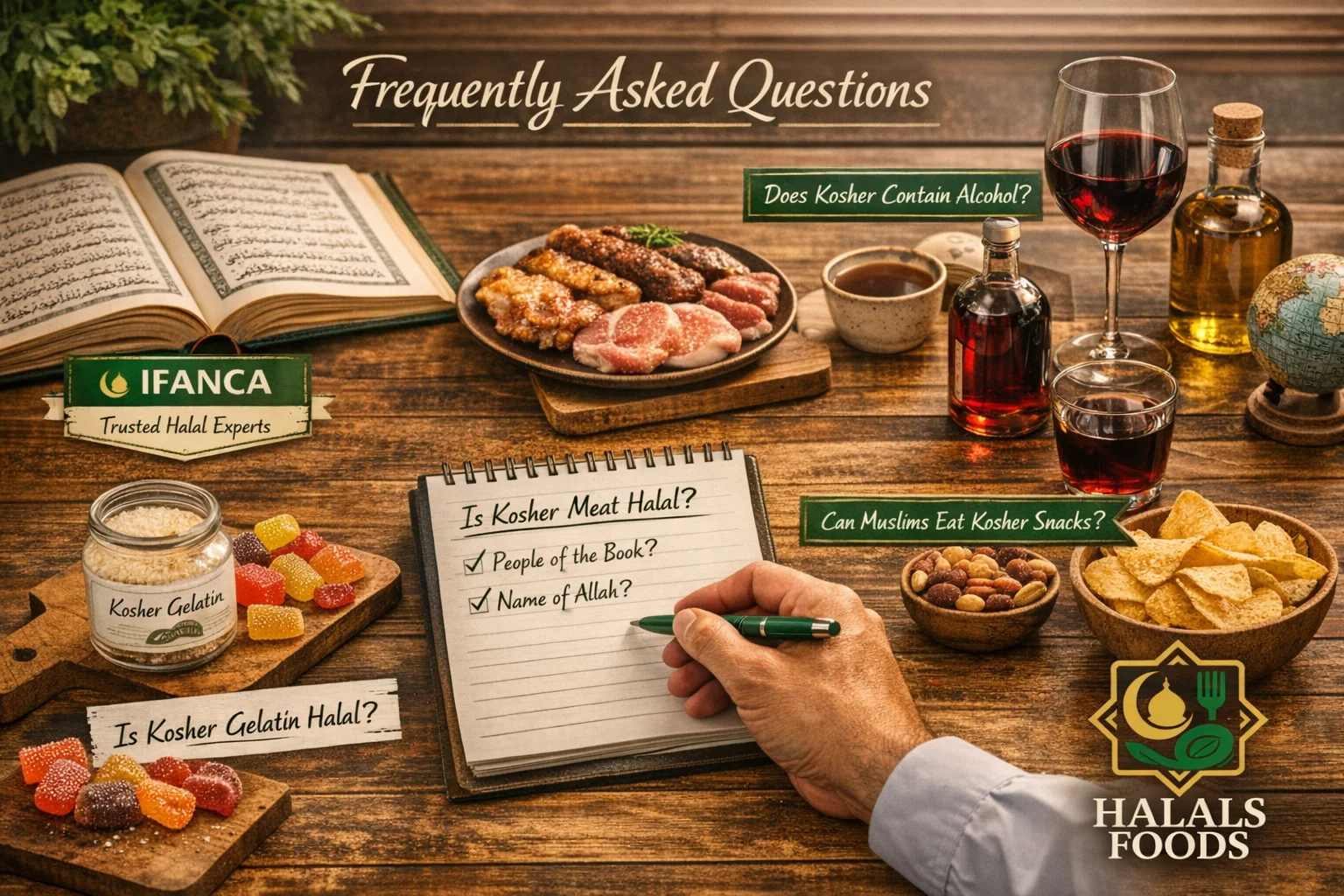
This is one of the most common questions about the Difference between halal & kosher. Some scholars allow kosher meat based on Quranic references to food from the “People of the Book,” while others reject it because the name of Allah is not recited during slaughter. Because of this disagreement, many Muslims prefer certified halal meat.
Does kosher food contain alcohol?
Yes, some kosher foods contain alcohol, especially flavor extracts or cooking ingredients. Jewish dietary law allows alcohol, while Islamic law strictly prohibits it. This is a major Difference between halal & kosher.
Is kosher gelatin halal?
Not necessarily. Kosher gelatin can come from animals that are kosher but not slaughtered according to Islamic rules. Since halal law requires Zabiha slaughter, many scholars consider kosher gelatin questionable unless it comes from halal-certified sources.
Can Muslims eat kosher snacks?
Many kosher snacks may be halal if they contain only plant-based ingredients and no alcohol or animal byproducts. However, consumers should still check the product label carefully to verify all ingredients.
Why do some Muslims prefer kosher food when halal is unavailable?
Some Muslims choose kosher food because kosher certification involves strict ingredient inspections and avoids pork. These similarities reduce some concerns about the Difference between halal & kosher, especially for vegetarian foods.
Is kosher chicken halal?
Kosher chicken is slaughtered according to Jewish law rather than Islamic Zabiha rules. Because the name of Allah is not recited during slaughter, many scholars do not consider kosher chicken halal.
Are kosher restaurants halal?
Kosher restaurants follow Jewish dietary rules, which means they avoid pork and separate meat and dairy. However, they may use alcohol or meat slaughtered under Jewish law. Therefore, kosher restaurants are not automatically halal.
Do halal and kosher certifications mean the same thing?
No. Halal certification ensures compliance with Islamic dietary laws, while kosher certification ensures compliance with Jewish law. The two systems overlap in some areas but differ in several key rules.
12. References
-
Islamic Food and Nutrition Council of America (IFANCA)
-
Halal Food Standards Alliance of America (HFSAA)
-
Orthodox Union Kosher Certification (OU Kosher)
-
U.S. Food Labeling and Ingredient Guidelines
-
Islamic Dietary Law (Fiqh of Halal and Haram Foods)
Related Halal Food Guides You May Find Helpful
People searching for “Is [ Is Gelatin Halal? (2026 guide) ]” are also curious about other foods and ingredients. Below, you’ll find related halal food articles that clearly explain ingredient sources, how products are made, and whether they meet halal requirements.
More Related Articles [ Is Vanilla Extract Halal? ]
More Related Articles [ Is Rennet Halal or Haram? ]
More Related Articles [ What Is Zabiha Halal? ]
More Related Articles [ What Is HFSAA Certification? ]
More Related Articles [ How to Read Halal Labels ]