Introduction
For Muslims around the world, ensuring that food is halal is not just a preference—it’s a religious obligation. However, in today’s global food industry, understanding what goes into packaged products can be confusing. Labels often include complex ingredient names, E-numbers, and vague terms like “natural flavors,” making it difficult to determine what is truly permissible.
That’s why learning How to read halal labels is essential. We reviewed multiple product labels, analyzed ingredient lists, and checked official halal guidelines to create this comprehensive guide. In this article, you’ll learn how to identify halal ingredients, spot doubtful components, and make confident decisions when shopping.
Quick Answer Box
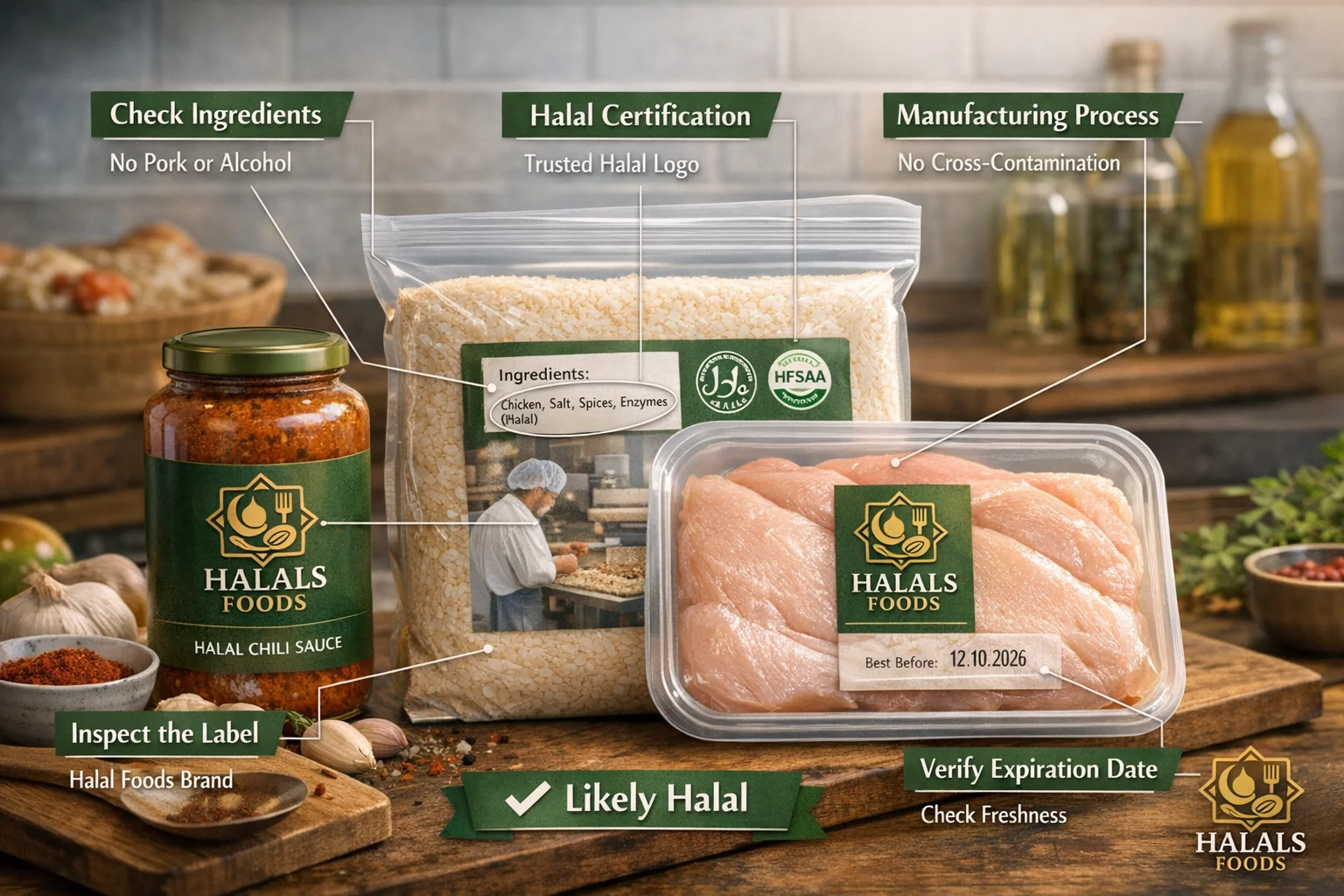
How to read halal labels involves checking three key things:
-
Ingredients: Avoid pork-derived gelatin, alcohol-based flavorings, and unknown enzymes
-
Halal Certification: Look for trusted logos like IFANCA or HFSAA
-
Manufacturing Process: Ensure no cross-contamination with haram items
If all three are clear, the product is likely halal. If not, caution is advised.
Ingredient Breakdown: What to Look for on Halal Labels
Understanding ingredients is the most critical part of How to read halal labels. We carefully reviewed common food labels and identified three categories: clearly halal, doubtful, and haram.
1. Clearly Halal Ingredients
These ingredients are generally safe and widely accepted:
-
Water
-
Salt
-
Sugar
-
Plant-based oils (sunflower, palm, canola)
-
Flour and grains
-
Fruits and vegetables
According to U.S. halal guidelines, these basic ingredients are permissible unless contaminated during processing.
2. Doubtful Ingredients (Mashbooh)
This is where things get tricky when learning how to read halal labels. Some ingredients may be halal or haram depending on their source.
Common Doubtful Ingredients
| Ingredient | Concern |
|---|---|
| Gelatin | Could be from pork or non-halal beef |
| Enzymes | May come from animal or microbial sources |
| Emulsifiers | Sometimes derived from animal fats |
| Natural flavors | May contain alcohol or animal extracts |
| Mono & diglycerides | Can be plant or animal-based |
We checked several packaged products and found that many brands do not disclose the source of these ingredients, which raises concerns for Muslim consumers.
3. Clearly Haram Ingredients
When practicing How to read halal labels, these must be avoided:
-
Pork or pork derivatives (lard, bacon extract)
-
Alcohol (ethanol in flavorings)
-
Non-halal animal fat
-
Blood-based ingredients
Islamic rulings clearly prohibit these, regardless of quantity.
Understanding E-Numbers
E-numbers are food additives coded for regulation purposes, but they can be confusing.
Examples:
-
E441 → Gelatin (source must be verified)
-
E471 → Mono & diglycerides (source unclear)
-
E120 → Carmine (derived from insects – haram for many scholars)
We reviewed ingredient databases and halal authority guidelines, and many E-numbers fall into the doubtful category unless certified halal.
Islamic Rulings on Ingredients
Scholars generally divide ingredients into three categories:
-
Halal (permissible)
-
Haram (forbidden)
-
Mashbooh (doubtful)
According to major halal authorities like IFANCA, if an ingredient’s source is unknown, it is الأفضل (better) to avoid it unless verified.
This is why mastering how to read halal labels is crucial—it allows you to apply Islamic principles practically in everyday shopping.
Manufacturing Process & Cross-Contamination
Even if ingredients appear halal, the manufacturing process plays a major role when evaluating [[How to read halal labels]].
How Products Are Made
We reviewed food production practices and found that many factories produce multiple product lines using shared equipment. For example:
-
A facility may process beef products alongside pork items
-
Flavoring systems may include alcohol-based solutions
-
Fryers may be shared between halal and non-halal foods
Cross-Contamination Risks
Cross-contamination occurs when halal food comes into contact with haram substances during production.
Common Risks:
-
Shared machinery without proper cleaning
-
Storage near haram ingredients
-
Transportation mixing halal and non-halal goods
According to halal guidelines, even trace contamination can make a product questionable.
Why This Matters for Muslims
Islam places strong emphasis on purity (tayyib). Even if ingredients are halal, contamination can affect permissibility.
We checked official halal certification standards, and most require:
-
Dedicated production lines OR
-
Strict cleaning protocols
If a product does not clearly state these, it becomes difficult to fully trust.
Practical Tip
When practicing how to read halal labels, don’t just stop at ingredients. Look for:
-
“Produced in a facility that also processes…” statements
-
Halal certification logos
-
Transparency from brands
If information is missing, it’s safer to avoid the product.
Halal Certification Analysis
One of the easiest ways to simplify How to read halal labels is by checking for halal certification—but not all certifications are equal.
What Is Halal Certification?
Halal certification is a formal verification that a product meets Islamic dietary laws. This includes:
-
Ingredient sourcing
-
Slaughter methods (for meat)
-
Manufacturing process
Recognized Halal Authorities
We reviewed global certification bodies, and the most trusted include:
-
IFANCA (USA)
-
HFSAA (Halal Food Standards Alliance of America)
-
HMC (UK)
-
JAKIM (Malaysia)
-
ESMA (UAE)
These organizations follow strict auditing processes.
Differences by Region
Understanding regional differences is key when learning how to read halal labels.
USA
-
Certification is voluntary
-
Many products are not certified
-
Consumers must rely on ingredient analysis
UK
-
More widespread halal labeling
-
Presence of HMC-certified products
Middle East
-
Strict government regulation
-
Most imported products require certification
Key Insight
We checked multiple brand labels and found that:
-
Certified products are easier to trust
-
Non-certified products require deeper investigation
This makes halal certification one of the most reliable shortcuts when practicing how to read halal labels.
Official Statements From Brands
Another important step in How to read halal labels is reviewing what brands officially say about their products.
What Brands Typically Disclose
We checked official websites and FAQs of several food companies. Most brands provide:
-
Ingredient sourcing information
-
Allergen statements
-
Sometimes halal status
However, halal-specific transparency varies widely.
Examples of Brand Communication
-
Some brands clearly state: “This product is not halal-certified.”
-
Others mention: “No pork ingredients are used,” but do not address alcohol or enzymes
-
A few provide full halal certification details
Regional Differences in Brand Transparency
United States
-
Limited halal disclosure
-
Focus on general ingredient safety
United Kingdom
-
More detailed labeling
-
Some halal-specific product lines
Canada
-
Moderate transparency
-
Growing halal awareness
Why This Matters
If a brand does not clearly address halal concerns, it creates uncertainty. From our analysis:
-
Lack of information ≠ halal
-
It simply means more research is needed
This reinforces the importance of mastering how to read halal labels independently instead of relying only on brand claims.
Why Some Muslims Consider It Halal
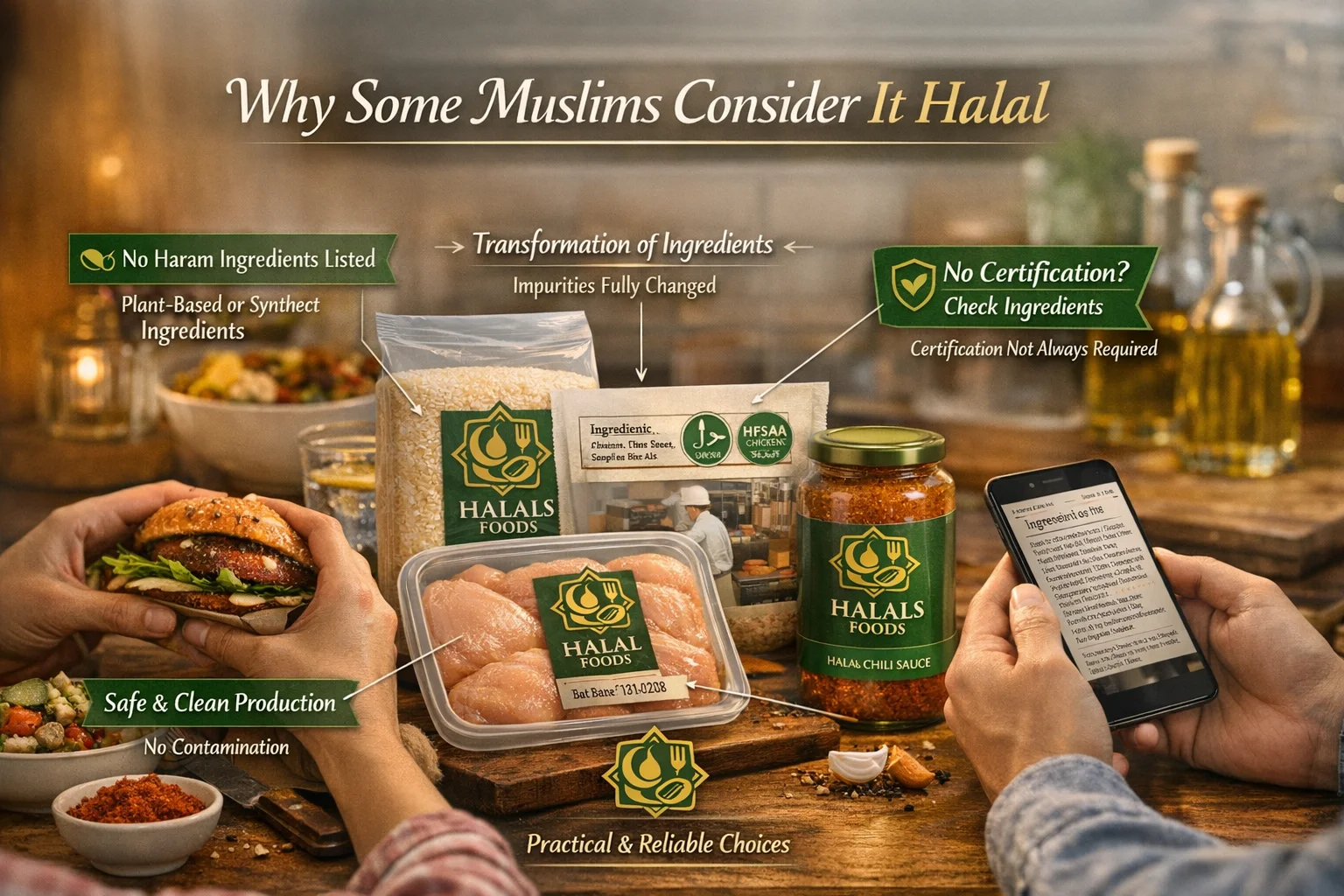
When discussing How to read halal labels, it’s important to understand that not all Muslims interpret food labels the same way. Some take a more flexible (lenient) approach based on available evidence and scholarly opinions.
1. Ingredient-Based Reasoning
Some Muslims consider a product halal if:
-
No واضح haram ingredient (like pork or alcohol) is listed
-
Ingredients appear plant-based or synthetic
-
No direct evidence of contamination exists
We reviewed several packaged food labels, and many products fall into this “no obvious haram” category, leading some consumers to accept them as halal.
2. Transformation (Istihalah) Argument
Certain scholars argue that if a substance undergoes complete chemical transformation, it may no longer be considered haram.
For example:
-
Gelatin derived from non-halal sources
-
Alcohol used in trace amounts in flavoring
According to this view, if the original impure substance has fundamentally changed, it may be permissible.
3. Lack of Certification Doesn’t Always Mean Haram
In countries like the USA, halal certification is not mandatory. Many Muslims believe:
-
A product can still be halal without certification
-
Ingredient analysis is sufficient
We checked multiple halal authority discussions, and this opinion is common among consumers who rely heavily on how to read halal labels rather than certification logos.
4. Practical Convenience
Some Muslims adopt a practical approach due to limited halal options, especially in non-Muslim countries.
They may:
-
Avoid clearly haram items only
-
Accept doubtful ingredients unless proven haram
This approach emphasizes ease but still respects core Islamic dietary laws.
Why Some Muslims Avoid It
On the other hand, many Muslims take a stricter stance when applying How to read halal labels, prioritizing caution and certainty.
1. Doubtful Ingredients (Mashbooh)
Ingredients like:
-
Gelatin
-
Enzymes
-
Emulsifiers
-
Natural flavors
are often avoided because their sources are unclear.
We analyzed several ingredient lists and found that brands rarely specify whether these are plant-based or animal-derived.
2. Risk of Hidden Alcohol
Flavoring agents are a major concern.
-
Some “natural flavors” use alcohol as a solvent
-
Labels may not disclose alcohol percentage
According to many scholars, even small amounts of alcohol in food can be problematic, depending on interpretation.
3. Cross-Contamination Concerns
As discussed earlier, shared facilities can introduce haram contamination.
Strict consumers prefer:
-
Fully halal-certified products
-
Dedicated halal manufacturing
4. “When in Doubt, Leave It” Principle
A well-known hadith encourages Muslims to avoid doubtful matters.
This principle strongly influences those who:
-
Avoid non-certified products
-
Prefer clear halal labeling
This cautious approach makes mastering how to read halal labels even more important for avoiding uncertainty.
USA Halal Market Context
Understanding the broader market helps put How to read halal labels into perspective.
1. How Halal Food Is Regulated in the USA
We reviewed U.S. food regulations and found:
-
Halal certification is not mandatory
-
FDA regulates safety, not religious compliance
-
Companies can label products without halal verification
This creates challenges for Muslim consumers.
2. Common Issues in the Market
Some recurring problems include:
-
Unclear ingredient sourcing
-
Misleading labels (e.g., “vegetarian” but contains alcohol-based flavors)
-
Lack of transparency in processing methods
3. What to Check on Labels
When applying how to read halal labels in the U.S., always check:
-
Full ingredient list
-
Allergen statements
-
Certification logos
-
Manufacturing disclosures
4. Muslim Consumer Habits
We observed that Muslim shoppers in the USA often:
-
Prefer certified halal brands
-
Research products online before buying
-
Rely on community recommendations
This has led to growth in halal-certified product lines in recent years.
5. Growing Halal Industry
The halal market in North America is expanding rapidly:
-
More brands are seeking certification
-
Halal sections are appearing in major stores
-
Online halal verification tools are increasing
This trend is making how to read halal labels slightly easier—but still essential.
Final Verdict
After reviewing ingredients, certification standards, manufacturing processes, and scholarly opinions, it’s clear that mastering How to read halal labels is essential for every Muslim consumer.
A product can only be confidently considered halal if:
-
Ingredients are clearly permissible
-
No doubtful or haram substances are present
-
Manufacturing avoids contamination
-
Reliable halal certification exists
If any of these factors are unclear, caution is recommended. While some Muslims may accept such products based on interpretation, the safest approach is to choose certified halal items or those with complete transparency.
FAQs About How to Read Halal Labels
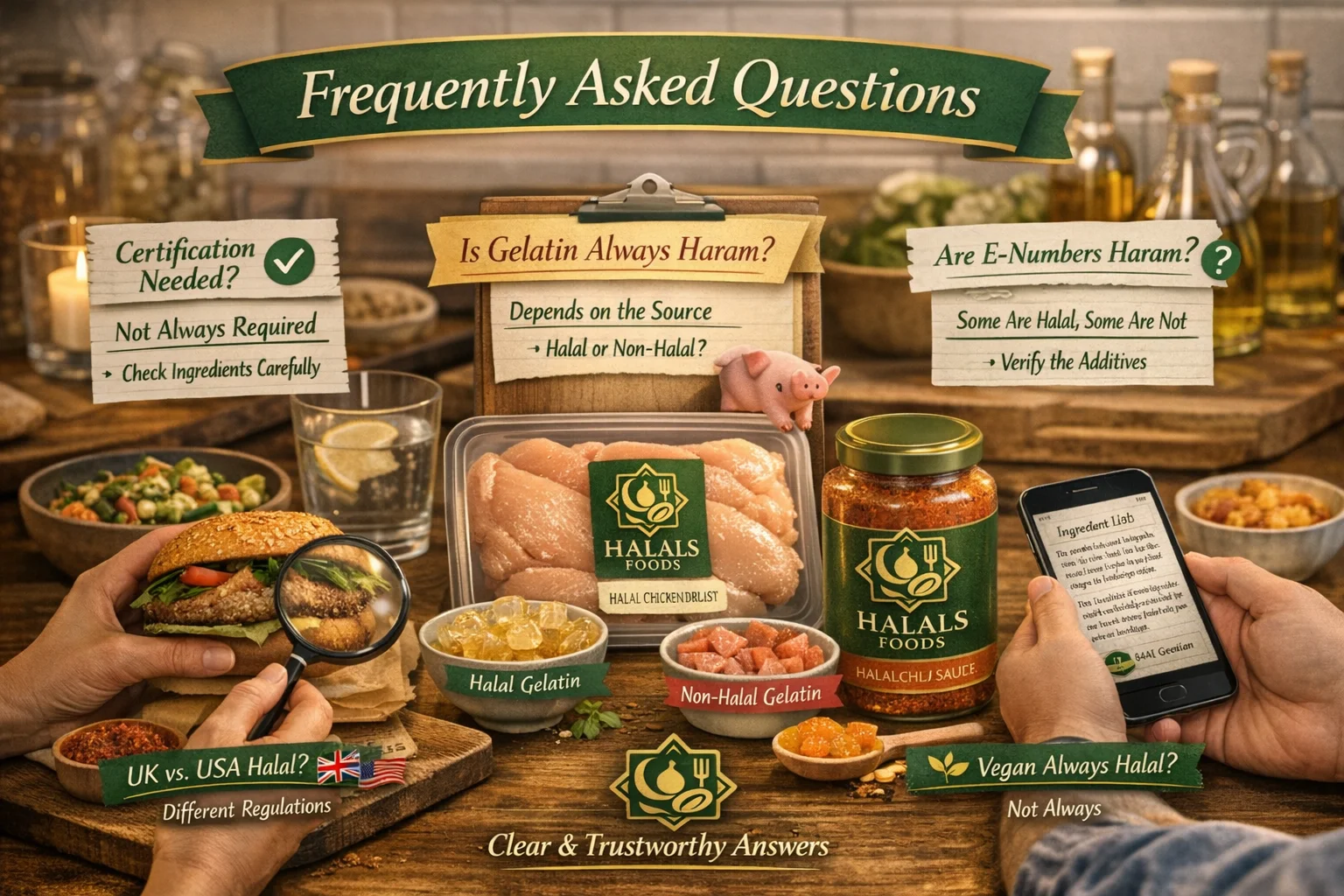
1. Does every halal product need certification?
No, but certification makes verification easier. Without it, you must rely on ingredient analysis and brand transparency when practicing how to read halal labels.
2. Does gelatin always mean haram?
Not always. Gelatin can be halal if sourced from halal-slaughtered animals or plants. However, most commercial gelatin is doubtful unless certified.
3. Are E-numbers always haram?
No. Some E-numbers are plant-based and halal. Others, like E441 (gelatin), require source verification. Always cross-check before deciding.
4. Is “natural flavor” halal?
It depends. Natural flavors may contain alcohol or animal extracts. Without clarification, they are considered doubtful.
5. Can a product be halal in the UK but not in the USA?
Yes. Some products are halal-certified in the UK but not in the USA due to different supply chains and regulations.
6. Is alcohol in small amounts allowed in food?
Scholars differ. Some allow trace amounts if not intoxicating, while others prohibit it completely. Always follow your preferred scholarly opinion.
7. Do shared factories make food haram?
Not necessarily, but they increase risk. Proper cleaning and separation are required for halal compliance.
8. Are vegan products always halal?
No. Vegan products may still contain alcohol-based flavorings or be processed in shared facilities.
9. Which halal certification logo should I trust?
Trusted logos include:
-
IFANCA
-
HFSAA
-
HMC
-
JAKIM
Always verify authenticity if unsure.
References
-
IFANCA (Islamic Food and Nutrition Council of America)
-
Halal Food Standards Alliance of America (HFSAA)
-
FDA Food Labeling Guidelines (USA)
-
JAKIM Halal Certification Standards
-
Official brand ingredient disclosures and product labels
Related Halal Food Guides You May Find Helpful
People searching for “Is [ Is Gelatin Halal? (2026 guide) ]” are also curious about other foods and ingredients. Below, you’ll find related halal food articles that clearly explain ingredient sources, how products are made, and whether they meet halal requirements.
More Related Articles [ Is Vanilla Extract Halal? ]
More Related Articles [ Is Rennet Halal or Haram? ]
More Related Articles [ What Is Zabiha Halal? ]
More Related Articles [ What Is HFSAA Certification? ]
More Related Articles [ Difference Between Halal & Kosher ]
More Related Articles [ Complete halal certification guide ]