Introduction
Pepperoni is one of the most popular pizza toppings in the world. From fast-food chains to frozen supermarket pizzas, this spicy cured meat appears in thousands of products globally. However, for Muslim consumers, an important question arises: Is pepperoni halal?
Many Muslims assume pepperoni is automatically haram because it is often made from pork. But in reality, the answer can be more complex. Some manufacturers produce beef pepperoni, turkey pepperoni, or even halal-certified pepperoni for Muslim markets.
To provide a clear answer, we carefully reviewed product labels, ingredient lists, brand statements, and halal certification guidelines from recognized authorities. In this guide, we will analyze pepperoni ingredients, manufacturing processes, cross-contamination risks, and official halal certifications so Muslim consumers can make an informed decision.
Quick Answer: Is Pepperoni Halal?
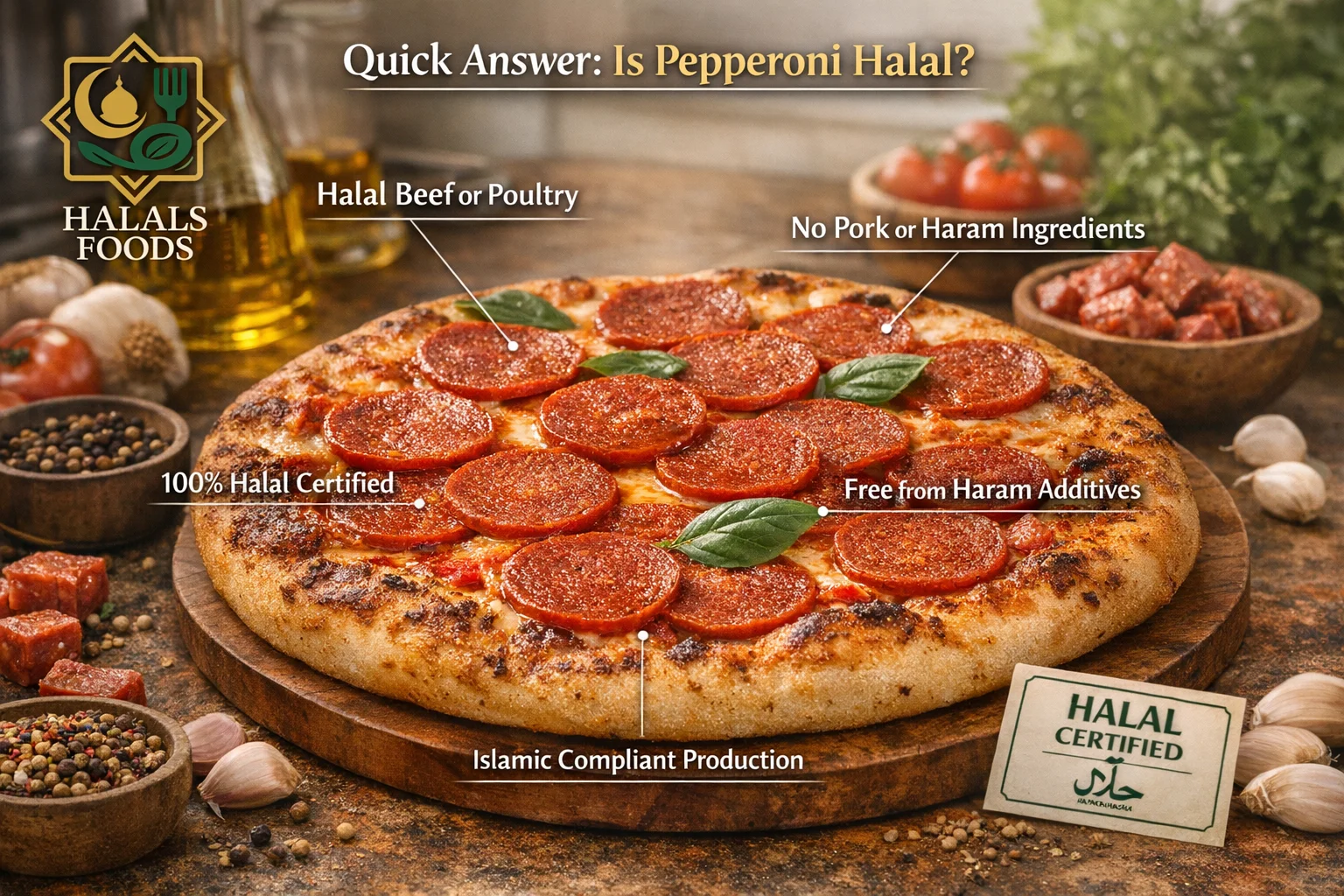
In most cases, pepperoni is not halal because traditional pepperoni is made from pork or pork mixed with beef, which is strictly forbidden in Islam.
However, pepperoni can be halal if it meets three conditions:
-
Made from halal-slaughtered beef or poultry
-
Contains no pork or haram additives
-
Produced under verified halal certification
Without these conditions, Muslims should generally avoid conventional pepperoni products.
Ingredient Breakdown
To understand whether pepperoni is halal, we must first analyze the typical ingredients used in its production. We reviewed ingredient labels from several major food brands and processed meat manufacturers.
Below is a simplified ingredient table commonly found on pepperoni packaging.
| Ingredient | Purpose | Halal Status |
|---|---|---|
| Pork or Beef | Main meat ingredient | Pork is haram; beef must be halal-slaughtered |
| Salt | Preservation | Halal |
| Spices (paprika, chili) | Flavor | Halal |
| Garlic Powder | Flavor | Halal |
| Sugar or Dextrose | Fermentation | Halal |
| Lactic Acid Starter Culture | Fermentation | Usually halal |
| Sodium Nitrite | Preservative | Halal |
| Natural Flavorings | Flavor enhancement | Sometimes doubtful |
1. The Main Meat Source
The biggest factor determining whether pepperoni is halal is the meat itself.
Traditional American-style pepperoni is typically made from:
-
Pork
-
Pork and beef mixture
Because pork is explicitly forbidden in Islam, any pepperoni containing pork is automatically considered haram.
However, some companies produce alternatives such as:
-
Beef pepperoni
-
Turkey pepperoni
-
Chicken pepperoni
Even in these cases, the meat must be slaughtered according to Islamic guidelines (Zabiha) for it to be halal.
2. Starter Cultures and Fermentation
Pepperoni is a fermented sausage, meaning bacteria cultures are used to develop its flavor and preserve the meat.
Common cultures include:
-
Lactobacillus
-
Pediococcus
These bacteria help convert sugars into lactic acid, giving pepperoni its tangy taste.
According to most halal scholars, microbial starter cultures are considered halal because they are derived from microorganisms rather than animals.
However, some scholars recommend verifying the source to ensure no animal-derived growth mediums were used during production.
3. Preservatives and Additives
Pepperoni commonly contains preservatives like:
-
Sodium nitrite
-
Sodium nitrate
These chemicals prevent bacterial growth and preserve the red color of the meat.
From an Islamic perspective, these additives are generally considered halal because they are synthetic compounds rather than animal-derived ingredients.
4. Natural Flavorings
“Natural flavorings” are sometimes listed on pepperoni labels. This ingredient category can be problematic for halal verification.
Natural flavors may originate from:
-
plant extracts
-
spice oils
-
animal derivatives
-
alcohol-based flavor carriers
Because manufacturers rarely disclose the exact source, halal researchers typically classify natural flavors as potentially doubtful (mashbooh) unless the product is halal certified.
5. E-Numbers in Pepperoni
Some processed pepperoni products include E-number additives, particularly in European or imported brands.
Common examples include:
-
E250 (Sodium Nitrite) – preservative
-
E300 (Ascorbic Acid) – antioxidant
-
E301 (Sodium Ascorbate) – color stabilizer
These additives are generally considered halal when produced synthetically.
However, Islamic food authorities recommend checking certification if the production method is unclear.
Key Ingredient Concern for Muslims
When reviewing pepperoni labels, Muslim consumers should watch for three main issues:
-
Pork-based meat
-
Non-halal slaughtered beef
-
Unclear flavoring sources
Because of these factors, most standard supermarket pepperoni products cannot be automatically considered halal.
Manufacturing Process & Cross-Contamination
Even if pepperoni ingredients appear halal on paper, the manufacturing process can still affect its halal status.
Pepperoni production typically follows several steps:
-
Grinding meat
-
Mixing spices and curing agents
-
Fermentation
-
Stuffing into casings
-
Drying and curing
-
Packaging
Shared Processing Equipment
One major concern for Muslim consumers is cross-contamination.
Many large meat-processing plants produce multiple products such as:
-
pork sausages
-
bacon
-
salami
-
pepperoni
-
beef sausages
If halal and non-halal meats are processed on shared equipment, contamination may occur through:
-
grinders
-
slicers
-
conveyor belts
-
curing racks
Islamic dietary law generally requires strict separation between halal and pork products.
Without proper cleaning protocols or halal certification oversight, contamination risk remains high.
Sausage Casings
Another factor is the casing used to form pepperoni.
Common casing materials include:
-
natural pork intestine
-
beef intestine
-
collagen casings
-
cellulose casings
If pork casings are used, the pepperoni is clearly haram, even if the internal meat is beef.
Halal-certified pepperoni typically uses:
-
halal beef casings
-
plant-based casings
-
synthetic casings
Fermentation and Aging Environment
Pepperoni is often aged in controlled humidity rooms. During this time, products may hang alongside other cured meats.
If halal pepperoni is stored next to pork sausages without separation, contamination concerns arise.
For this reason, halal authorities require dedicated production lines or strict sanitation procedures.
Why Manufacturing Matters
Many Muslims only check ingredient labels, but halal experts emphasize that processing methods are equally important.
A product may appear halal based on ingredients but still fail halal standards due to:
-
shared equipment
-
pork processing in the same facility
-
improper cleaning procedures
This is why halal certification plays a crucial role when evaluating processed meats like pepperoni.
Halal Certification Analysis
One of the most reliable ways to determine whether pepperoni is halal is to look for official halal certification.
Halal certification ensures that the product has been independently verified according to Islamic dietary guidelines.
Several globally recognized halal certification bodies monitor food production.
Major Halal Authorities
Some of the most respected halal organizations include:
-
IFANCA (Islamic Food and Nutrition Council of America)
-
HFSAA (Halal Food Standards Alliance of America)
-
Halal Monitoring Committee (UK)
-
Halal Food Authority (UK)
-
JAKIM (Malaysia)
These organizations inspect:
-
ingredient sourcing
-
slaughter methods
-
manufacturing processes
-
equipment cleaning protocols
-
packaging and labeling
If a pepperoni product carries certification from one of these authorities, Muslims can generally trust its halal status.
Regional Differences in Halal Pepperoni
Pepperoni products vary widely depending on where they are sold.
United States
Most standard supermarket pepperoni contains pork and is not halal. However, halal brands such as Midamar and Crescent Foods produce certified halal beef pepperoni.
United Kingdom
Some pizza chains and halal butcher shops offer halal pepperoni alternatives made from turkey or beef.
Middle East
Many imported pepperoni products are reformulated using halal meat to meet local regulations.
These regional differences explain why some Muslims may encounter halal pepperoni in certain markets but not others.
Official Statements From Pepperoni Brands
When researching whether pepperoni is halal, it is important to examine what major food brands say about their ingredients and production processes. We reviewed official company websites, product labels, and publicly available ingredient disclosures to understand how manufacturers address halal concerns.
What Major Brands Say
Many popular pepperoni brands sold in the United States include:
-
Hormel
-
Oscar Mayer
-
Bridgford
-
Margherita
-
Boar’s Head
After reviewing their official product pages and ingredient labels, most of these companies clearly state that their traditional pepperoni products contain pork or a mixture of pork and beef.
For example, a typical ingredient list from a major brand includes:
-
Pork
-
Beef
-
Salt
-
Spices
-
Dextrose
-
Lactic acid starter culture
-
Sodium nitrite
Because pork is a primary ingredient, these standard pepperoni products cannot be considered halal.
Halal Pepperoni Brands
Some companies specifically produce halal-certified pepperoni alternatives.
Examples include:
-
Midamar Halal Beef Pepperoni
-
Crescent Foods Halal Pepperoni
-
Saffron Road Halal Pepperoni (limited products)
These brands state that their pepperoni is made from 100% halal-slaughtered beef or turkey and produced under halal-certified facilities.
According to Midamar’s official website, their pepperoni is:
-
Made from Zabiha halal beef
-
Certified by IFANCA
-
Produced in a facility monitored for halal compliance
This type of certification provides greater assurance for Muslim consumers.
Regional Statements
Pepperoni availability varies by region.
United States
Most mainstream pepperoni products are not halal due to pork content.
United Kingdom
Some pizza chains offer halal-certified pepperoni in specific Muslim-majority neighborhoods.
Canada
Several halal grocery stores sell certified beef pepperoni imported from halal suppliers.
Because manufacturers rarely label products as halal unless certified, Muslim consumers often need to carefully review ingredients and certifications.
Why Some Muslims Consider Pepperoni Halal
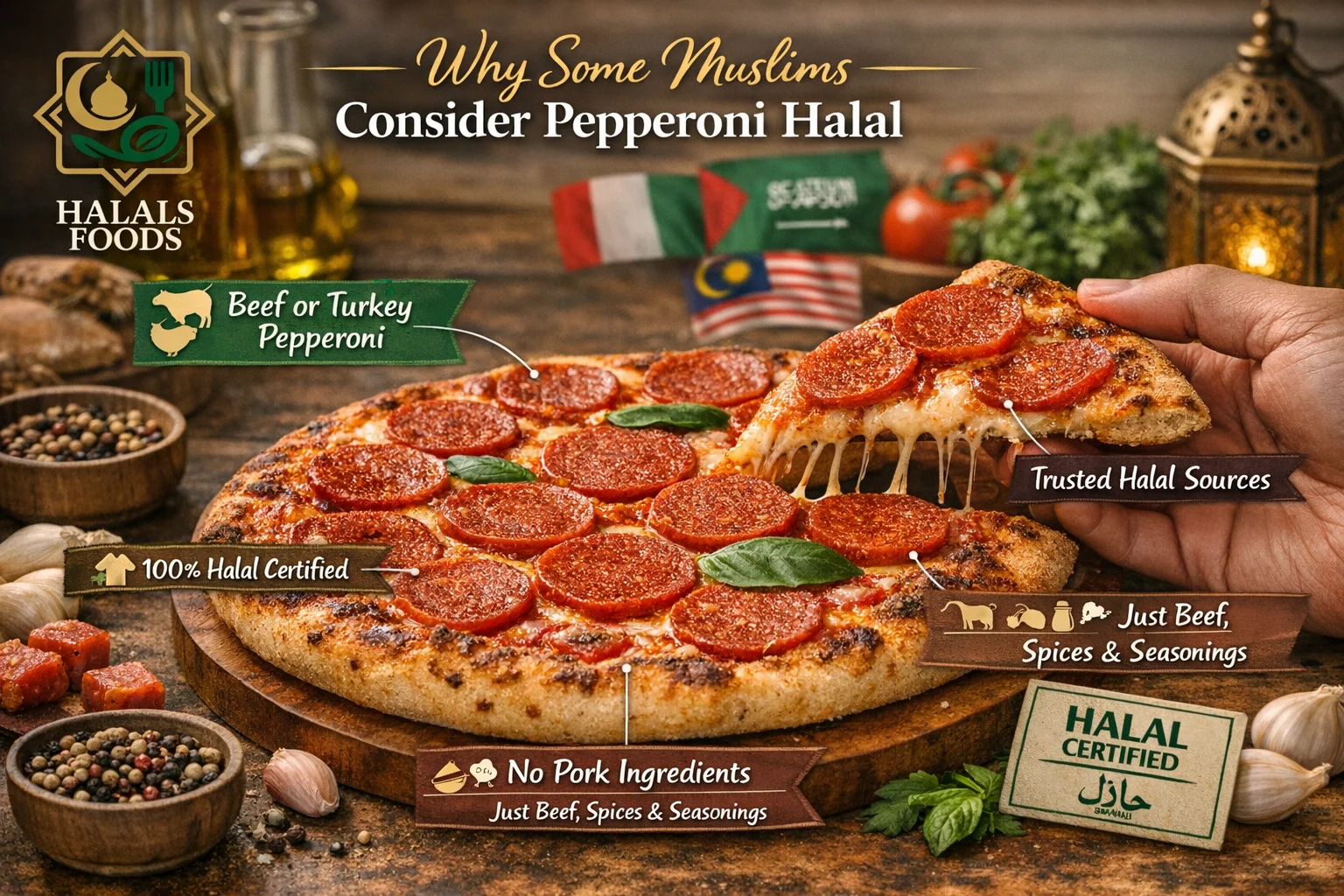
Although many scholars classify conventional pepperoni as haram due to pork content, some Muslims may still consider certain types of pepperoni halal under specific conditions.
1. Beef or Turkey Pepperoni
Some pepperoni products are made from:
-
beef
-
turkey
-
chicken
If these meats are slaughtered according to Islamic guidelines, some scholars consider them permissible to eat.
However, verifying the slaughter method is essential.
2. Assumption of Halal Meat
In some Muslim-majority countries, processed meats are assumed to come from halal-slaughtered animals due to strict government regulations.
For example:
-
Saudi Arabia
-
Malaysia
-
UAE
In these markets, pepperoni products are typically reformulated using halal-certified meat.
3. Ingredient-Based Judgement
Some consumers evaluate halal status based purely on ingredients.
If a pepperoni label contains:
-
beef
-
spices
-
salt
-
preservatives
and no pork is listed, they may assume the product is halal.
However, halal experts caution that this approach may overlook:
-
slaughter method
-
cross-contamination
-
casing sources
4. Lack of Awareness
Many people simply associate pepperoni with pizza and may not realize that traditional pepperoni contains pork.
For this reason, halal food education remains important for Muslim consumers.
Why Some Muslims Avoid Pepperoni
While some pepperoni products may appear acceptable, many Muslims choose to avoid pepperoni entirely unless it carries verified halal certification.
There are several reasons for this cautious approach.
1. Pork in Traditional Pepperoni
Historically, pepperoni was developed as a pork-based cured sausage.
Most supermarket pepperoni in Western countries still uses:
-
pork
-
pork and beef mixtures
Since pork is clearly forbidden in Islam, this alone causes many Muslims to avoid pepperoni completely.
2. Doubtful Meat Sources
Even if a pepperoni product uses beef or turkey, the meat may not be slaughtered according to Islamic requirements.
Islamic law requires:
-
invocation of Allah’s name
-
proper slaughter method
-
draining of blood
Without halal certification, verifying these conditions is difficult.
3. Natural Flavoring Concerns
Some pepperoni products include vague ingredients such as:
-
natural flavors
-
flavor extracts
These ingredients may contain alcohol-based carriers or animal-derived compounds.
Because manufacturers rarely disclose the exact sources, halal scholars sometimes classify these as mashbooh (doubtful).
4. Cross-Contamination Risk
As discussed earlier, pepperoni is usually produced in facilities that also process:
-
pork sausages
-
bacon
-
ham
-
salami
If halal and pork products share equipment, contamination may occur.
For this reason, many Muslims prefer to only purchase halal-certified pepperoni.
USA Halal Market Context
Understanding the halal status of pepperoni also requires looking at the broader halal food market in the United States.
The American halal food industry has grown rapidly over the past two decades due to the increasing Muslim population.
Size of the Halal Market
According to market research estimates, the U.S. halal food market exceeds $20 billion annually.
This includes products such as:
-
halal meat
-
frozen meals
-
snacks
-
processed foods
-
restaurant chains
As demand grows, more companies are introducing halal-certified alternatives to popular foods.
Challenges in Halal Processed Foods
Processed meats like pepperoni present several challenges for halal verification.
These include:
-
complex ingredient lists
-
shared manufacturing facilities
-
imported additives
-
unclear flavor sources
Because of these factors, many processed meat products require detailed inspection before halal certification can be granted.
What Muslim Consumers Should Check
When buying pepperoni in the United States, Muslims should carefully review:
1. Ingredient list
Look for pork, gelatin, or unclear flavorings.
2. Halal certification logo
Trusted organizations include:
-
IFANCA
-
HFSAA
-
Halal Monitoring Committee
3. Brand transparency
Some brands clearly state whether their meat is halal-slaughtered.
Growing Halal Alternatives
Fortunately, several companies now produce halal versions of common foods.
Examples include:
-
halal beef pepperoni
-
halal turkey bacon
-
halal hot dogs
-
halal deli meats
These products allow Muslim consumers to enjoy familiar foods while staying within Islamic dietary guidelines.
Final Verdict
So, is pepperoni halal?
In most cases, pepperoni is not halal because traditional pepperoni contains pork or pork mixed with beef, which is clearly forbidden in Islam.
However, pepperoni can be halal if it meets specific conditions:
-
made from halal-slaughtered beef, turkey, or chicken
-
produced without pork ingredients
-
manufactured in facilities that prevent cross-contamination
-
verified by a recognized halal certification authority
Because processed meats often involve complex ingredients and manufacturing methods, Muslim consumers should always check product labels and halal certifications carefully.
When in doubt, choosing certified halal pepperoni brands is the safest and most reliable option.
Frequently Asked Questions
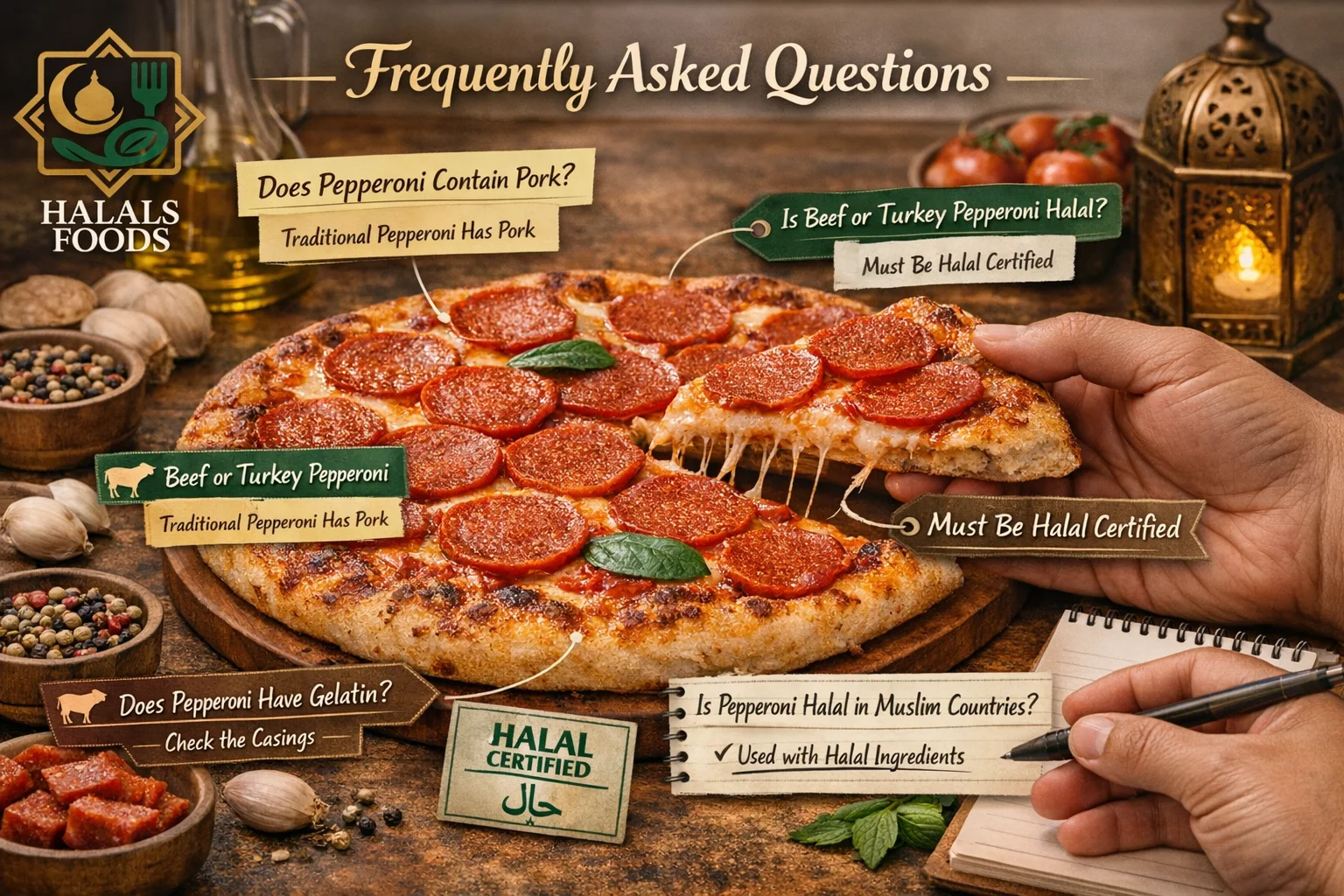
Does pepperoni contain pork?
Yes, traditional pepperoni usually contains pork or a mixture of pork and beef. This is why most pepperoni sold in Western supermarkets is not halal. However, some brands produce beef or turkey pepperoni alternatives.
Is beef pepperoni halal?
Beef pepperoni is only halal if the beef is slaughtered according to Islamic guidelines and the product does not contain haram ingredients. Without halal certification, it may still be doubtful.
Is turkey pepperoni halal?
Turkey pepperoni can be halal if the turkey is halal-slaughtered and the product is free from pork ingredients or alcohol-based flavorings.
Many halal brands use turkey as a pork-free pepperoni alternative.
Does pepperoni contain gelatin?
Most traditional pepperoni does not contain gelatin, but it may use natural casings derived from animal intestines.
If these casings come from pork, the product becomes haram.
Is pepperoni halal in Muslim countries?
In many Muslim-majority countries, pepperoni products are reformulated using halal meat and halal-certified ingredients.
However, imported products should still be checked carefully.
Can Muslims eat pepperoni pizza?
Muslims can only eat pepperoni pizza if the pepperoni is made from halal-certified meat.
Most mainstream pizza chains use pork pepperoni, which is not permissible.
Does pepperoni contain alcohol?
Pepperoni itself usually does not contain alcohol, but some flavor extracts or preservatives may use alcohol as a carrier during processing.
Halal-certified products ensure these ingredients meet Islamic standards.
Which brands sell halal pepperoni?
Several companies produce halal pepperoni, including:
-
Midamar Halal
-
Crescent Foods
-
Al Safa
-
some local halal butcher brands
These products are typically made from halal beef or turkey.
References
-
IFANCA – Islamic Food and Nutrition Council of America
-
Halal Food Standards Alliance of America (HFSAA)
-
USDA Ingredient Labeling Guidelines
-
Midamar Halal Product Information
-
FDA Food Ingredient Database
Related Halal Food Guides You May Find Helpful
People searching for “Is [ Is Tyson Chicken Halal in the USA? ]” are also curious about other foods and ingredients. Below, you’ll find related halal food articles that clearly explain ingredient sources, how products are made, and whether they meet halal requirements.
More.[ Is Sanderson Farms Halal? ]
More.[ Is Perdue Chicken Halal? ]
More.[ Is Beef Gelatin Halal? ]