Introduction
For Muslim consumers around the world, halal certification plays an essential role in determining whether food products comply with Islamic dietary laws. With thousands of packaged foods and restaurants available today, it can be difficult to identify which products are truly halal. That is why halal certification organizations exist—to verify ingredients, manufacturing processes, and supply chains.
One certification that often appears on food labels in North America is What is HFSAA certification? Many Muslims see the HFSAA logo but may not fully understand what it means or how reliable it is.
To answer this question, we reviewed official halal certification guidelines, analyzed how halal authorities operate, and examined how organizations like HFSAA verify food products. In this guide, we explain what HFSAA certification is, how it works, and whether Muslims can trust products approved by it.
Quick Answer: What is HFSAA Certification?
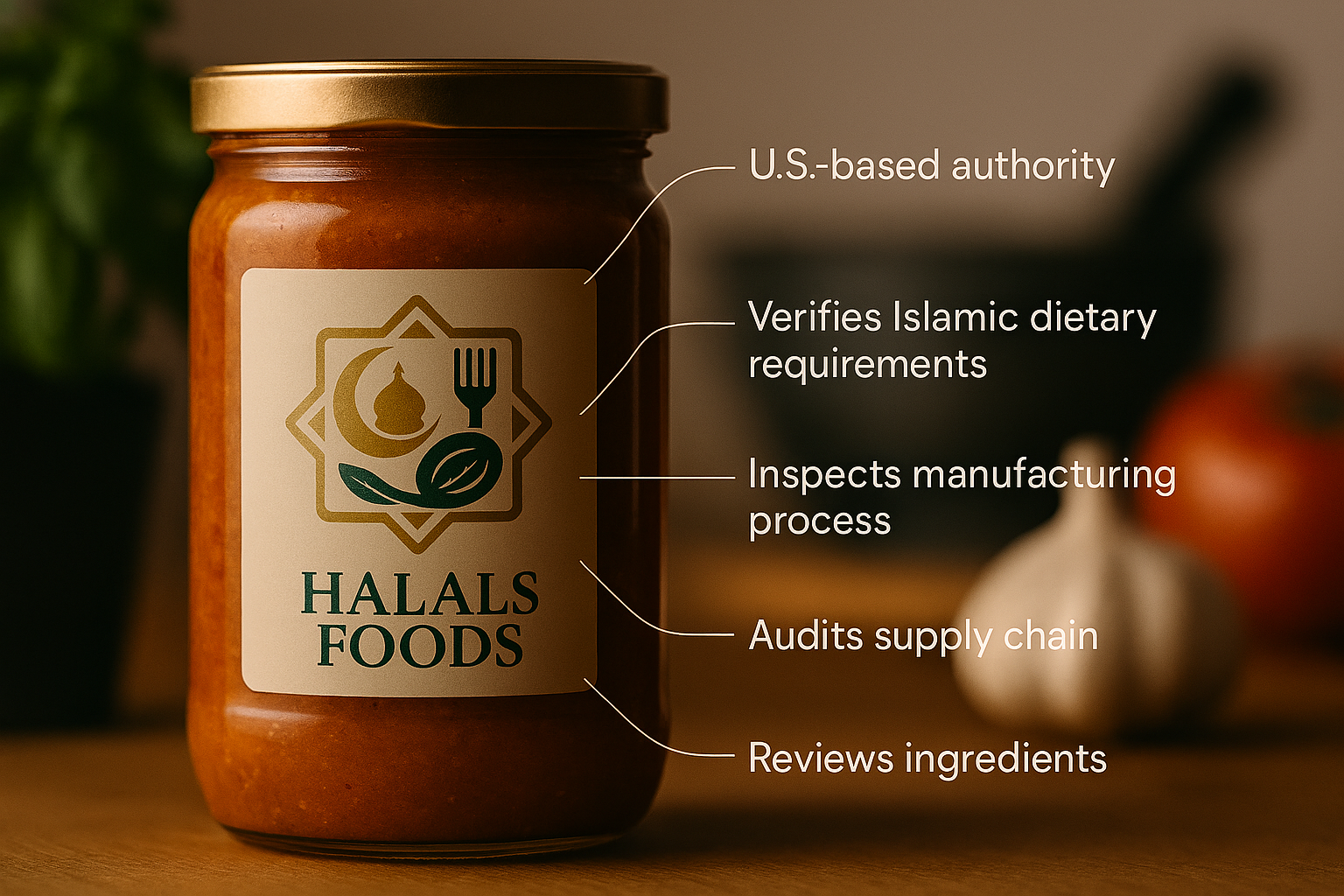
What is HFSAA certification? HFSAA stands for Halal Food Standards Alliance of America, a U.S.-based halal certification authority. It verifies that food products meet Islamic dietary requirements by reviewing ingredients, inspecting manufacturing processes, and auditing supply chains. Products certified by HFSAA are generally considered halal if they meet Islamic guidelines and pass their certification standards.
Ingredient Breakdown: Understanding What Halal Certification Reviews
To understand What is HFSAA certification?, it is important to know how halal authorities evaluate ingredients in food products. Halal certification organizations carefully examine every ingredient listed on a product label to determine whether it complies with Islamic dietary rules.
We reviewed several halal certification frameworks used by organizations like HFSAA, IFANCA, and other recognized halal authorities. These frameworks classify ingredients into three main categories.
1. Clearly Halal Ingredients
Certain ingredients are naturally halal and generally do not require extensive investigation. Examples include:
-
Fruits and vegetables
-
Grains such as wheat, rice, and corn
-
Plant oils (sunflower, olive, canola)
-
Natural spices and herbs
-
Legumes such as beans and lentils
When these ingredients appear on a product label, halal certification bodies usually consider them permissible unless contamination occurs during manufacturing.
2. Doubtful or Questionable Ingredients
The most important role of halal certification bodies like HFSAA is reviewing doubtful ingredients. These ingredients may be halal or haram depending on how they are produced.
Common examples include:
| Ingredient | Why It Requires Verification |
|---|---|
| Gelatin | Can come from pork or halal-slaughtered beef |
| Enzymes | May originate from animals or microbial sources |
| Mono- and diglycerides | Sometimes derived from animal fats |
| Natural flavors | May contain alcohol or animal derivatives |
| Glycerin | Can be plant-based or animal-based |
When investigating What is HFSAA certification?, we found that halal certifiers typically request documentation from ingredient suppliers. This documentation verifies the source and production method of each ingredient.
If an ingredient cannot be verified as halal, it may disqualify the product from receiving certification.
3. Clearly Haram Ingredients
Islamic dietary laws strictly prohibit certain ingredients. These include:
-
Pork and pork derivatives
-
Alcohol used as an intoxicant
-
Blood and blood by-products
-
Meat not slaughtered according to Islamic guidelines
Halal certification bodies automatically reject products containing these ingredients.
Understanding E-Numbers in Halal Certification
Many packaged foods list additives using E-numbers, which can make ingredient labels confusing for consumers. For example:
| E-Number | Ingredient | Halal Status |
|---|---|---|
| E441 | Gelatin | Depends on source |
| E322 | Lecithin | Usually halal (plant-based) |
| E471 | Mono- and diglycerides | Requires verification |
| E120 | Carmine (cochineal) | Considered questionable by some scholars |
Organizations that issue halal certification, including HFSAA, must investigate the source and processing method of these additives before approving a product.
Islamic Rulings Behind Ingredient Analysis
Islamic scholars base halal food rulings on several core principles:
-
Halal (permissible) foods are allowed for Muslims.
-
Haram (forbidden) foods must be avoided.
-
Mashbooh (doubtful) foods should be avoided unless verified.
Halal certification bodies like HFSAA help resolve the mashbooh category by conducting ingredient verification and audits.
This ingredient analysis is a critical part of understanding What is HFSAA certification?, because certification is only granted once all ingredients are confirmed halal.
Manufacturing Process & Cross-Contamination
Ingredients alone do not determine whether a food product is halal. The manufacturing process also plays a major role in halal compliance. This is another area where halal certification organizations conduct inspections.
To understand What is HFSAA certification?, we examined how halal auditors evaluate manufacturing facilities.
Factory Inspection
Halal certification bodies typically perform on-site inspections to ensure:
-
Halal and non-halal ingredients are stored separately
-
Equipment is properly cleaned
-
No cross-contamination occurs
Auditors may also review:
-
ingredient sourcing
-
production records
-
sanitation procedures
-
employee training
These inspections ensure that halal-certified products remain compliant throughout the manufacturing process.
Shared Equipment Risks
Many food factories produce multiple products on the same equipment. This creates potential cross-contamination risks if the facility also processes non-halal ingredients.
Examples include:
-
Pork-based gelatin products
-
Alcohol-containing flavorings
-
Non-halal meat processing
If equipment is shared, halal certification bodies may require:
-
deep cleaning procedures
-
dedicated production lines
-
documented sanitation protocols
These measures help maintain halal integrity.
Why Cross-Contamination Matters
From an Islamic perspective, contamination with haram substances can make an otherwise halal product impermissible.
For example:
-
Halal chicken cooked on equipment used for pork could be questionable.
-
Candy made with halal gelatin but processed in a facility that uses pork gelatin may require additional verification.
This is why halal certification bodies focus heavily on supply chain audits and manufacturing procedures.
Understanding these inspections helps explain What is HFSAA certification? and why certification logos are important for Muslim consumers who cannot directly observe how food products are produced.
Halal Certification Analysis: Understanding HFSAA
Now that we have examined ingredients and manufacturing standards, we can explore the core question: What is HFSAA certification?
What Does HFSAA Stand For?
HFSAA stands for Halal Food Standards Alliance of America.
It is a halal certification organization based in the United States that provides halal verification services to food manufacturers, restaurants, and ingredient suppliers.
What HFSAA Certification Means
When a product carries HFSAA certification, it typically means the organization has verified:
-
ingredient sources
-
production processes
-
supply chain documentation
-
facility hygiene and separation procedures
Certification usually involves:
-
Ingredient review
-
Facility inspection
-
Compliance audits
-
Ongoing monitoring
If all requirements are met, the product receives the HFSAA halal certification logo.
How HFSAA Compares to Other Halal Authorities
Several halal certification bodies operate worldwide. Some of the most recognized include:
| Halal Authority | Region |
|---|---|
| IFANCA | United States |
| HFSAA | United States |
| Halal Monitoring Committee (HMC) | United Kingdom |
| JAKIM | Malaysia |
| ESMA | UAE |
Each organization follows Islamic dietary guidelines but may have slightly different certification procedures.
Regional Differences in Halal Certification
One important factor when researching What is HFSAA certification? is that halal standards vary slightly by region.
For example:
-
United States: Halal certification is voluntary and managed by private organizations like HFSAA or IFANCA.
-
United Kingdom: Some halal certification bodies have stricter monitoring requirements.
-
Middle East: Government authorities often regulate halal certification.
Despite these differences, most reputable halal certifiers follow the same core Islamic principles regarding halal ingredients and slaughter practices.
Official Statements From Halal Authorities
When researching What is HFSAA certification?, we reviewed information from halal certification authorities and official documentation describing how certification organizations operate.
Halal certification bodies like HFSAA typically publish guidelines explaining how companies can obtain certification and what requirements must be met before a product can display the halal logo.
According to halal certification frameworks used in the United States, manufacturers seeking halal approval usually must provide detailed documentation that includes:
-
Full ingredient lists
-
Supplier information for each ingredient
-
Production process descriptions
-
Cleaning and sanitation procedures
-
Packaging and labeling details
These documents allow halal auditors to evaluate whether the product meets Islamic dietary standards.
What Halal Certification Organizations Usually State
Most halal certification authorities explain that their certification verifies three major factors:
-
Ingredients must be halal
All ingredients must be derived from permissible sources. -
Manufacturing must follow halal standards
Facilities must prevent cross-contamination with non-halal materials. -
Ongoing audits ensure compliance
Certified companies must maintain halal practices over time.
HFSAA certification works similarly to other halal certification programs. Once a product meets halal requirements, the company can display the halal certification logo on packaging or promotional materials.
Regional Differences in Official Guidance
When analyzing [[What is HFSAA certification?]], it is also helpful to compare how different regions approach halal certification.
United States
In the United States, halal certification is typically handled by private organizations such as:
-
HFSAA
-
IFANCA
-
ISA (Islamic Services of America)
Companies voluntarily apply for halal certification to reach Muslim consumers.
United Kingdom
In the UK, halal certification is also provided by private organizations, including:
-
Halal Monitoring Committee (HMC)
-
Halal Food Authority (HFA)
Some of these groups conduct frequent inspections and ongoing monitoring.
Canada
Canada has several halal certifiers that operate similarly to U.S. organizations. Certification ensures that products meet Islamic dietary requirements and gives Muslim consumers greater confidence.
The existence of these regional organizations helps explain What is HFSAA certification? and why multiple halal authorities exist globally.
Why Some Muslims Trust HFSAA Certification
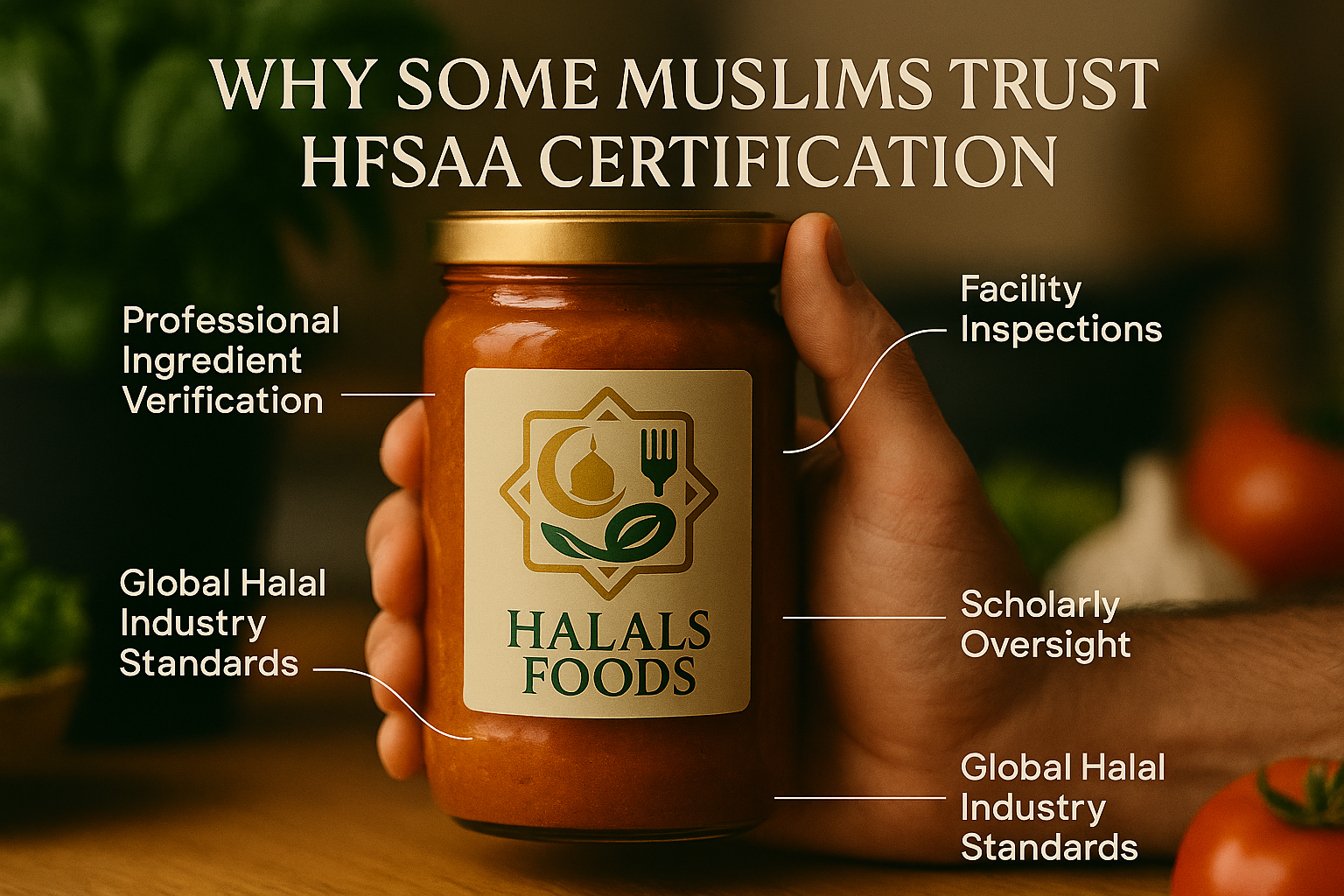
Many Muslim consumers consider products certified by reputable halal authorities to be permissible.
When examining What is HFSAA certification?, several factors explain why some Muslims trust certification organizations like HFSAA.
1. Professional Ingredient Verification
Halal certification bodies review detailed ingredient documentation. This helps ensure that questionable ingredients such as gelatin, enzymes, or emulsifiers come from halal sources.
For consumers who cannot personally investigate every ingredient supplier, certification provides an additional layer of verification.
2. Facility Inspections
Another reason some Muslims accept halal certification is that auditors inspect manufacturing facilities.
These inspections verify:
-
separation of halal and non-halal materials
-
proper cleaning procedures
-
compliance with halal guidelines
This oversight reduces the risk of contamination.
3. Scholarly Oversight
Most halal certification organizations consult with Islamic scholars to ensure their standards align with Islamic law.
These scholars help determine rulings on:
-
food additives
-
slaughter practices
-
fermentation processes
Because of this religious oversight, many Muslims feel comfortable trusting halal-certified products.
4. Global Halal Industry Standards
Halal certification has become an important part of the global food industry. Many manufacturers seek certification to access Muslim markets.
As a result, halal certification organizations have developed standardized procedures to maintain credibility.
For these reasons, some Muslim consumers view What is HFSAA certification? as a reliable indicator that a product meets halal guidelines.
Why Some Muslims Remain Cautious
While many Muslims trust halal certification, others remain cautious or prefer additional verification.
Understanding these concerns is important when discussing What is HFSAA certification?.
1. Differences Between Certification Standards
Not all halal certification bodies follow identical standards.
For example:
-
Some organizations require hand-slaughtered meat.
-
Others allow mechanical slaughter under certain conditions.
These differences can influence whether some Muslims accept specific certifications.
2. Concerns About Ingredient Transparency
Another concern involves complex food additives.
Modern processed foods may contain dozens of ingredients, including emulsifiers, flavorings, and stabilizers.
Some consumers worry that:
-
ingredient sources may change over time
-
suppliers may use different production methods
Although certification bodies monitor these changes, some Muslims prefer to avoid processed foods entirely.
3. Lack of Universal Global Authority
Unlike some religious systems, Islam does not have a single global authority that regulates halal certification.
Instead, multiple organizations operate independently around the world.
Because of this, Muslim consumers may prefer certain certification bodies over others.
These concerns do not necessarily mean certification is unreliable, but they explain why opinions can differ regarding What is HFSAA certification?.
Halal Certification in the United States
Understanding the American halal market provides additional context for [[What is HFSAA certification?]].
The United States has one of the largest halal food markets outside Muslim-majority countries.
Growth of the Halal Food Market
According to industry estimates, the halal food sector in the U.S. has grown significantly due to:
-
a growing Muslim population
-
increasing demand for certified halal products
-
greater awareness of halal dietary requirements
Many mainstream food companies now pursue halal certification to expand their customer base.
How Halal Food Is Regulated in the U.S.
Unlike some countries, the U.S. government does not centrally regulate halal certification.
Instead, halal verification is managed by private certification organizations such as:
-
HFSAA
-
IFANCA
-
Islamic Services of America
These organizations work with food manufacturers to review ingredients and production processes.
Common Issues in the Halal Market
Muslim consumers in the U.S. often face challenges when evaluating whether foods are halal.
Some common issues include:
-
unclear ingredient labels
-
complex food additives
-
lack of halal certification
Because of these challenges, many Muslims rely on halal certification logos to make informed choices.
Understanding the role of certification bodies helps clarify What is HFSAA certification? and why it matters for Muslim consumers.
Final Verdict
After reviewing halal certification systems, ingredient verification procedures, and manufacturing audits, we can answer the central question: What is HFSAA certification?
HFSAA certification is issued by the Halal Food Standards Alliance of America, a halal certification organization that evaluates food products based on Islamic dietary rules.
The certification process typically includes:
-
detailed ingredient analysis
-
facility inspections
-
supply chain verification
-
ongoing compliance monitoring
When a product receives HFSAA certification, it indicates that the organization has reviewed the ingredients and production process to ensure they meet halal standards.
However, as with any halal certification system, individual Muslim consumers may choose to research additional information depending on their personal level of caution.
Frequently Asked Questions
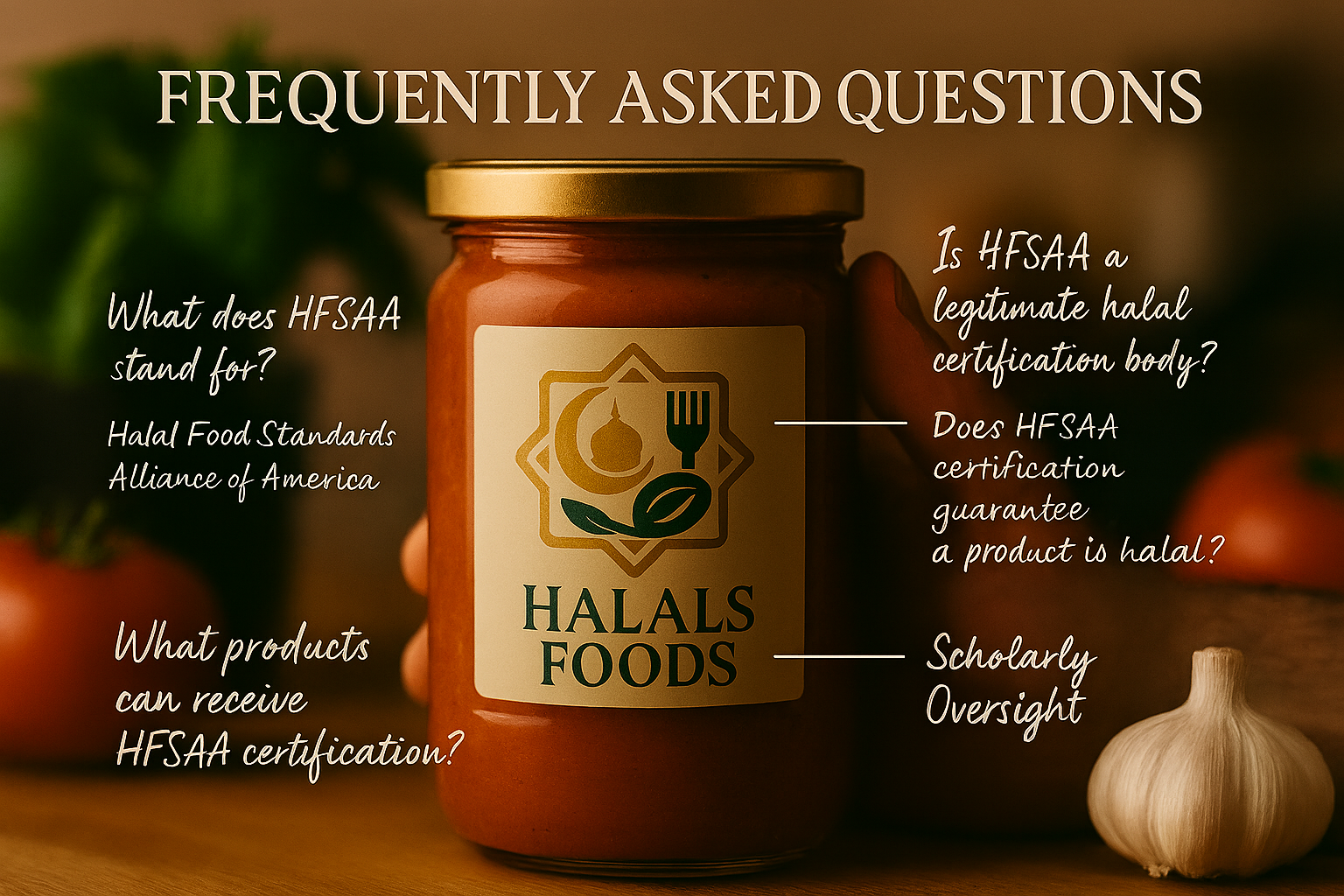
1. What does HFSAA stand for?
HFSAA stands for Halal Food Standards Alliance of America. It is a halal certification organization based in the United States that verifies whether food products comply with Islamic dietary laws.
2. Is HFSAA a legitimate halal certification body?
HFSAA is one of several halal certification organizations operating in North America. It provides ingredient verification, manufacturing audits, and halal certification services for food manufacturers and restaurants.
3. Does HFSAA certification guarantee a product is halal?
Halal certification indicates that the certifying organization has reviewed ingredients and manufacturing processes according to Islamic guidelines. However, individual consumers may still choose to conduct additional research if they prefer.
4. What products can receive HFSAA certification?
Many types of products can receive halal certification, including:
-
packaged foods
-
meat products
-
beverages
-
food ingredients
-
restaurant meals
Certification depends on whether the product meets halal standards.
5. Does HFSAA inspect factories?
Yes. Halal certification organizations typically conduct facility inspections to ensure that halal and non-halal ingredients are properly separated and that production follows halal guidelines.
6. Is HFSAA certification recognized internationally?
HFSAA primarily operates in the United States, but halal-certified products may be distributed internationally depending on the manufacturer and market requirements.
7. How can consumers verify halal certification?
Consumers can check halal certification by:
-
reviewing the product label
-
visiting the certifier’s official website
-
contacting the manufacturer for additional information
This helps confirm whether a product is truly halal certified.
8. Are halal certification standards the same worldwide?
No. Different halal authorities may apply slightly different standards depending on local regulations and scholarly interpretations.
However, most halal certification organizations follow the same fundamental Islamic principles regarding halal and haram ingredients.
References
-
Halal Food Standards Alliance of America – Official website
-
IFANCA Halal Certification Guidelines
-
Islamic Services of America – Halal certification standards
-
U.S. halal food industry reports
-
Islamic dietary law resources on halal food regulations
Related Halal Food Guides You May Find Helpful
People searching for “Is [ Is Gelatin Halal? (2026 guide) ]” are also curious about other foods and ingredients. Below, you’ll find related halal food articles that clearly explain ingredient sources, how products are made, and whether they meet halal requirements.
More Related Articles [ Is Vanilla Extract Halal? ]
More Related Articles [ Is Rennet Halal or Haram? ]
More Related Articles [ What Is Zabiha Halal? ]
More Related Articles [ Difference Between Halal & Kosher ]