Let’s Be Real… Why This Question Matters So Much
When you pick up a slice of pizza, grab a burger, or even eat a simple sandwich, you probably don’t think twice about what’s inside the cheese.
But here’s the uncomfortable truth…
For many Muslims, that one small ingredient — rennet — turns a completely normal meal into a serious question of halal and haram.
And that’s exactly why people keep asking: Is rennet halal?
It’s not just curiosity.
It’s about faith, daily choices, and avoiding something doubtful without even realizing it.
Now here’s the tricky part…
Rennet is everywhere.
And most of the time, you won’t even see clear information about it.
So instead of guessing, let’s actually break it down properly — in a way that makes sense.
What Exactly Is Rennet? (Simple Explanation)
Alright, no complicated science here.
Rennet is basically an enzyme used to turn milk into cheese.
Without rennet → no cheese.
It’s that simple.
It works by:
- Thickening milk
- Separating it into curds and whey
- Helping form the texture we all recognize as cheese
Now here’s where things start getting complicated…
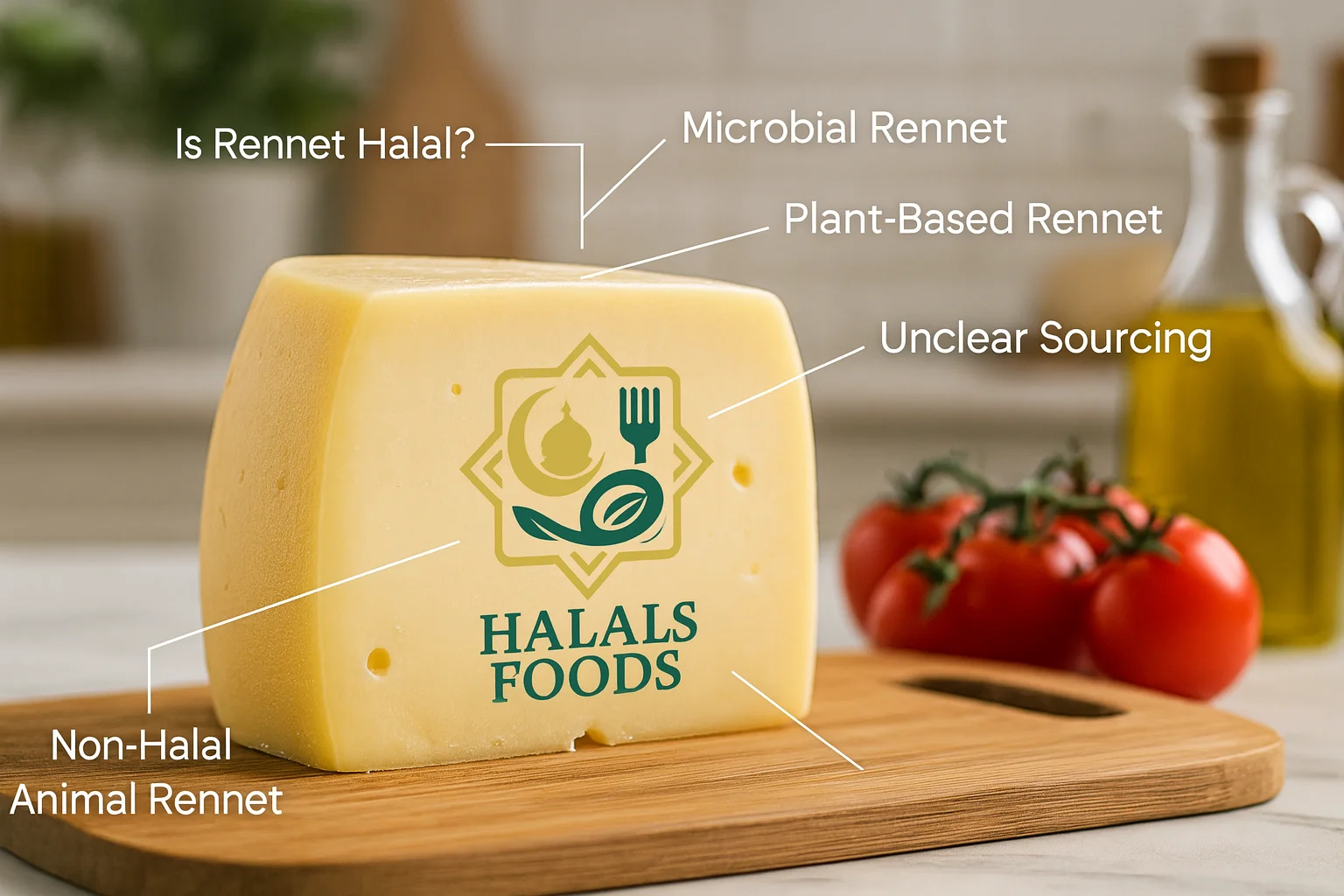
Rennet is not one single thing.
There are different types, and each one has a completely different ruling in Islam.
The Part Most People Ignore…
When people ask Is rennet halal, they usually expect a simple yes or no.
But honestly… that’s the wrong way to look at it.
Because:
👉 Rennet can be halal
👉 Rennet can be haram
👉 Rennet can even be doubtful
All depending on where it comes from.
And this is exactly where most confusion begins.
The 4 Types of Rennet You MUST Understand
Let’s break it down clearly.
1. Animal Rennet (The Most Controversial One)
This is the traditional type.
It comes from the stomach of young animals, usually:
- Calves
- Goats
- Lambs
Now ask yourself:
👉 Was the animal halal?
👉 Was it slaughtered according to Islamic law?
Because if not…
Then this type of rennet becomes haram according to most scholars.
📌 Reality check:
In many Western countries, animals are NOT slaughtered Islamically.
So most animal rennet in the market is high-risk or haram.
2. Microbial Rennet (The Safer Option)
Now this is where things get easier.
Microbial rennet is made using:
- Bacteria
- Fungi
- Fermentation processes
No animal involved.
That’s why many scholars say:
✅ It is generally halal
But — and this is important —
You still need to consider:
- Processing methods
- Any added substances
Still, compared to animal rennet… this is much safer.
3. Plant-Based Rennet (No Doubt Here)
This one is simple.
It comes from plants like:
- Thistle
- Figs
- Herbs
No animals. No complications.
✅ 100% halal
The only downside?
It’s not commonly used in mass production.
4. Genetically Engineered Rennet (Modern Science Twist)
This sounds complicated, but here’s the simple version:
Scientists take the enzyme gene and produce it using microorganisms.
No actual animal part remains in the final product.
Scholars have different opinions, but:
👉 Most halal authorities approve it
Because the final substance is completely transformed.
Why Labels Make Everything More Confusing
Let’s be honest…
If companies simply wrote “animal rennet” or “plant rennet,” life would be easy.
But they don’t.
Instead, you’ll see things like:
- “Enzymes”
- “Rennet”
- “Natural enzymes”
- “Cheese cultures”
And that’s it.
No source. No clarity.
So when you ask Is rennet halal, the real issue is:
👉 You often can’t even tell what type it is
Here’s the Part That Frustrates Most Muslims
Food laws in many countries do NOT require companies to disclose enzyme sources.
Which means:
- Animal rennet can be hidden
- Non-halal sources can go unnoticed
- Consumers are left guessing
And let’s be real…
No one wants to call customer support every time they buy cheese.
A Quick Reality Check About Cheese
You might be thinking:
“Okay, I’ll just avoid rennet.”
But here’s the problem…
👉 Rennet is in MOST cheeses
Including:
- Pizza cheese
- Cheddar
- Mozzarella
- Parmesan
- Processed foods
So avoiding it completely is not always practical.
That’s why understanding Is rennet halal properly is so important.
Islamic Perspective: Why Source Matters So Much
Islam doesn’t just look at the final product.
It looks at:
- Origin
- Process
- Purity
So when it comes to rennet:
👉 The ruling follows the source
If the source is halal → permissible
If the source is haram → not allowed
Simple in theory… complicated in reality.
The Concept of Doubt (Shubha)
Here’s something many people overlook.
In Islam, there’s a category called:
⚠️ Doubtful matters
And the Prophet (ﷺ) advised to avoid them.
So if:
- You don’t know the source
- There’s no certification
- The label is unclear
Then the product falls into a gray area
And that’s where personal caution comes in.
Why Some People Say It’s Halal Anyway
Now this is where things get interesting…
Some scholars (especially in classical opinions) argue:
👉 Rennet is not like meat
👉 It may remain pure even if taken from non-halal animals
This view is especially known in the Hanafi school.
Their reasoning?
- Rennet is more like milk
- It doesn’t carry the same ruling as flesh
So for some Muslims:
👉 The answer to Is rennet halal becomes more flexible
But Here’s the Catch…
Modern scholars often push back on this.
Why?
Because today’s food industry is VERY different from the past.
We now have:
- Industrial slaughter
- Unknown sourcing
- Complex processing
- Cross-contamination
So relying on classical rulings without considering modern reality can be risky.
The Hidden Risk: Cross-Contamination
This is something hardly anyone talks about.
Even if rennet is halal…
👉 It can become doubtful during manufacturing
How?
- Shared equipment
- Mixed processing lines
- No halal cleaning standards
So even “safe” rennet can become questionable.
Why Halal Certification Changes Everything
Let’s be practical for a second.
The easiest way to avoid all this confusion?
👉 Look for halal certification
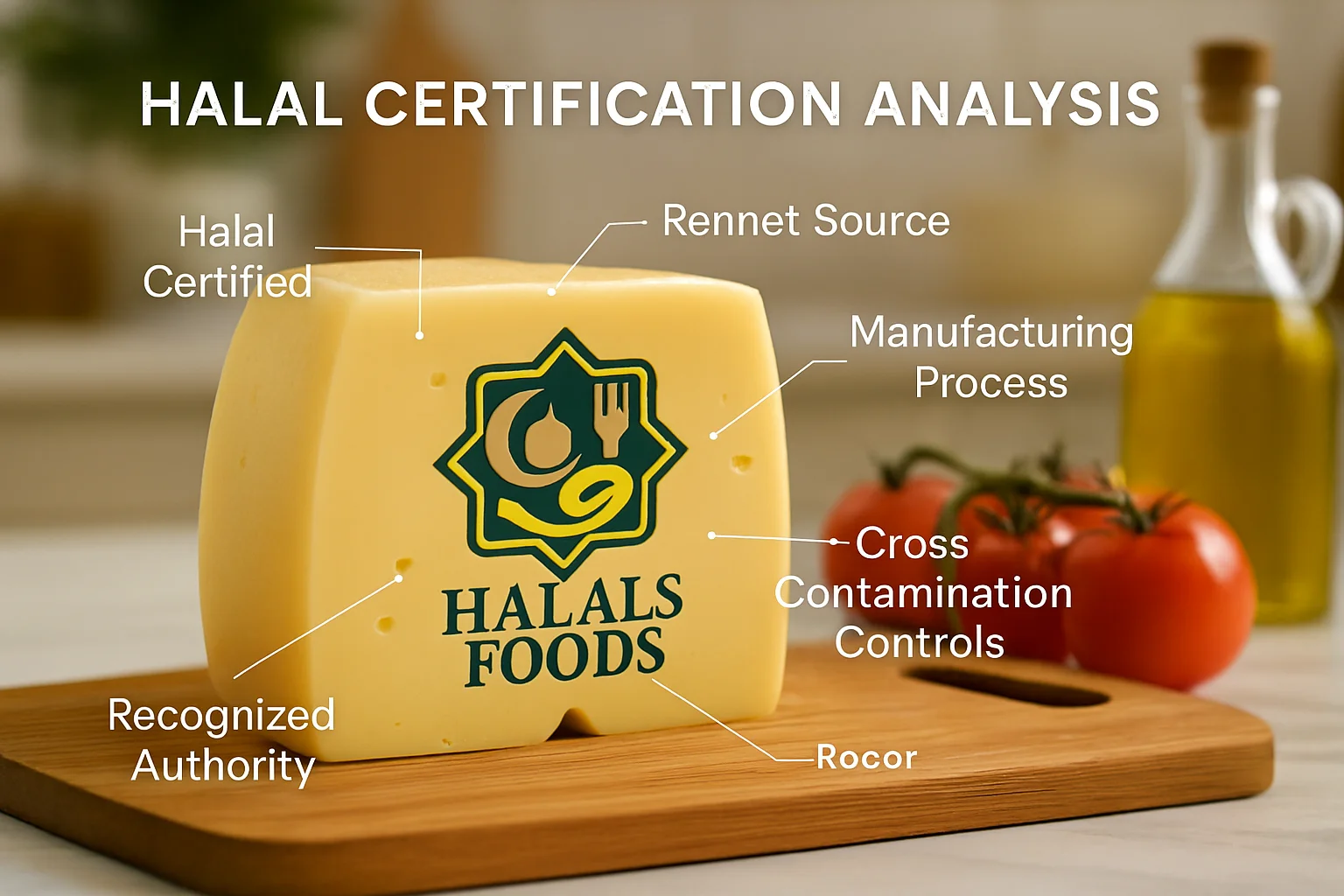
Because certified products are checked for:
- Source of rennet
- Production process
- Cleanliness
- Cross-contamination
Without certification…
You’re basically guessing.
What Smart Consumers Actually Do
People who understand this issue usually:
- Choose vegetarian cheese
- Look for halal logos
- Avoid unclear labels
- Stick to trusted brands
It’s not about being extreme…
It’s about being informed.
Internal Reads You Shouldn’t Miss
If you’re trying to understand halal ingredients deeply, you should also read:
- Is Gelatin Halal? Complete Guide
- What Is Zabiha Halal? Explained Simply
- Is Vanilla Extract Halal or Haram?
These topics connect directly with the same kind of ingredient confusion.
So… Where Does That Leave Us?
At this point, you probably realize something:
The question Is rennet halal is not simple at all.
It depends on:
- Type
- Source
- Processing
- Certification
- Scholarly opinion
And honestly…
We’ve only scratched the surface.
Because there’s still a deeper side to this:
👉 Why some Muslims strictly avoid it
👉 Why others accept certain types
👉 How real-world markets affect your choices
And more importantly…
👉 What YOU should actually do in everyday life
So… What Should You Actually Do?
By now, you already know the basics behind Is rennet halal — the types, the confusion, and the scholarly differences.
But let’s move past theory.
Because at the end of the day, this isn’t just an academic discussion.
👉 It’s about what you eat every single day.
So the real question becomes:
How do you deal with rennet in real life without overcomplicating everything?
The 3 Types of Muslim Responses (Which One Are You?)
Let’s be honest… Muslims today generally fall into three groups when it comes to rennet.
1. The Strict Approach (Zero Risk)
These people say:
“If it’s not clearly halal-certified, I’m not touching it.”
They avoid:
- All unknown rennet
- All non-certified cheese
- All doubtful ingredients
Their mindset is simple:
👉 No doubt = peace of mind
This approach is safest… but can feel restrictive, especially in non-Muslim countries.
2. The Balanced Approach (Most Practical)
This group takes a more informed path.
They:
- Accept microbial & vegetarian rennet
- Avoid clear animal rennet
- Check labels carefully
They understand the issue but don’t want life to become unnecessarily difficult.
👉 This is where most aware Muslims fall today.
3. The Lenient Approach (Based on Classical Opinions)
This group follows the opinion that:
👉 Rennet may still be pure even from non-halal animals
They rely on:
- Hanafi scholarly views
- Concept of transformation (istihalah)
- Practical necessity
But here’s the important part…
Even within this group, many still prefer halal-certified when available.
Let’s Clear a Common Misconception
A lot of people think:
“If it says vegetarian, it must be halal.”
Not always.
Here’s why:
- “Vegetarian” only means no animal meat
- It doesn’t guarantee halal processing
- Alcohol or contamination could still be involved
So while vegetarian rennet is usually safe, it’s not automatically perfect.
The Cheese Trap Most People Fall Into
Let’s be real…
Cheese feels harmless.
Milk + salt + culture… right?
But here’s the hidden reality:
👉 Cheese is one of the most complicated halal foods
Because:
- Rennet source is unclear
- Production is industrial
- Labels are vague
So when you ask Is rennet halal, what you’re really asking is:
👉 “Is my cheese actually halal?”
Real-Life Examples (This Will Surprise You)
Let’s take a few common scenarios.
🍕 Pizza from a Fast Food Chain
- Cheese source unknown
- Likely mass-produced
- No halal certification
👉 Verdict: Doubtful or haram risk
🧀 Supermarket Cheese (No Label Info)
- Says “enzymes”
- No halal logo
👉 Verdict: Doubtful
🥗 Cheese Labeled “Vegetarian Rennet”
- No animal source
- Widely accepted
👉 Verdict: Generally halal
🕌 Halal-Certified Cheese
- Verified ingredients
- Clean production
👉 Verdict: 100% halal
Why Scholars Disagree (And Why That’s Okay)
You might be wondering:
“Why can’t scholars just agree on one answer?”
Fair question.
But here’s the thing…
Islamic rulings are based on:
- Evidence
- Interpretation
- Context
And rennet sits right at the intersection of:
- Classical rulings
- Modern food science
So differences are natural.
👉 The key is: Follow a position with understanding, not confusion
The Principle Most People Forget
There’s a powerful Islamic principle:
“Leave what makes you doubt for what does not make you doubt.”
So instead of constantly asking:
Is rennet halal
Ask yourself:
👉 “Can I choose something clearly halal instead?”
That one mindset shift changes everything.
The Growing Halal Food Movement (Good News)
Here’s something encouraging…
The halal market is growing fast.
Today, you can find:
- Halal-certified cheese brands
- Muslim-owned dairy companies
- Clear labeling (especially online)
So compared to 10–15 years ago…
👉 You have way more options now
What About Eating Outside?
This is where things get tricky.
Restaurants rarely mention:
- Type of rennet
- Source of cheese
- Certification details
So what can you do?
Smart strategies:
- Ask if cheese is vegetarian-based
- Choose restaurants with halal certification
- Avoid cheese-heavy dishes if unsure
No need to be extreme…
Just be aware.
A Simple Rule You Can Follow Daily
If all this feels overwhelming, just remember this:
👉 3-Step Halal Check for Rennet
- Look for halal certification
- Check if it says “vegetarian/microbial rennet”
- If unclear → avoid when possible
That’s it.
Simple. Practical. Effective.
The Emotional Side No One Talks About
Let’s be honest for a second…
This topic can feel frustrating.
You just want to eat normally… but suddenly everything feels complicated.
That’s completely understandable.
But here’s the perspective that helps:
👉 You’re not making life harder
👉 You’re making your choices more conscious
And that intention matters.
Final Verdict: Is rennet halal?
Let’s answer this clearly, once and for all.
✅ Halal:
- Plant-based rennet
- Microbial rennet
- Halal-certified animal rennet
❌ Haram:
- Animal rennet from non-halal slaughter
⚠️ Doubtful:
- Unspecified “enzymes” or “rennet” without certification
The Real Answer (Simple Words)
Is rennet halal?
👉 It depends on the source.
But if you want the safest path:
✔ Choose halal-certified
✔ Prefer vegetarian or microbial
✔ Avoid unclear labels
Final Thought (Human to Human)
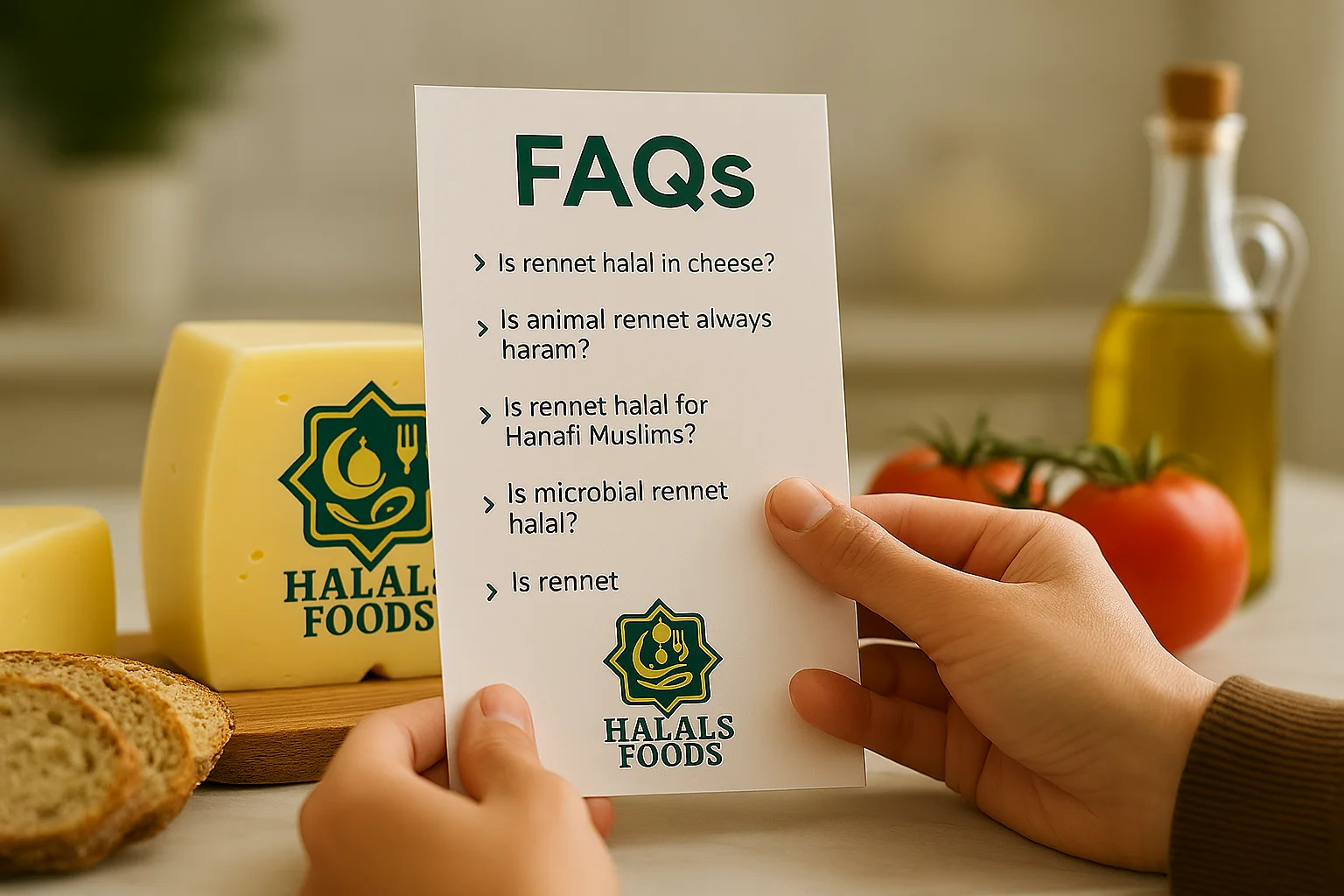
At the end of the day…
This isn’t just about rennet.
It’s about being mindful of what you consume.
Not perfect. Not extreme. Just aware.
Because small daily choices…
👉 quietly shape your lifestyle, your habits, and your values.
Related Halal Food Guides You May Find Helpful
People searching for “Is [ Is Gelatin Halal? (2026 guide) ]” are also curious about other foods and ingredients. Below, you’ll find related halal food articles that clearly explain ingredient sources, how products are made, and whether they meet halal requirements.
More Related Articles [ Is Vanilla Extract Halal?]
More Related Articles [ What Is Zabiha Halal? ]