Let’s be real for a moment…
You walk into a store in the U.S., see colorful candies everywhere, and think: “It’s just sugar… how complicated can it be?”
But then someone says, “Wait, check if it’s halal.”
And suddenly… everything feels confusing.
That’s exactly the situation many Muslim families face when searching for Halal candies in USA. It’s not just about avoiding pork anymore. It’s about ingredients you can’t pronounce, labels that don’t explain enough, and brands that don’t give clear answers.
So what’s actually going on here?
Let’s break it down in a way that actually makes sense.
Why Halal candies in USA Are So Confusing
Here’s the part most people ignore…
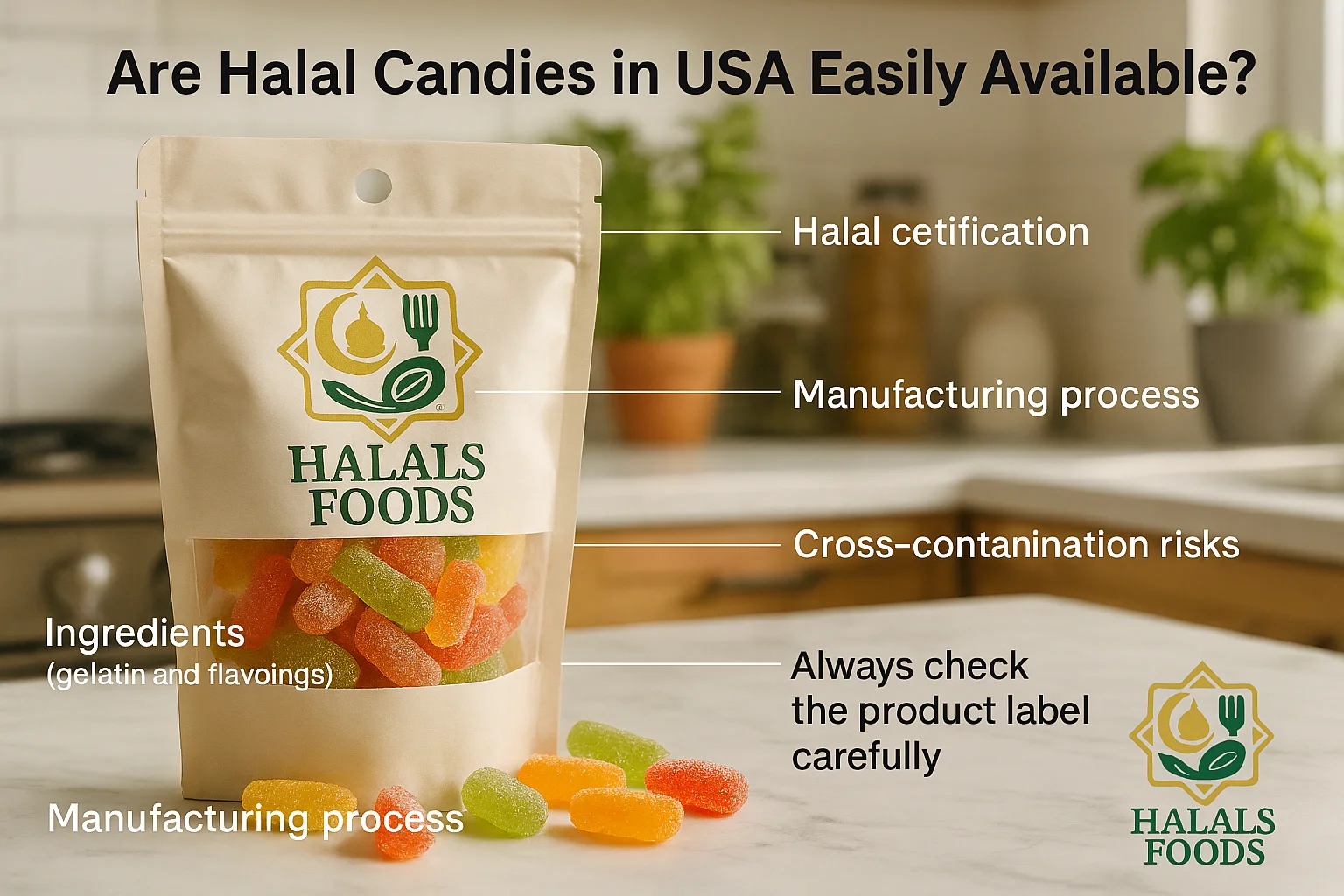
Candy looks simple, but it’s actually one of the most complex processed foods when it comes to halal.
Why?
Because of three hidden factors:
- Invisible ingredients (like gelatin & flavors)
- Unclear labeling laws
- Manufacturing processes you never see
In many cases, two candies can look identical — same color, same taste — but one is halal and the other is completely haram.
That’s not guesswork. That’s reality.
Quick Answer (Straight to the Point)
Are Halal candies in USA easily available?
👉 Yes… but not all candies are halal.
Simple rule:
- ✔️ Pectin-based candies → Usually halal
- ✔️ Halal-certified candies → Safe
- ❌ Pork gelatin → Haram
- ⚠️ Unknown ingredients → Doubtful
If you remember just this, you’re already ahead of most people.
The Real Problem: Ingredients You Don’t Notice
You might be thinking:
“Okay, I’ll just avoid pork.”
That sounds simple… but it’s not enough.
Let’s go deeper.
1. Gelatin – The Biggest Red Flag
If there’s ONE ingredient you should always check, it’s this.
Gelatin = the backbone of most gummies, marshmallows, and chewy candies.
But here’s the issue:
- In the USA, gelatin is mostly derived from pork
- Labels usually just say “gelatin” — no source mentioned
So what does that mean?
👉 If the source isn’t halal-certified → it’s not safe to assume it’s halal
This is why many popular candies instantly become questionable.
2. “Natural Flavors” – Sounds Safe… But Isn’t Always
This is where things get tricky.
“Natural flavors” can include:
- Alcohol-based extracts
- Animal-derived compounds
- Fermentation by-products
And companies are not required to fully disclose details.
So even if a candy says “no gelatin”… it can still be doubtful.
3. Color Additives (Like E120)
You’ve probably seen bright red candies.
That color sometimes comes from:
👉 Carmine (E120) – made from insects
Now scholars differ:
- Some say it’s permissible
- Others say avoid it
So again… it becomes a gray area
Categories of Halal candies in USA (Simple Breakdown)
To make things easier, think of candies in 3 categories:
✔️ Clearly Halal
These are the safest:
- Pectin-based gummies
- Candies with halal certification
- Products with plant-based ingredients only
Examples include:
- Fruit chews with no gelatin
- Sour candies using starch instead of gelatin
⚠️ Doubtful
This is where most U.S. candies fall:
- Gelatin (unknown source)
- Natural flavors (unclear origin)
- No halal certification
Many people consume these… but with uncertainty.
❌ Clearly Haram
These are easy to avoid:
- Pork gelatin
- Alcohol listed directly
- Non-halal animal derivatives
Let’s Talk About Manufacturing (This Changes Everything)
You might be thinking:
“Okay, I’ll just check ingredients and I’m done.”
Not really.
Here’s the hidden issue…
Shared Factories = Shared Risk
Most candy brands in the USA:
- Produce multiple products in the same facility
- Use the same machines
- Don’t follow halal cleaning standards
So what happens?
👉 Even if your candy has no pork ingredients…
👉 It might still be exposed to pork-based gelatin during production
From an Islamic perspective, this creates serious doubt
Why Halal Certification Matters More Than You Think
Let’s simplify this.
A halal logo is not just a sticker.
It means:
- Ingredients verified
- Sources checked
- Factory inspected
- Cross-contamination controlled
Without certification?
👉 You’re basically relying on assumptions
Trusted Halal Authorities in the USA
Look for these names:
- IFANCA
- HFSAA
- ISA
- Zabiha Halal
If you see these → much safer choice
Reality Check: What Brands Actually Say
We looked into multiple candy companies…
And honestly?
Most of them say things like:
- “Not halal certified”
- “Cannot guarantee halal compliance”
- “Gelatin source not disclosed”
Some even clearly confirm:
👉 “Gelatin is pork-derived”
So the confusion isn’t in your head — it’s real.
Why Some Muslims Still Eat Certain Candies
You’ll notice something interesting…
Not all Muslims follow the same approach.
Some say:
- “No pork listed = halal”
- “Candy is just sugar”
- “Gelatin is transformed”
This is based on a principle:
👉 Everything is halal unless proven haram
And Why Others Completely Avoid Them
On the other side…
Some Muslims are very strict.
They believe:
- High chance gelatin = pork
- Labels are unclear
- Doubt should be avoided
Based on the hadith:
👉 “Leave what makes you doubt…”
So… Who’s Right?
That’s where things get personal.
It depends on:
- Your level of caution
- Your understanding of halal
- Your trust in food systems
But one thing is clear:
👉 Certainty is always better than doubt
Growing Demand for Halal candies in USA
Here’s something interesting…
The halal candy market is growing fast.
Why?
- More Muslim families in the U.S.
- Kids wanting mainstream snacks
- Awareness increasing on social media
Now parents are actively searching for:
- Halal Halloween candy
- Eid sweets
- School snacks
This demand is pushing brands to change.
But we’re not fully there yet.
A Smarter Way to Shop (Practical Insight)
Next time you pick a candy, don’t overcomplicate it.
Just follow this:
- Check for gelatin
- Look for halal logo
- Avoid unclear ingredients
- Prefer pectin-based products
That alone filters out most risks.
Internal Linking Suggestions
You can also read:
- Is Gelatin Halal or Haram
- Halal Certification Explained
- Is Carmine (E120) Halal in Islam
Something Most People Still Don’t Realize…
Even after all this…
There’s one thing that surprises many Muslims when they dig deeper into Halal candies in USA:
👉 The SAME candy brand can be halal in one country… and haram in another.
Yes — same name, different formula.
And this changes everything when choosing what’s actually safe to eat.
So here’s where things get even more real…
we talked about ingredients, labels, and hidden risks in Halal candies in USA.
But now comes the question everyone actually cares about:
👉 “Okay… but which candies can I actually eat?”
Let’s break it down properly — no guessing, no confusion.
Brand Reality: Same Candy, Different Country, Different Ruling
You might be shocked by this…
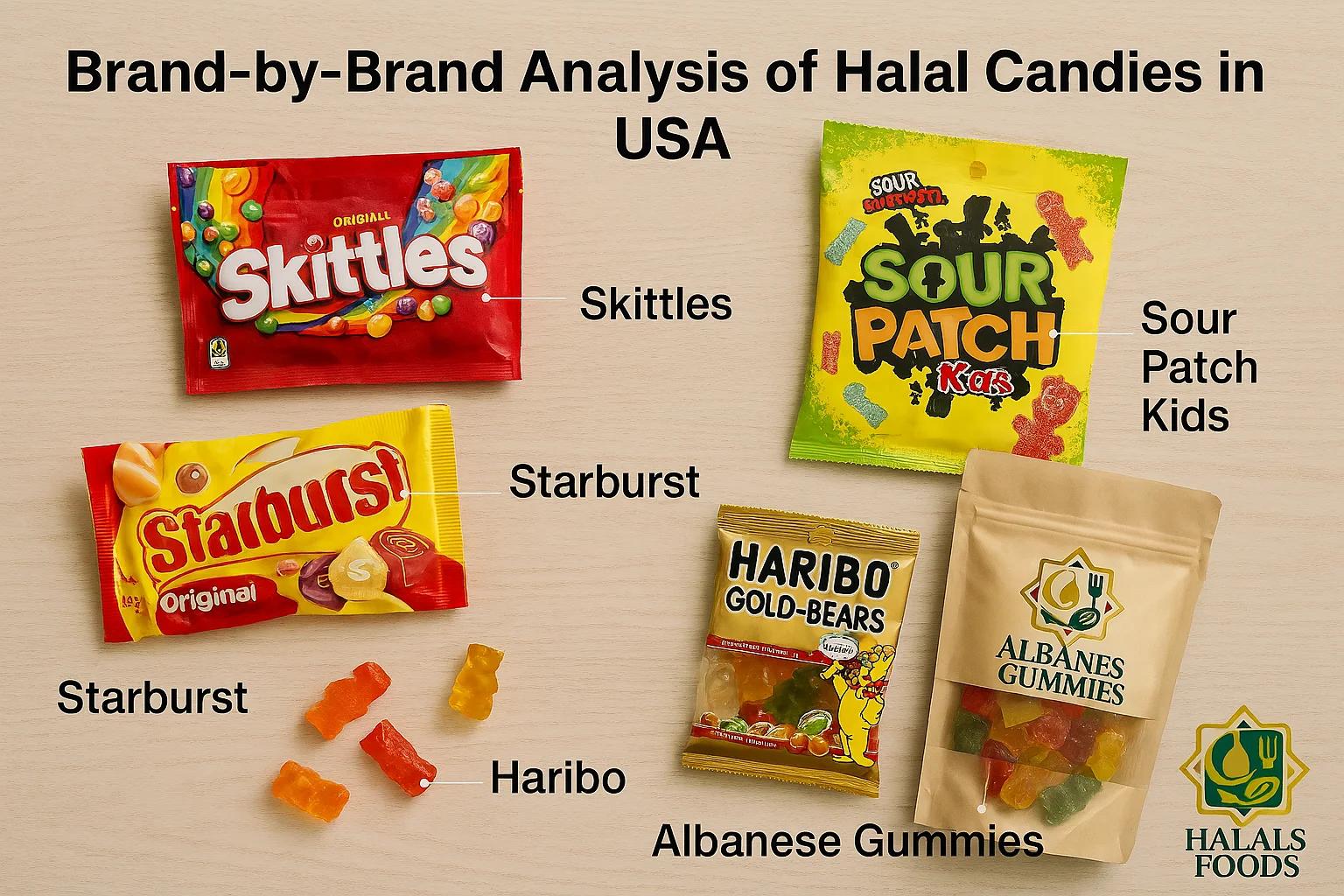
A candy that’s halal in Turkey or the UK can be haram in the USA.
Yes — same brand name, completely different ingredients.
Why?
- Different manufacturing plants
- Different regulations
- Different ingredient sourcing
So never rely on brand name alone.
👉 Always check the USA version specifically
Popular Candy Breakdown (USA Market)
Let’s go through the candies people ask about the most when searching for Halal candies in USA.
🍬 Skittles (USA)
What we found:
- No gelatin
- Uses sugar, corn syrup, oils
- Contains natural + artificial flavors
- No halal certification
So what’s the verdict?
👉 Many Muslims consider it permissible
👉 But cautious consumers still hesitate due to flavor sources
🍓 Starburst (USA)
This one is more clear.
Ingredients include:
- Gelatin (source not specified)
And in the U.S., that usually means:
👉 Pork-derived gelatin
Verdict:
❌ Not halal in the USA
🍋 Sour Patch Kids
This is interesting…
Ingredients:
- No gelatin
- Uses starch instead
Verdict:
👉 Generally considered halal
👉 But still not certified
🐻 Haribo Gummies
Now this is where most people get confused.
Haribo USA:
- Contains pork gelatin
- No halal certification
❌ Haram
Haribo Turkey / UAE versions:
- Use halal bovine gelatin
- Often halal certified
✔️ Halal
👉 Same brand… totally different ruling
🍇 Albanese Gummies
A very popular U.S. brand.
Reality check:
- Many products contain pork gelatin
- Some are gelatin-free
- No consistent halal certification
👉 You must check each product individually
Quick Comparison Table
| Candy Brand | Gelatin | Certification | Status |
|---|---|---|---|
| Skittles | No | No | Generally permissible |
| Starburst USA | Yes | No | Not halal |
| Sour Patch Kids | No | No | Generally permissible |
| Haribo USA | Pork | No | Haram |
| Haribo Turkey | Bovine (Halal) | Yes | Halal |
| Albanese | Often pork | No | Mostly not halal |
The Gelatin Debate (Important Insight)
You might hear this argument:
👉 “Gelatin is transformed, so it becomes halal.”
This concept is called Istihalah (transformation).
But here’s the reality in the U.S. halal industry:
- IFANCA → does NOT accept pork gelatin
- Most scholars → reject pork gelatin
- Certification bodies → require halal source
So while a minority opinion exists…
👉 The majority view = avoid pork gelatin completely
Alcohol in Candy – Hidden but Real
Let’s talk about something many people overlook…
Alcohol in flavorings
In U.S. candy production:
- Alcohol is often used as a solvent
- It may not always be clearly labeled
Now the ruling depends on:
- Quantity
- Whether it remains in final product
Some scholars allow trace amounts…
Others avoid completely.
👉 That’s why halal-certified candies avoid this issue entirely
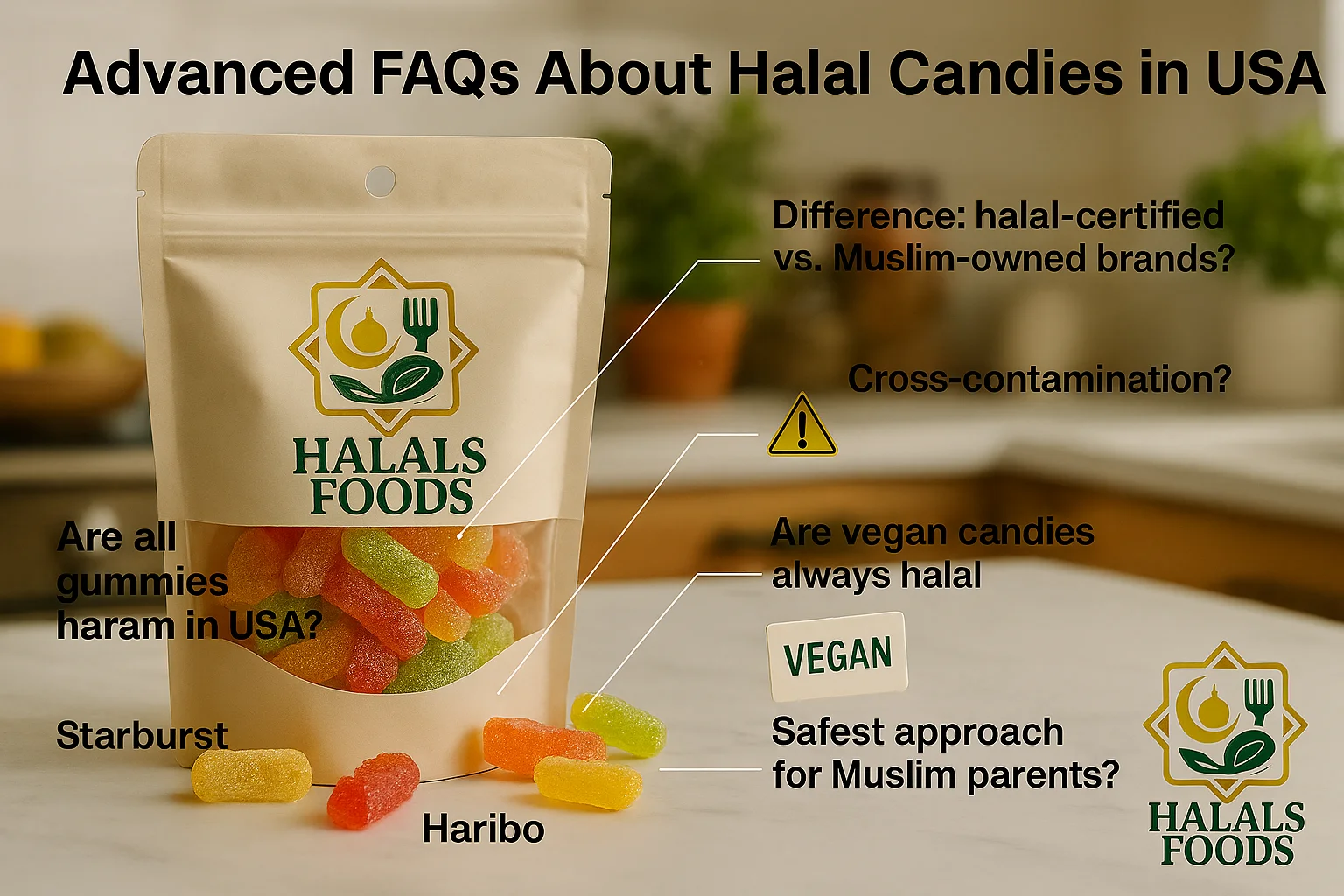
Are Vegan Candies Always Halal?
Sounds logical, right?
No animal = halal?
Not always.
Here’s why:
- Vegan candies can still contain alcohol-based flavors
- They may be produced in shared facilities
- No halal certification
👉 So vegan ≠ automatically halal
Cross-Contamination: The Hidden Risk
Here’s something most people never think about…
Even if a candy has:
- No gelatin
- No alcohol
It can still be problematic
Why?
👉 Shared machinery
In U.S. factories:
- Pork gelatin products run on same lines
- Cleaning is not halal-supervised
So contamination risk exists.
This is why scholars emphasize:
👉 Certification over assumption
Why Imported Candies Are Often Safer
If you’ve ever been to a halal store, you’ll notice something:
Most candies come from:
- Turkey
- Malaysia
- UAE
That’s not random.
These countries:
- Have strong halal regulations
- Require certification
- Monitor production closely
👉 So imported options are often more reliable
Smart Buying Strategy (Simple but Powerful)
Let’s make this super practical.
When buying Halal candies in USA, follow this:
Step 1: Scan the Label
Avoid:
- Gelatin (unless halal-certified)
- Carmine (if you follow strict view)
- Alcohol
Step 2: Look for Certification
Logos to trust:
- IFANCA
- HFSAA
- ISA
Step 3: Choose Safer Types
Best options:
- Pectin gummies
- Hard candies
- Sour candies without gelatin
Step 4: When in Doubt… Skip It
This rule saves you every time.
Real-Life Scenario (You’ll Relate to This)
Imagine this…
Your child gets candy at school.
No label. No info.
What do you do?
This is where awareness matters.
Many Muslim parents now:
- Keep halal candy at home
- Educate their kids
- Swap doubtful candies
Because at the end of the day…
👉 It’s about long-term habits, not one snack
Common Questions (Quick Answers)
Are all gummies haram in the USA?
No. Only those with non-halal gelatin.
Is it sinful if I didn’t know?
No. Islam considers intention.
Can I trust big brands?
Only if they are halal certified.
Are halal candies expensive?
Sometimes slightly — but not always.
What’s the safest choice?
👉 Certified halal or pectin-based candies
Internal Linking Suggestions
You can also read:
- Is KFC Halal in USA
- Is Rennet Halal or Haram
- Halal vs Haram Ingredients Guide
Final Verdict on Halal candies in USA
After everything we’ve uncovered…
Let’s make it crystal clear:
👉 Not all candies in the USA are halal — and many are actually not.
Simple Final Breakdown:
- ❌ Pork gelatin candies → Haram
- ✔️ Halal-certified candies → Safe
- ✔️ Pectin-based candies → Usually halal
- ⚠️ Non-certified products → Doubtful
The Honest Conclusion (Human Talk)
Let’s not overcomplicate it…
You don’t need to become a food scientist.
You just need to be aware.
Because in today’s world:
👉 Halal is not always obvious
👉 Labels are not always clear
👉 And assumptions can mislead
So the smartest approach?
✔️ Choose certainty when possible
✔️ Avoid doubt when you can
✔️ Especially for your family and kids
That’s the balanced path.
Reference Links (For Direct Checking)
Here are trusted sources you can explore:
- https://www.ifanca.org
- https://www.hfsaa.org
- https://www.isahalal.com
- https://www.fda.gov/food/food-labeling-nutrition
- https://www.zabihahalal.com
You can also check brand ingredient pages directly on their official websites before buying.
Related Halal Food Guides You May Find Helpful
People searching for “ [Is Skittles Halal?]” are also curious about other foods and ingredients. Below, you’ll find related halal food articles that clearly explain ingredient sources, how products are made, and whether they meet halal requirements.
More Related Articles [ Are Sour Patch Kids Halal ]